





Art therapy is making waves in mental health and wellness circles, with more professionals using creative methods to help people open up and heal. Some studies report that engaging in art therapy activities can lower stress levels by as much as 75 percent after just one session. That sounds impressive and you might think the benefits are mostly for clients who have trouble finding the right words. Actually, the biggest impact is often seen in the professionals themselves, who discover entirely new ways to manage their own stress and nurture emotional growth in their demanding fields.
Table of Contents
- Understanding Art Therapy Basics And Benefits
- Common Art Therapy Techniques Explained
- How Art Therapy Supports Professionals And Guides
- Getting Started: Steps To Experience Art Therapy
Quick Summary
| Takeaway | Explanation |
|---|---|
| Art therapy fosters emotional expression | It provides a nonverbal outlet for clients to explore complex feelings through creative processes. |
| Techniques enhance emotional processing | Various methods like drawing and collage help clients articulate experiences and uncover insights about themselves. |
| Art therapy supports professional wellbeing | It offers professionals tools for stress reduction, emotional regulation, and personal growth in demanding environments. |
| Initial assessments guide therapy goals | A personalized approach ensures the therapy aligns with individual emotional needs and aspirations from the start. |
| Reflection is key to deeper understanding | Discussion about created artwork helps clients make sense of their emotions and integrate insights into their lives. |
Understanding Art Therapy Basics and Benefits
Art therapy represents a powerful intersection of creative expression and psychological healing, offering professionals and clients a unique pathway to emotional exploration and mental wellness. At its core, art therapy is a specialized form of mental health treatment that harnesses the transformative power of artistic creation as a therapeutic tool.
The Fundamental Principles of Art Therapy
Art therapy is a professional discipline that goes far beyond simple artistic activities. It is a structured approach that combines psychological theory with creative processes, allowing individuals to express complex emotions and experiences through visual and tactile mediums. Unlike traditional talk therapy, art therapy provides a nonverbal communication channel that can be especially beneficial for individuals who struggle to articulate their inner experiences through words.
Professionals trained in art therapy understand that the creative process itself is inherently healing. When clients engage in art-making, they activate different parts of their brain, enabling them to process trauma, reduce stress, and gain insights into their emotional landscape. The act of creating becomes a form of self-exploration, where colors, shapes, and textures become language for unspoken feelings.
Therapeutic Benefits and Applications
According to research from Henry Ford Health, art therapy offers profound benefits across various mental health and wellness contexts. It can be particularly effective in managing conditions such as depression, anxiety, post-traumatic stress disorder, and emotional challenges related to chronic illness.
The therapeutic applications are remarkably diverse. Healthcare settings, rehabilitation centers, schools, and private practices increasingly recognize art therapy as a valuable intervention. For individuals experiencing communication barriers or emotional blockages, art therapy provides a safe, non-threatening approach to psychological healing. Whether through painting, drawing, sculpting, or other creative mediums, clients can externalize internal experiences, gaining distance and perspective on their emotional states.
Professionals can explore Valentina Freifeld’s Art Therapy session to deepen their understanding of this transformative practice. Art therapy is not about creating perfect artwork but about the healing journey of self-expression and emotional processing.
Key benefits include:
- Emotional Release: Providing a constructive outlet for complex or suppressed emotions
- Stress Reduction: Engaging creative processes that naturally lower cortisol levels
- Self-Discovery: Revealing unconscious thoughts and patterns through artistic expression
The power of art therapy lies in its ability to transcend traditional verbal communication, offering a holistic approach to mental health that honors individual experiences and promotes profound personal growth. For professionals seeking innovative therapeutic approaches, art therapy represents a dynamic and compassionate pathway to supporting client wellness.
Common Art Therapy Techniques Explained
Art therapy encompasses a diverse range of creative techniques that provide professionals with powerful tools for emotional exploration and psychological healing. Each technique offers unique pathways for clients to express complex feelings, process experiences, and develop deeper self-understanding.
Drawing and Painting Techniques
Comprehensive research from the National Center for Biotechnology Information highlights drawing and painting as foundational art therapy techniques. These methods allow individuals to externalize internal experiences through visual representation. Therapists might guide clients through specific drawing exercises such as mandala creation, free-form emotional mapping, or structured imagery development that helps uncover unconscious thoughts and feelings.
Drawing techniques can range from spontaneous scribbling to more intentional representations. Clients might be asked to draw their emotions using color and shape, create self-portraits reflecting inner states, or illustrate metaphorical landscapes representing personal challenges. Painting offers similar therapeutic potential, with watercolors often used for exploring fluid emotional states and acrylic paints providing opportunities for more bold, definitive expressions.
Collage and Mixed Media Approaches
Collage represents another powerful art therapy technique that enables clients to create meaning through image selection and arrangement. By combining existing images, photographs, and materials, individuals can construct visual narratives that might be challenging to articulate verbally. Mixed media approaches allow for even greater creative flexibility, integrating multiple materials like fabric, found objects, and digital imagery.
These techniques are particularly effective for trauma processing and personal storytelling. Clients can create symbolic representations of their experiences, deconstruct and reimagine personal narratives, and develop new perspectives through creative assembly. Explore our art therapy resources to understand how these techniques can be implemented in professional practice.
Sculpture and Three-Dimensional Art Making
Three-dimensional art techniques like clay modeling, sculpture, and object construction provide unique therapeutic opportunities. These approaches engage different sensory and motor skills, offering clients a tactile and kinesthetic mode of expression. Working with three-dimensional materials can be especially powerful for individuals who find two-dimensional art limiting.
Sculpture techniques might involve creating symbolic representations of emotional states, constructing protective or healing objects, or developing three-dimensional self-representations. The physical act of molding, shaping, and transforming materials becomes a metaphorical process of personal transformation.
Key aspects of art therapy techniques include:
- Emotional Exploration: Providing safe channels for expressing complex feelings
- Nonverbal Communication: Offering alternatives to traditional verbal therapy
- Personal Empowerment: Enabling clients to actively participate in their healing process
By understanding and skillfully applying these diverse art therapy techniques, professionals can create profound therapeutic experiences that support emotional growth, psychological healing, and personal development.
To help readers compare the main art therapy techniques explained in this section, the table below summarizes their features, typical materials, and unique benefits.
| Technique | Typical Materials | Key Benefits |
|---|---|---|
| Drawing and Painting | Pencils, markers, crayons, paints | Express emotions visually; explore inner states |
| Collage and Mixed Media | Photos, magazines, fabrics, objects | Personal storytelling; trauma processing |
| Sculpture/3D Art Making | Clay, wood, found objects | Tactile expression; kinesthetic release |
How Art Therapy Supports Professionals and Guides
Art therapy offers transformative support for professionals and guides navigating the complex emotional landscapes of their personal and professional lives. Beyond traditional therapeutic applications, art therapy provides powerful tools for self-care, professional development, and emotional resilience.
Stress Reduction and Emotional Regulation
Research from the National Library of Medicine reveals that art therapy can significantly reduce stress and enhance emotional well-being for professionals working in high-intensity environments. The creative process acts as a natural stress management technique, allowing individuals to externalize complex emotions and gain perspective on challenging experiences.
Professionals often encounter emotional burnout and compassion fatigue, particularly in helping fields like coaching, counseling, and healthcare. Art therapy provides a unique avenue for processing these intense emotional experiences. Through creative expression, guides can explore their internal landscapes, release accumulated emotional tension, and develop healthier coping mechanisms. The act of creating becomes a form of self-reflection and emotional processing that goes beyond traditional verbal methods.
Professional Self-Care and Personal Growth
According to NIH-funded research, art therapy interventions can dramatically improve emotional regulation and workplace well-being. For professionals who constantly support others, this approach offers a critical opportunity for personal restoration and self-understanding. Creating art allows guides to step back from their professional roles, reconnect with their inner experiences, and develop greater emotional intelligence.
The techniques are particularly powerful for professionals who spend significant time holding space for others. Art-making becomes a form of professional self-care, helping individuals process secondary trauma, manage professional stress, and maintain emotional boundaries. Explore our professional wellness resources to discover how art therapy can transform your professional practice.
Professional Development and Emotional Intelligence
Beyond stress reduction, art therapy serves as a profound tool for professional development. The creative process cultivates skills directly transferable to professional environments: improved emotional awareness, enhanced communication, and greater adaptability. Professionals learn to interpret symbolic language, understand nonverbal communication, and develop more nuanced approaches to emotional understanding.
Key benefits for professionals include:
- Emotional Resilience: Building capacity to navigate complex emotional landscapes
- Self-Awareness: Developing deeper understanding of personal emotional patterns
- Professional Growth: Enhancing emotional intelligence and interpersonal skills
By integrating art therapy into their personal and professional development strategies, guides can create more authentic, compassionate, and sustainable approaches to their work. The creative process becomes a powerful ally in maintaining professional effectiveness while nurturing personal well-being.
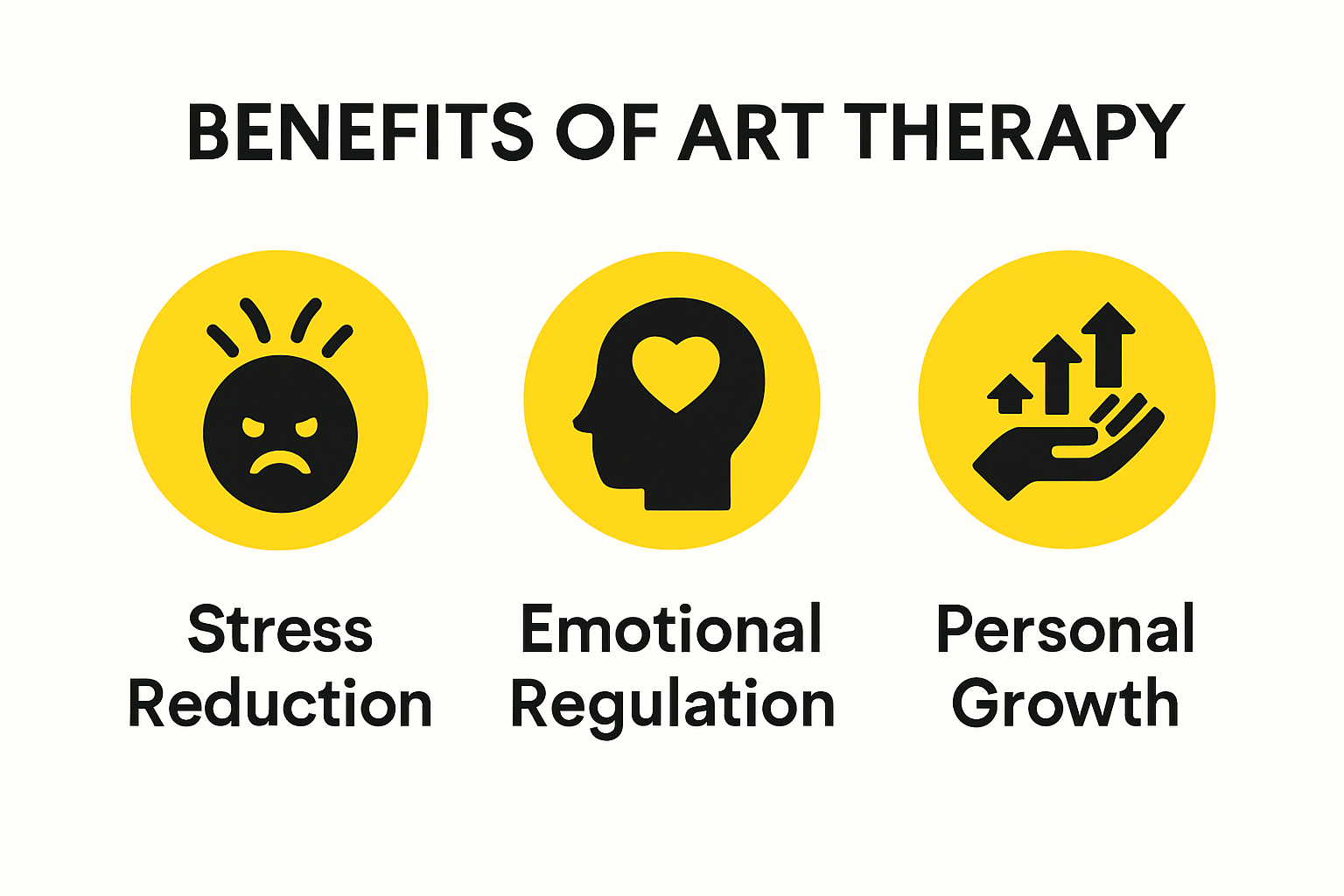
The following table summarizes the main ways art therapy supports professionals, highlighting core benefits and relevant applications.
| Support Area | Key Benefit | Typical Professional Contexts |
|---|---|---|
| Stress Reduction | Lowers stress & burnout | Healthcare, counseling, coaching |
| Emotional Regulation | Improves emotional processing | High-responsibility or high-intensity jobs |
| Self-Care | Aids in managing secondary trauma | Social work, therapy, education |
| Professional Growth | Enhances emotional intelligence & reflection | Leadership, team management, caregiving |
Getting Started: Steps to Experience Art Therapy
Embarking on an art therapy journey represents a transformative pathway to personal growth, emotional healing, and self-discovery. Understanding the initial steps and approaching the process with openness can help individuals maximize the therapeutic potential of creative expression.
Initial Assessment and Goal Setting
Research from the National Institutes of Health emphasizes the critical importance of a comprehensive initial assessment when beginning art therapy. This first step involves working with a credentialed art therapist to establish personalized therapeutic goals, understand individual emotional landscapes, and create a tailored creative approach.
During the initial consultation, clients can expect a collaborative discussion about their emotional challenges, personal history, and specific objectives. The art therapist will help individuals identify potential areas of exploration, whether addressing stress, processing trauma, managing mental health conditions, or pursuing personal growth. This foundational conversation sets the stage for a meaningful therapeutic experience, ensuring that the creative process aligns with the client’s unique needs and aspirations.
Exploring Creative Techniques and Approaches
Once goals are established, clients begin exploring various art therapy techniques designed to facilitate emotional expression and psychological insight. These techniques are not about creating aesthetically perfect artwork but about using creative processes as a tool for self-understanding and healing. Guided exercises might include free-form drawing, mandala creation, symbolic representation of emotions, or structured imagery development.
The art therapist plays a crucial role in creating a safe, non-judgmental environment where clients feel comfortable experimenting with different artistic mediums. Some individuals might gravitate towards painting, while others might find greater comfort in collage-making or clay modeling. Discover our comprehensive art therapy resources to understand the diverse approaches available and find techniques that resonate with your personal journey.
Reflection and Integration
A fundamental aspect of art therapy involves reflective discussion and meaning-making. After creating artwork, clients engage in guided conversations about their creative process, exploring the symbolism, emotions, and insights embedded in their pieces. This reflective stage transforms artistic expression from a purely creative act into a powerful therapeutic tool.
Professionals guide clients through interpretative discussions, helping them uncover underlying emotional patterns, develop new perspectives, and integrate creative insights into their personal growth journey. The artwork becomes a tangible representation of internal experiences, offering a unique window into the client’s emotional landscape.
Key considerations for individuals beginning art therapy include:
- Openness: Embracing the creative process without judgment
- Patience: Understanding that healing and self-discovery take time
- Vulnerability: Allowing oneself to explore emotions through creative expression
Art therapy offers a compassionate, innovative approach to personal development. By approaching the process with curiosity, individuals can unlock profound emotional insights, develop greater self-awareness, and cultivate meaningful strategies for psychological well-being. The journey is not about artistic skill but about using creativity as a transformative healing modality.
Frequently Asked Questions
What is art therapy?
Art therapy is a specialized mental health treatment that uses creative methods to help individuals express complex emotions and experiences through artistic creation, promoting emotional exploration and psychological healing.
What are the benefits of art therapy for professionals?
Art therapy can significantly reduce stress, enhance emotional regulation, and support personal growth for professionals by providing tools for self-care and enhancing emotional intelligence in demanding environments.
What techniques are commonly used in art therapy?
Common art therapy techniques include drawing and painting, collage and mixed media, as well as sculpture and three-dimensional art making, each offering unique pathways for emotional expression and self-discovery.
How do clients get started with art therapy?
Clients typically begin art therapy with an initial assessment followed by goal setting with a credentialed art therapist, exploring various creative techniques tailored to their individual emotional needs and aspirations.
Bring the Power of Art Therapy Into Your Practice and Self-Care
Are you feeling the weight of emotional fatigue or searching for innovative ways to nurture both your clients and yourself? If the stress and demands of helping others leave you longing for effective self-care, this article has shown how art therapy can support emotional regulation, relieve burnout, and spark real growth. Now you can put these proven strategies into action with guidance and resources designed just for professionals like you.

Step toward lasting resilience and creativity by exploring expert-led art therapy and holistic wellness services at Plentiful. Find personalized sessions, workshops, and digital tools that bring the healing power of creative expression right to your screen. Visit Plentiful’s art therapy offering to discover solutions for reducing stress and strengthening your emotional toolbox. Spaces fill up quickly when new resources launch, so take the next step now and start experiencing all the benefits highlighted in this guide.
Recommended
- Art Therapy by Valentina | Mental Wellness
- Online Art Therapy Class for Personal Growth | Plentiful
- Flor Da Valle Art Events & Coaching with Flor Da Valle
- The Journal | Personal Growth and Wellbeing Topics | Plentiful
- Counseling Supervision Models for Diverse Needs in 2025 – Mastering Conflict
Ready to improve your life?
Access our free newsletter designed to help you become the best version of yourself.
Learn how to find your path, understand yourself, and make progress toward your dream life.