
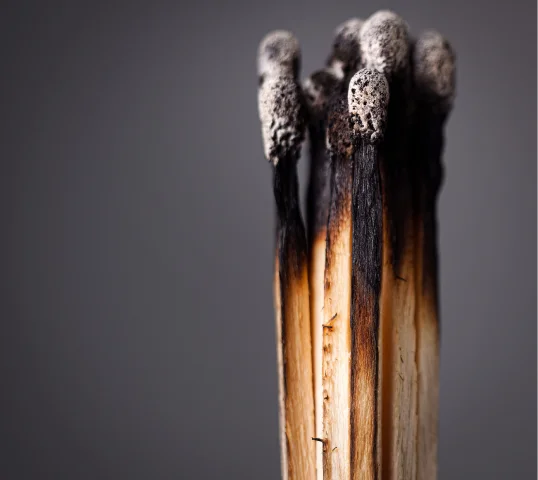






Burnout can creep up on you.
At first, you’re just busy. You push through a demanding week, work a few late nights, cancel a workout or two, and tell yourself things will settle down soon.
Except they don’t.
Eventually, you’re not just tired. You’re depleted. Work you once cared about starts to feel pointless. Your patience disappears. Sunday night fills you with dread. You struggle to concentrate. And even when you finally get a break, you don’t necessarily feel better.
If that sounds familiar, you may be experiencing burnout.
The good news is that burnout is not something you simply have to accept. Recovery is possible. But it usually requires more than a vacation, a massage, or trying harder to “manage stress.”
Burnout recovery means understanding what is draining you, creating genuine opportunities for recovery, changing the conditions that contributed to your burnout, and gradually rebuilding your energy, engagement, and sense of control.
In this guide, you’ll learn:
- What burnout actually is
- The most common signs and symptoms of burnout
- The difference between stress and burnout
- What causes burnout
- How long burnout recovery can take
- How to recover from burnout
- When changing your job or work environment may be necessary
- How coaching and other forms of support can help
What Is Burnout?
The World Health Organization defines burnout as a syndrome resulting from “chronic workplace stress that has not been successfully managed.”
WHO identifies three primary dimensions of burnout:
- Energy depletion or exhaustion
- Increased mental distance from your job, including negativity or cynicism
- Reduced professional efficacy
Importantly, WHO classifies burnout as an occupational phenomenon rather than a medical condition.
That distinction matters.
Burnout isn’t simply having a bad week or feeling tired after an intense project. It develops when workplace stress becomes chronic and you don’t have enough opportunity, control, resources, or recovery to counteract it.
And burnout isn’t necessarily a sign that you no longer care about your career.
In fact, highly committed people can find themselves burned out precisely because they do care. They keep giving more, taking on more, and pushing through warning signs until there is very little left in the tank.
What Does Burnout Feel Like?
Burnout can look different from person to person, but one of its defining characteristics is that ordinary rest stops feeling sufficient.
You might sleep through the weekend and still feel exhausted on Monday. You might take a vacation and feel better for several days, only to find the same dread returning shortly after you go back to work.
Burnout can affect how you feel about your work, your capabilities, the people around you, and sometimes yourself.
Common burnout symptoms include:
- Persistent exhaustion: Feeling physically or emotionally depleted, even after resting
- Cynicism or negativity: Becoming increasingly frustrated, critical, or pessimistic about your work
- Detachment: Feeling disconnected from colleagues, clients, responsibilities, or work you previously cared about
- Reduced motivation: Finding it increasingly difficult to care about doing a good job
- Difficulty concentrating: Struggling to focus, remember things, make decisions, or complete tasks
- Reduced sense of accomplishment: Feeling that your work doesn’t matter or that you’re no longer effective
- Irritability: Having less patience with colleagues, friends, or family
- Sleep changes: Struggling to fall asleep, stay asleep, or feel restored by sleep
- Physical symptoms: Experiencing headaches, muscle tension, digestive problems, or other stress-related complaints
- Loss of enjoyment: Having little energy left for relationships, hobbies, exercise, or the things that normally make life feel good
The Mayo Clinic notes that burnout can affect both physical and mental health and recommends speaking with a healthcare or mental health professional when symptoms could also be related to conditions such as depression.
A quick burnout self-check
Ask yourself:
Do I feel exhausted, increasingly disconnected or cynical about my work, and less effective than I used to feel?
If the answer is yes to all three, it may be worth looking more closely at burnout and what is driving it.
This isn’t a diagnosis. It’s a signal that something may need to change.
Stress vs. Burnout: What’s the Difference?
Stress and burnout are related, but they aren’t the same thing.
With stress, you often feel that there is simply too much: too much work, too much pressure, too much urgency and too little time.
With burnout, the experience can shift toward not enough: not enough energy, motivation, enthusiasm, hope, or belief that your effort will make a difference.
| Stress | Burnout |
|---|---|
| You feel over-engaged | You feel disengaged |
| Everything feels urgent | Everything can feel pointless |
| You have too much energy or anxiety | You feel depleted |
| You believe pushing harder might solve it | You struggle to believe your effort matters |
| Rest often helps | Ordinary rest may not feel sufficient |
| The stressful period may have a clear endpoint | The situation can feel endless |
Think of stress as repeatedly flooring the accelerator.
Burnout is what can happen when you’ve been doing it for so long that the engine begins to struggle.
What Causes Burnout?
There is rarely one single cause of burnout.
It usually develops from a mismatch between what your work continually demands from you and the resources, autonomy, support, recovery, or meaning available to you.
Common causes and risk factors include:
1. An unsustainable workload
There are only so many hours in a day. When the workload consistently exceeds what can reasonably be accomplished, working harder eventually stops being a viable strategy.
2. Too little control
Having little say over your schedule, priorities, workload, resources, or how your work gets done can contribute to burnout.
3. Unclear expectations
Constantly shifting priorities or not knowing what success actually looks like creates ongoing mental strain.
4. A lack of support
Feeling that you have to carry everything alone can turn an already demanding job into an exhausting one.
5. Workplace conflict or a toxic environment
A difficult manager, bullying, organizational politics, discrimination, or persistent interpersonal conflict can make work emotionally exhausting even when the workload itself is manageable.
6. Poor work-life boundaries
When work follows you everywhere, your brain and body rarely receive the signal that the working day has actually ended.
If this sounds familiar, read our guide to setting healthier boundaries for fulfillment and growth.
7. A mismatch between your work and your values
Sometimes the problem isn’t simply how much you’re working.
It’s what you’re working so hard for.
A role that once suited you may no longer fit your priorities, strengths, interests, or the life you want to build.
That can create a different kind of exhaustion: the feeling that you’re pouring enormous energy into something that no longer feels meaningful.
Can You Recover From Burnout?
Yes.
But recovering from burnout usually isn’t about finding one magical technique that makes everything better.
It’s about reducing the forces draining you while increasing the things that restore your energy, control, connection, and sense of meaning.
That’s also why burnout recovery cannot be reduced to self-care.
Meditation, exercise, sleep, time outdoors, breathwork, and other restorative practices can all be useful. But if you’re working 70 hours a week for an abusive manager with impossible expectations, adding ten minutes of meditation isn’t going to fix the underlying problem.
You cannot self-care your way out of an environment that continually burns you out.
Burnout recovery often requires changes on two levels:
Personal recovery: Rest, sleep, movement, boundaries, relationships, stress management, reflection, and professional support.
Structural recovery: Changes to workload, responsibilities, working hours, expectations, management, autonomy, team support, or sometimes the job itself.
Research into workplace burnout supports looking beyond individual coping strategies and addressing organizational factors contributing to chronic stress.
How to Recover From Burnout: 7 Steps
There is no universal burnout recovery plan, but these seven steps provide a practical place to begin.
1. Stop pretending you’re fine
Burnout tends to get worse when you continuously override what your mind and body are telling you.
If you’re exhausted, detached, cynical, struggling to concentrate, or dreading every working day, pay attention.
Instead of asking:
How can I become better at handling this?
try asking:
What is this exhaustion trying to tell me?
That shift can be powerful because it moves you away from blaming yourself and toward understanding the conditions that need to change.
2. Identify what’s actually burning you out
“Work” may not be a specific enough answer.
Ask yourself:
- Is my workload unrealistic?
- Is my manager the problem?
- Do I lack autonomy?
- Am I constantly available?
- Have I taken on responsibilities that should belong to other people?
- Do I feel unsupported?
- Has the job stopped feeling meaningful?
- Am I working in a way that conflicts with the life I want?
- Am I saying yes when I need to say no?
- Is this a temporary period, or has this become normal?
The more precisely you identify the source of your burnout, the easier it becomes to decide what needs to change.
3. Create real recovery time
When you’re burned out, recovery needs to become a priority rather than something you squeeze into whatever time remains.
That might mean:
- Taking PTO
- Ending work at a defined time
- Protecting your weekends
- Turning off work notifications
- Taking regular breaks during the day
- Getting enough sleep
- Exercising or spending time outside
- Making time for people who energize you
- Returning to interests that have nothing to do with your career
If your days constantly disappear before you’ve had time for yourself, our guide to time management for professionals can help you rethink how you’re allocating your time and energy.
4. Set boundaries that actually change something
A boundary isn’t simply deciding that you’d prefer not to answer emails at 10 p.m.
It means changing your behavior.
Maybe you stop checking Slack after 7 p.m. Maybe you decline meetings that don’t require you. Maybe you stop automatically saying yes to additional work. Maybe you tell your manager that the current workload requires prioritization rather than quietly trying to accomplish everything.
Small boundaries can create surprisingly large amounts of breathing room.
5. Have the conversation you’ve been avoiding
If work is causing your burnout, some part of your recovery may need to happen at work.
That could mean speaking with your manager about:
- Workload
- Priorities
- Resources
- Deadlines
- Role clarity
- Flexible working
- Delegating responsibilities
- Time off
- Changing your responsibilities
Go into the conversation with specifics.
Instead of saying, “I’m completely overwhelmed,” identify what is unsustainable and what concrete change would make it more manageable.
6. Rebuild a life outside work
One of burnout’s cruelest effects is that work can consume the energy you would normally invest in the very things that help you recover.
Friends. Exercise. Nature. Family. Creativity. Adventure. Play.
Start putting some of them back.
Not because they’re another task on your wellness checklist, but because your life is supposed to contain things that make you feel alive.
Explore Plentiful’s meditation experiences, life coaching, or energy and restorative experiences if you want support creating more space for recovery.
7. Ask the bigger question: Does something need to change?
Sometimes burnout is a warning that you’ve been working unsustainably.
Sometimes it’s telling you something bigger.
You may realize that you don’t want your manager’s job. That the career you chose at 25 no longer fits who you are at 42. That success has come at a price you no longer want to pay. Or simply that you haven’t felt excited about your work for years.
You don’t necessarily need to quit.
But don’t automatically assume that the goal of burnout recovery is to become healthy enough to return to exactly the same situation that burned you out.
Sometimes recovery means changing how you work.
Sometimes it means changing where you work.
And occasionally, it means reconsidering what you want your work and life to look like altogether.
If you’re wrestling with that question, explore Plentiful’s career coaching experiences for support gaining clarity about what comes next.
What NOT to Do When You’re Burned Out
Burnout can create a strong temptation to look for a quick fix.
Be wary of:
Simply pushing harder. If your existing approach created the problem, more of the same is unlikely to solve it.
Taking a vacation and changing nothing else. A break can provide valuable recovery time, but the benefits may disappear quickly if you return to exactly the same conditions.
Turning recovery into another performance goal. You don’t need to become world-class at meditation, exercise six days a week, or build the perfect morning routine.
Blaming yourself. Burnout isn’t necessarily evidence that you aren’t resilient enough. Workplace conditions matter.
Making enormous decisions at your most depleted. Unless your health or safety requires an immediate exit, giving yourself some space to recover can help you make major career decisions more clearly.
How Long Does It Take to Recover From Burnout?
There is no single burnout recovery timeline.
Someone experiencing early burnout may feel substantially better after reducing their workload, taking meaningful time off, and creating stronger boundaries.
More severe or long-standing burnout may take months to recover from, particularly if the underlying work situation remains unchanged.
Rather than asking only, “How long until I feel normal again?”, look for signs of progress:
- Is your energy gradually returning?
- Are you sleeping better?
- Do you feel less dread?
- Is your concentration improving?
- Are you enjoying things outside work again?
- Do you feel more like yourself?
- Can you imagine a future you’re excited about?
Burnout recovery isn’t necessarily linear. A difficult week doesn’t mean you’re back at square one.
Do You Need to Quit Your Job to Recover From Burnout?
Not necessarily.
If the primary causes can be changed, you may be able to recover without leaving.
Changes in workload, management support, role clarity, autonomy, boundaries, or responsibilities can sometimes dramatically alter your experience.
But ask yourself an important question:
Can the conditions causing my burnout realistically change?
If you’ve repeatedly tried to address an impossible workload, unhealthy culture, values mismatch, toxic manager, or lack of control and nothing changes, leaving may eventually be the healthiest option.
Before making the decision, try separating two questions:
- Do I need to leave this job?
- Or do I need to change how I’m doing this job?
A career coach can be particularly helpful here because burnout can make it difficult to distinguish temporary exhaustion from a deeper desire for change.
Explore career coaching on Plentiful.
Can Coaching Help With Burnout?
Coaching can be useful when burnout is connected to issues such as workload, boundaries, leadership pressure, career dissatisfaction, priorities, or uncertainty about what should change.
A coach can give you space to step outside the day-to-day pressure and ask questions such as:
- What is actually draining me?
- What am I tolerating that needs to change?
- What is within my control?
- Where do I need stronger boundaries?
- What am I afraid will happen if I say no?
- What would sustainable success look like?
- Do I still want this career or role?
- What do I want my life to contain beyond work?
There is also emerging evidence supporting coaching in some occupational burnout contexts. A 2026 systematic review and meta-analysis of randomized trials among healthcare professionals found professional coaching was probably effective in reducing some dimensions of burnout among physicians, although the researchers also noted limitations in the available evidence.
Coaching isn’t a substitute for medical or mental health treatment. If you’re experiencing persistent low mood, severe anxiety, thoughts of self-harm, substance misuse, or symptoms that are interfering significantly with daily life, talk to a qualified healthcare or mental health professional.
Where to Start Your Burnout Recovery
If you’re burned out, you don’t need to reinvent your entire life tomorrow.
Start with one question:
What is one thing making my life harder right now that I have the power to change?
Maybe it’s:
- Shutting the laptop at 6 p.m.
- Finally using your PTO.
- Telling your manager the workload isn’t sustainable.
- Saying “no.”
- Asking for help.
- Admitting that you’ve outgrown something you once wanted very badly.
Burnout can make your world feel smaller. Recovery is about gradually creating room again: room to rest, think, connect, enjoy yourself, make choices, and figure out what you want next.
And eventually, to feel like yourself again.
Ready for some support?
You don’t have to figure everything out alone.
Plentiful brings together vetted coaches, guides, teachers, and practitioners who can help you reduce stress, rethink your relationship with work, build healthier boundaries, reconnect with yourself, and decide what comes next.
Depending on what you need right now, you can:
- Explore career coaching if work itself needs to change.
- Explore life coaching if you’re trying to reconnect with what you want.
- Explore meditation if you need practical ways to slow down and create space.
- Explore energy and restorative experiences if you’re looking for practices focused on rest and reconnection.
Or start with Breathe Away Burnout, a short, practical course designed specifically to help people experiencing burnout use breathwork to slow down, reconnect with their body, and restore balance.
Burnout Recovery FAQ
What is the fastest way to recover from burnout?
There is no instant cure for burnout. A useful first step is to identify the biggest source of chronic workplace stress and reduce your exposure to it where possible. Rest and healthy habits can support recovery, but lasting improvement may also require changes to workload, responsibilities, boundaries, management support, or your work environment.
Can you recover from burnout without quitting your job?
Yes. If the conditions contributing to burnout can be changed, recovery may be possible without leaving your job. Changes to workload, boundaries, responsibilities, working hours, autonomy, or management support can all help. If the underlying conditions cannot realistically change, however, exploring another role may be appropriate.
How long does burnout recovery take?
There is no standard timeline. Recovery depends on the severity and duration of burnout, your personal circumstances, the support available to you, and whether the factors causing your burnout can be changed. Some people improve relatively quickly; others may need months or longer.
What are the three main signs of burnout?
The World Health Organization describes burnout through three dimensions: exhaustion or energy depletion; increased mental distance, negativity, or cynicism toward your job; and reduced professional efficacy.
Is burnout the same as depression?
No. Burnout and depression can share symptoms, including exhaustion, difficulty concentrating, and reduced motivation, but they are not the same. WHO defines burnout specifically in relation to chronic workplace stress. Because symptoms can overlap, seek guidance from a healthcare or mental health professional if you’re unsure what you’re experiencing.
Does taking time off cure burnout?
Time away from work can be an important part of recovery, but a vacation alone may not solve burnout if you return to the same workload, lack of control, unhealthy culture, or other conditions that contributed to it.
What happens if you ignore burnout?
Persistent burnout can affect your work performance, relationships, sleep, physical health, and overall well-being. If you’re noticing ongoing exhaustion, detachment, declining performance, or physical symptoms, it’s worth taking them seriously rather than simply pushing through.
Can a career coach help with burnout?
A career coach may help you identify what is driving your burnout, establish boundaries, rethink priorities, improve your relationship with work, and decide whether your current role still fits. Coaching should complement rather than replace appropriate medical or mental health care.
What should I do if I’m burned out but can’t take time off?
Start by looking for smaller changes that reduce your exposure to chronic stress: clarify priorities with your manager, remove unnecessary commitments, protect non-working hours, delegate where possible, take your available breaks, and ask for support. Small structural changes can matter even when extended leave isn’t immediately possible.