







Changing careers after 40 isn’t just possible, it’s often the smartest move you’ll ever make. While it may feel daunting to leave behind years of experience, research shows that more than half of professionals over 40 have already made a major career shift. And the surprising truth? Many report greater job satisfaction, renewed energy, and a deeper sense of fulfillment than ever before.
At this stage in life, you have a unique advantage: wisdom, resilience, and a track record of adaptability. A successful career change isn’t about starting over. It’s about redirecting your skills, passions, and life experience into a path that excites you. Whether you’re chasing a long-held dream, seeking more balance, or craving new opportunities, the right strategy can transform midlife uncertainty into your most rewarding chapter yet.
This guide walks you through every step of the process… from evaluating your strengths and researching new paths to building connections, acquiring fresh skills, and landing the role that truly fits.
Table of Contents
- Step 1: Evaluate Your Skills And Interests
- Step 2: Research Potential Career Paths
- Step 3: Update Your Resume And Online Presence
- Step 4: Network With Professionals In Your Desired Field
- Step 5: Acquire Necessary Skills And Certifications
- Step 6: Apply For Jobs And Prepare For Interviews
Quick Summary
| Key Point | Explanation |
|---|---|
| 1. Assess Your Skills and Interests | Conduct a self-assessment to identify skills and interests that will guide your career transition. |
| 2. Research Career Paths Actively | Explore multiple resources and conduct informational interviews to learn about viable new career options. |
| 3. Update Your Resume Strategically | Revise your resume to highlight transferable skills and create a professional narrative that aligns with your new goals. |
| 4. Build and Expand Your Network | Leverage existing connections and engage in networking strategies to discover opportunities in your desired field. |
| 5. Focus on Skill Acquisition | Identify necessary skills through a gap analysis and pursue targeted learning to prepare for your new career. |
Step 1: Evaluate Your Skills and Interests
Changing careers after 40 requires a strategic and introspective approach to understanding your professional potential. This critical first step involves a comprehensive self-assessment that will serve as the foundation for your entire career transition journey. By carefully examining your existing skills, hidden talents, and genuine interests, you’ll create a roadmap that transforms professional uncertainty into purposeful opportunity.
Begin by conducting a thorough personal inventory of your professional capabilities. Reflect on your entire work history, not just your most recent role. Consider skills you’ve developed across different jobs, volunteer experiences, and personal projects.
The following table gives a side-by-side overview of recommended self-assessment tools and resources mentioned for evaluating your skills and interests when changing careers after 40.
| Tool or Resource | Purpose | Example/Details |
|---|---|---|
| Personality Assessments | Identify strengths, work styles, and personal preferences | Myers-Briggs, StrengthsFinder |
| Skills Matching Surveys | Match skills to possible careers | Offered by career centers |
| Online Career Platforms | Explore potential fields and job matches | Career exploration websites |
| Professional Counseling | Receive expert guidance for career discovery | Career counseling/coaching consultations |
| These might include communication abilities, project management expertise, technical knowledge, or interpersonal skills that transcend specific job titles. Look beyond traditional job descriptions and recognize the transferable competencies you’ve accumulated throughout your career. |
To systematically evaluate your skills and interests, utilize self-assessment tools and professional resources. According to the U.S. government’s career resources, career assessment tools can help individuals identify their strengths and potential career paths. Consider completing structured assessments that can provide objective insights into your professional profile. Some recommended approaches include:
- Personality assessments like Myers-Briggs or StrengthsFinder
- Skills matching surveys from professional career centers
- Online career exploration platforms
- Professional counseling or coaching consultations
As you explore potential career directions, pay close attention to activities and tasks that genuinely energize you. Passion is a powerful indicator of future success. Identify work environments, projects, and responsibilities that have consistently brought you satisfaction, not just financial rewards. This might mean recognizing your love for problem-solving, your ability to lead teams, or your talent for creative thinking.
Remember that skills evaluation is not about finding a perfect match but understanding your adaptability. Many professionals successfully transition between seemingly unrelated fields by recognizing their core competencies. Your goal is to build a comprehensive understanding of your professional identity that allows for flexible and strategic career repositioning.
Successful completion of this step means having a clear, documented overview of your skills, interests, and potential career trajectories. You should feel more confident about your professional capabilities and excited about the possibilities that lie ahead in your career change journey.
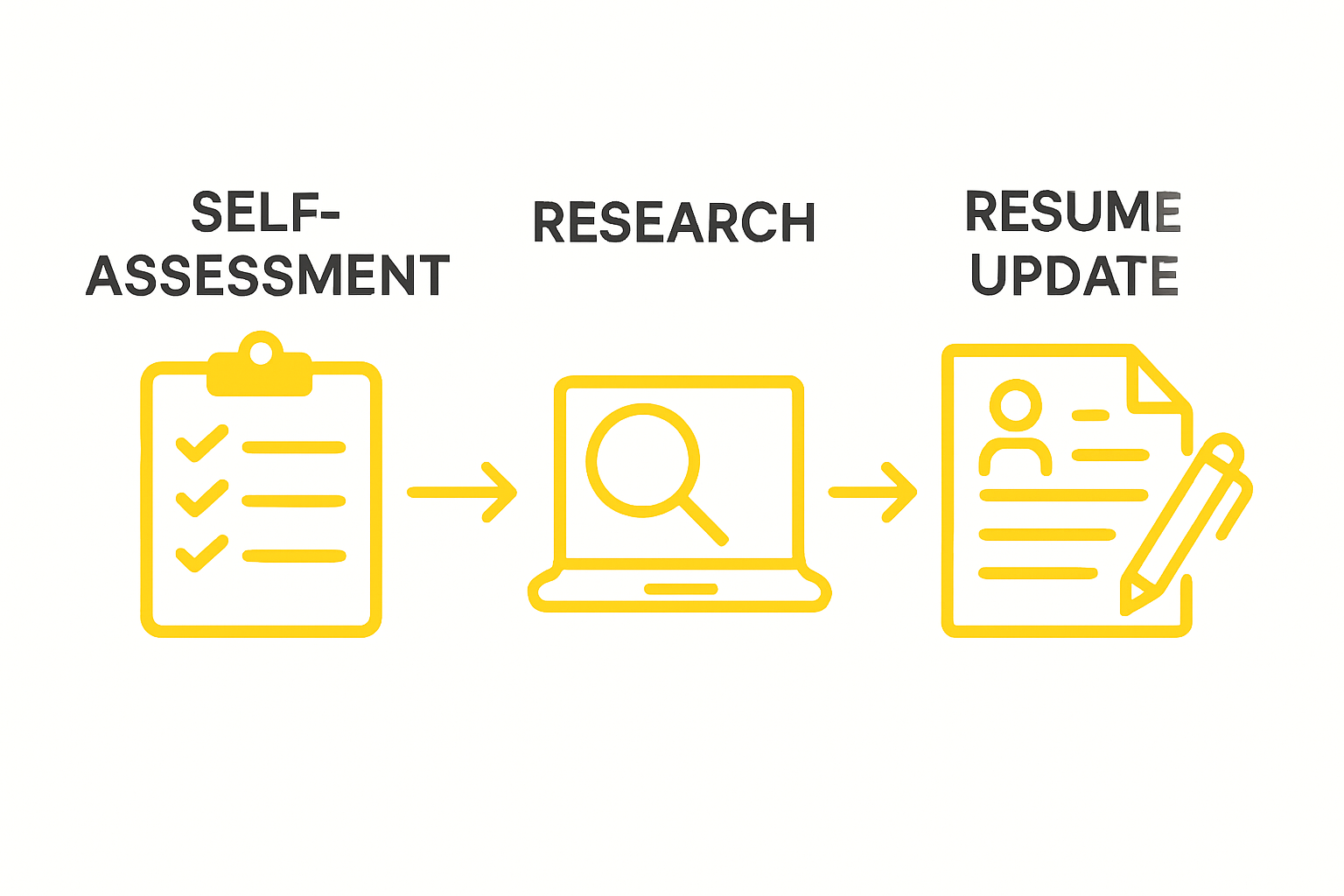
Step 2: Research Potential Career Paths
With your skills and interests clearly mapped out, the next crucial phase of your career change journey involves comprehensive and strategic research into potential new professional directions. This step transforms your self-assessment into actionable career exploration, helping you identify realistic and exciting opportunities that align with your professional aspirations.
Leverage multiple research strategies to gain a holistic understanding of potential career paths. Online resources provide an excellent starting point for your investigation. According to the U.S. Bureau of Labor Statistics, understanding job market trends and occupation prospects is essential for successful career transitions. Utilize government databases, professional association websites, and industry-specific platforms to gather detailed information about different career fields. One great paper we found is the Future of Jobs Report 2025 by the World Economic Forum. In it you will find projections about the high-growth industries and skills, among many other trends and insights. The report is very long and dense but you will take a lot away from it by simply skimming it.
Informational interviews represent a powerful research tool for professionals changing careers. Reach out to individuals working in fields that intrigue you through professional networking platforms like LinkedIn. These conversations offer unfiltered insights into daily job responsibilities, required skills, workplace cultures, and potential challenges. Prepare thoughtful questions that go beyond surface-level information, focusing on personal experiences and practical advice for career transitioners.
Expand your research beyond traditional job descriptions by exploring emerging industries and roles. Technology, healthcare, sustainability, and digital services continue to create innovative career opportunities for experienced professionals. Attend virtual conferences, webinars, and industry events to understand current trends and potential growth areas. Online learning platforms can provide preliminary courses that offer deeper insights into specific professional domains.
Consider creating a career research spreadsheet to systematically track and compare potential career paths. Include columns for job titles, required skills, average salaries, education requirements, growth potential, and personal alignment with your interests. This structured approach helps transform abstract research into concrete career possibilities.
Your research phase should produce a shortlist of 3-5 potential career paths that genuinely excite you and seem feasible given your existing skills and willingness to learn. Look for roles that offer not just financial stability but also personal fulfillment and opportunities for continuous growth.
Successful completion of this step means having a well-researched, thoughtfully curated selection of potential career paths. You should feel informed, inspired, and ready to take the next steps in your professional transformation. The knowledge you’ve gathered will serve as a solid foundation for the strategic planning and skill development that follows.
Step 3: Update Your Resume and Online Presence
Transitioning to a new career requires a strategic rebranding of your professional image, with your resume and online presence serving as critical marketing tools. This step is about transforming your professional narrative to align with your newly identified career goals, showcasing your transferable skills and potential in your target industry.
Reimagine your resume as a strategic storytelling document, not just a chronological record of past employment. Focus on highlighting skills and experiences that directly relate to your desired career path. Instead of listing job duties, emphasize accomplishments and results that demonstrate your versatility and potential. Craft a compelling professional summary that speaks to your career transition, explaining your motivation and the unique value you bring to your new field.
According to the New York State Department of Labor, professionals changing careers should strategically present their experience to minimize potential age-related biases. This means prioritizing recent, relevant experiences and skills over an exhaustive work history. Consider using a functional or combination resume format that emphasizes your capabilities rather than strictly chronological progression.
Your online presence requires an equally thoughtful overhaul. LinkedIn becomes your digital professional portfolio, serving as a critical platform for networking and job exploration. Update your profile to reflect your new career direction, using keywords from job descriptions in your target industry. Write a compelling headline and summary that clearly communicate your professional transition and aspirations. Connect with professionals in your desired field, join relevant industry groups, and engage with content that demonstrates your growing expertise.
Beyond LinkedIn, audit your entire digital footprint. Google yourself to understand what potential employers might see. Clean up social media profiles, ensuring they present a professional and consistent image. Consider creating a personal website or digital portfolio that showcases projects, skills, and your professional journey, particularly if you’re moving into creative or technology-driven fields.
Professional certifications, online courses, and recent learning experiences can significantly strengthen your transition narrative. Prominently feature these new credentials on your resume and online profiles. They signal your commitment to professional growth and your ability to adapt to new challenges.
Successful completion of this step means having a cohesive, forward-looking professional narrative across all platforms. Your resume and online presence should now clearly communicate your career change story, highlighting your unique value proposition and readiness for new professional challenges. The goal is to present yourself not as someone leaving an old career, but as an experienced professional eagerly embracing an exciting new professional direction.
Step 4: Network with Professionals in Your Desired Field
Networking is the critical bridge between your career aspirations and actual opportunities, transforming your professional transition from a personal goal into a tangible reality. This step goes beyond casual conversations, focusing on building meaningful connections that can provide insights, guidance, and potential pathways into your new career landscape.
Begin your networking strategy by leveraging existing connections, which often feel less intimidating than approaching complete strangers. Reach out to current and former colleagues, friends, and professional acquaintances who might have insights or connections in your target industry. According to Yale University’s career resources, nearly 80% of positions are filled through referrals, making your existing network an invaluable resource for career exploration.
Professional networking platforms like LinkedIn become powerful tools in this process. Create a strategic approach to online networking by joining industry-specific groups, participating in discussions, and connecting with professionals in your desired field. When sending connection requests, always include a personalized message explaining your professional interests and desire to learn. Share thoughtful comments on posts, demonstrating your growing knowledge and genuine interest in the industry.
Informational interviews represent a nuanced networking technique that can provide deep insights into your potential new career. These are not job interviews but exploratory conversations designed to understand the realities of a specific role or industry. Prepare a set of thoughtful questions that go beyond basic job descriptions. Ask about daily challenges, necessary skills, industry trends, and potential pathways for professionals transitioning into the field.
Attending professional conferences, webinars, and industry events can dramatically expand your network. Even virtual events offer tremendous networking opportunities. Approach these gatherings with clear intentions: listen actively, ask intelligent questions, and follow up with speakers or participants who provide interesting perspectives. Business cards might be less common now, but collecting contact information and sending personalized follow-up emails can establish lasting professional relationships.
Don’t underestimate the power of professional associations related to your target career. Many organizations offer membership benefits including networking events, online forums, and mentorship programs specifically designed to support career changers. These communities can provide structured networking opportunities and access to resources tailored to professionals seeking industry transitions.
Successful completion of this networking step means establishing at least 5-10 meaningful professional connections in your desired field. You should have conducted 2-3 informational interviews, joined relevant professional groups, and created a sustainable strategy for ongoing professional relationship building. The connections you develop now will serve as your professional support system throughout your career change journey.
Step 5: Acquire Necessary Skills and Certifications
Transitioning into a new career demands a strategic approach to skill development, transforming your existing professional foundation into a robust platform for future success. This step is about intentionally bridging the gap between your current capabilities and the requirements of your desired career path through targeted learning and certification.
Create a comprehensive skills gap analysis by comparing your current skill set with the requirements of your target career. Review job descriptions, industry standards, and professional profiles to identify specific technical and soft skills you need to develop. This systematic approach ensures your learning efforts are focused and purposeful, maximizing your time and resources.
According to U.S. government career resources, multiple pathways exist for acquiring new professional skills. Online learning platforms like Coursera, edX, and LinkedIn Learning offer flexible, affordable options for professional development. Consider a mix of learning strategies, including structured online courses, professional certification programs, and hands-on workshops that provide practical, industry-relevant experience.
Bootcamps and intensive training programs represent an accelerated approach to skill acquisition. These immersive experiences compress learning into short, focused timeframes, often providing direct connections to potential employers. Look for programs specifically designed for career changers, which understand the unique challenges of professionals transitioning between industries.
Practical experience remains crucial in skill development. Seek opportunities to apply new knowledge immediately. This might involve freelance projects, volunteer work, part-time consulting, or pro-bono assignments that allow you to build a portfolio demonstrating your emerging capabilities. Many professionals find that hands-on experience reinforces theoretical learning and provides tangible evidence of their growing expertise.
Financial considerations are important when investing in skill development. Research potential funding sources including employer tuition reimbursement, professional development grants, and government-sponsored training programs. Some online platforms offer financial aid or sliding-scale pricing to make learning more accessible. Additionally, many professional certifications provide significant return on investment by dramatically increasing your marketability.
Successful completion of this step means developing a clear, actionable learning plan with specific milestones. You should have identified 3-5 key skills to develop, selected appropriate learning resources, and begun actively acquiring knowledge through structured programs. The goal is not just accumulating certifications, but building a genuine, demonstrable expertise that positions you competitively in your new professional domain.
Step 6: Apply for Jobs and Prepare for Interviews
Transitioning into a new career culminates in the critical phase of job application and interview preparation. This step transforms your previous strategic work into tangible professional opportunities, requiring a focused and intentional approach to presenting yourself as a compelling candidate in your new field.
Develop a targeted job application strategy that goes beyond traditional job board searching. Utilize multiple channels including professional networking platforms, industry-specific job sites, company career pages, and recommendations from your professional network. Customize each application to highlight how your transferable skills and recent certifications make you a unique candidate. Craft individualized cover letters that tell a compelling story about your career transition, emphasizing your motivation, adaptability, and commitment to your new professional path.
Interviews demand comprehensive preparation, especially for career changers. Practice articulating your professional narrative that explains your transition confidently and authentically. Develop a clear, concise explanation of why you’re changing careers, focusing on your passion, transferable skills, and the strategic thinking behind your professional pivot. Anticipate questions about your non-traditional career path and prepare responses that demonstrate your self-awareness and professional growth.
Research common interview formats in your target industry. Some sectors prefer behavioral interviews that explore past experiences, while others focus on technical assessments or case study evaluations. Prepare specific examples from your professional history that showcase problem-solving skills, adaptability, and learning agility. Mock interviews with professionals in your network can provide invaluable feedback and help build confidence.
Technology has transformed job searching and interviewing. Familiarize yourself with video interview platforms, ensuring you have reliable technology, a professional background, and appropriate lighting. Practice speaking clearly, maintaining eye contact with the camera, and projecting enthusiasm about your career transition. Many companies now use initial screening tools like automated video interviews, so being comfortable with these technologies is crucial.
Be prepared for potential challenges unique to career changers. Some employers might initially perceive your transition as a risk. Counter this by emphasizing your maturity, life experience, and commitment to professional development. Highlight how your diverse background brings unique perspectives and problem-solving approaches that can benefit their organization.
Successful completion of this step means consistently applying to positions, receiving interview invitations, and demonstrating growing confidence in your ability to articulate your professional transition. You should aim to schedule 3-5 interviews per month, continuously refining your approach based on feedback and experience. Remember, each interaction is an opportunity to learn and improve your professional positioning.
Here is a summary checklist to confirm your completion of each step in a successful career change after 40. Use it to keep track of your progress and readiness.
| Step | Completion Indicator |
|---|---|
| Conducted self-assessment | Documented skills, interests, and career options |
| Researched potential career paths | Created a shortlist of 3-5 feasible new roles |
| Updated resume and online presence | Resume reflects transferable skills and new direction |
| Built and expanded professional network | Connected with 5-10 professionals, conducted interviews |
| Acquired necessary skills/certifications | Identified skill gaps and enrolled in learning programs |
| Applied for jobs and prepared for interviews | Sent tailored applications and practiced interview skills |
Transform Your Career Change After 40 Into Lasting Well-Being
Are you feeling overwhelmed by the challenges of switching professions after 40? The path you just explored (evaluating your skills, researching new fields, updating your resume, and building a support network) can be daunting. Many people in this transition feel isolated, anxious about their choices, or unsure how to leverage their life experience into fulfilling work. You do not have to do this alone. In fact, we highly recommend you don’t. Professional guidance makes all the difference when mastering a career change, especially if you want your next move to reflect your values and passions.

Give yourself the advantage of expert support and a holistic approach by connecting with specialized career coaches and personal growth professionals at Plentiful. From personalized 1:1 sessions to insightful workshops and online classes, our platform matches you with coaches who understand the challenges of career transition after 40. Invest in your future and start building confidence, resilience, and clarity today. Take the next step by visiting Plentiful to explore tailored coaching or book your first session now. Your successful career change begins with a single action.
Frequently Asked Questions
What are the first steps to take when considering a career change after 40?
The first step is to evaluate your skills and interests through a comprehensive self-assessment. Reflect on your work history, identify transferable skills, and consider using self-assessment tools to create a roadmap for your career transition.
How do I research potential career paths that align with my skills?
To research potential career paths, leverage online resources such as government job databases and professional association websites. Conduct informational interviews with professionals in fields of interest and attend relevant industry events to gather insights and understand job market trends.
What should I include in my resume when changing careers?
Your resume should focus on transferable skills and relevant accomplishments rather than a detailed job history. Craft a compelling professional summary that highlights your motivation for the career change and showcases your adaptability to prospective employers.
How can I enhance my skills and qualifications for a new career?
You can enhance your skills by creating a skills gap analysis compared to the requirements of your targeted career. Consider online courses, professional certifications, and hands-on experiences like volunteering or freelance projects to build the necessary qualifications.
Recommended
- Kickstart Your Career Shift: 60 Minutes To Action | Casie Tennin
- Compass My Career: 90-Days To Your Dream Career | Casie Tennin
- Unleash Your Potential – Top 5 Strengths | Heather Kunz
- The Worklife Coach | Life Coach
- Soul Mentorship | Jennifer Kanyumwa
- Your Personal Storytelling Workbook | Liz Morrison
- 7 Powerful Trades for Females to Consider Today – WorkWearComfort
Want your life to be more Plentiful?
Sign up for stories, experience info and launches, and event invites delivered right to your inbox.
Unsubscribe anytime.