Grief doesn’t just break your heart… it reshapes your world. The familiar rhythm of daily life suddenly feels foreign. Simple routines take effort. Moments that once brought comfort now echo with absence.
And yet, grief isn’t only about what’s been lost. It’s also about what can emerge when you begin to heal.
When you allow yourself to feel instead of fight your emotions, you start to uncover a quiet resilience within. Every tear, every sleepless night, every wave of pain is your heart learning to hold both love and loss at once. Suppressing those feelings might seem easier in the short term, but true healing begins when you face your grief with gentleness and curiosity, not judgment.
This isn’t about “moving on.” It’s about learning to move with your grief. To carry it in a way that honors what you’ve lost while making room for what’s still to come.
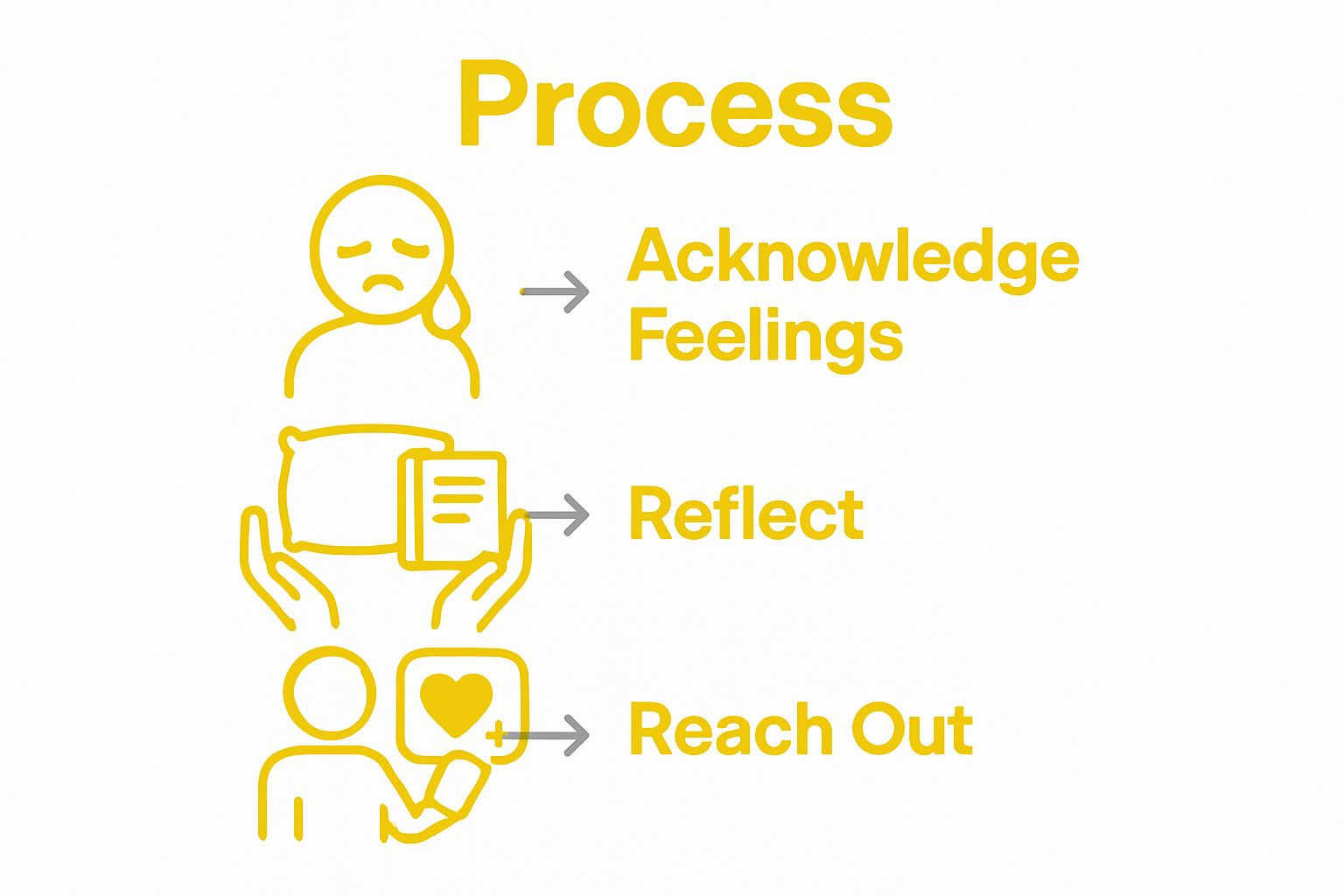
In this guide, we’ll explore five healing steps to help you navigate loss: from acknowledging your emotions and creating safe spaces for reflection, to building supportive connections and healthy routines that anchor you through change.
Because while grief may change your story, it doesn’t end it. With time, compassion, and care, pain can become a teacher. And your heart, a testament to love’s enduring strength.
Table of Contents
- Step 1: Acknowledge Your Feelings And Loss
- Step 2: Create A Safe Space For Reflection
- Step 3: Seek Support From Trusted Individuals
- Step 4: Engage In Healthy Coping Mechanisms
- Step 5: Establish A Routine To Foster Stability
Quick Summary
| Key Point | Explanation |
|---|---|
| 1. Acknowledge your feelings honestly | Accepting your emotions is crucial for healing and recognizing that grief is unique to each person. |
| 2. Create a safe reflective space | Designate a personal area where you can explore emotions without distractions or judgment for effective healing. |
| 3. Seek support from trusted individuals | Reach out to compassionate people who can listen and validate your feelings, enhancing your emotional recovery. |
| 4. Engage in healthy coping mechanisms | Use activities like exercise or creative expression to process grief constructively and support emotional well-being. |
| 5. Establish a consistent routine | Maintaining a structured daily schedule offers stability and predictability, aiding in emotional regulation during grief. |
Step 1: Acknowledge Your Feelings and Loss
Coping with grief begins with a critical first step: honestly acknowledging your emotional experience. This initial phase requires tremendous courage and self compassion. Recognizing and accepting your feelings is not a sign of weakness but an essential part of healing. Your grief is unique and deeply personal – there is no universal roadmap or timeline for processing loss.
Emotional acknowledgment means creating a safe inner space where you can experience your feelings without judgment. This might involve sitting with intense emotions like profound sadness, anger, confusion, or numbness. Allow yourself to feel these sensations fully, understanding that each emotion is a natural response to significant loss. Suppressing or denying your feelings will only prolong your healing journey.
Practical ways to acknowledge your emotions include journaling about your experience, speaking with trusted friends or family members, or exploring professional grief support sessions designed to help you navigate complex emotional terrain. Some individuals find comfort in creating memory books, talking to a therapist, or participating in support groups where shared experiences can provide validation and understanding.
Important signs that you are successfully acknowledging your feelings include:
- Being able to discuss your loss without feeling overwhelmed
- Recognizing emotional triggers without becoming paralyzed
- Experiencing moments of genuine emotional release
- Feeling a gradual sense of acceptance, not forced closure
Remember that acknowledgment is not about eliminating pain but learning to carry it with grace and resilience. Your feelings are valid, and by facing them directly, you begin transforming grief from an insurmountable obstacle into a pathway of personal growth and healing.
Step 2: Create a Safe Space for Reflection
Creating a safe emotional sanctuary is crucial when navigating grief. This step transforms your healing journey from passive suffering to intentional processing. A safe space for reflection allows you to explore your emotions without external pressures or judgments, providing a compassionate environment where healing can genuinely begin.
Physical environment matters deeply in emotional processing. Choose a location that feels inherently comfortable and private – this might be a quiet corner of your home, a peaceful outdoor setting, or a dedicated personal room. Some individuals find solace in creating a small altar or memory space with meaningful photographs, candles, or objects that represent their lost loved one. Learn to trust your intuition about what environment feels most supportive during this vulnerable time.
Emotional safety requires establishing clear boundaries. Communicate with family and friends about your need for uninterrupted reflection time. This might mean setting specific hours where you are unavailable, using do not disturb settings on communication devices, or explicitly requesting privacy. Your emotional healing is paramount, and protecting your inner space is an act of profound self respect.
Practical tools for creating a reflective space include:
- Soft, comfortable seating or cushions
- Journals for writing thoughts and feelings
- Calming music or nature sounds
- Soft lighting or natural sunlight
- Comfortable temperature and minimal external distractions
Successful creation of a safe reflection space demonstrates itself through feelings of emotional openness, reduced anxiety when processing grief, and a sense of gentle inner calm. You will know you have achieved this step when entering your designated space feels like a relief rather than a burden, and when you can sit with your emotions without becoming overwhelmed.
Below is a table summarizing practical tools and materials you can use to create a safe space for emotional reflection, along with their purposes during the grieving process.
| Tool/Material | Purpose |
|---|---|
| Soft seating or cushions | Provides comfort and physical relaxation |
| Journal or notebook | Offers a private space for emotional expression |
| Calming music or nature sounds | Soothes the mind and encourages reflection |
| Soft lighting or sunlight | Creates a peaceful, reassuring atmosphere |
| Meaningful personal objects | Helps connect with memories and foster healing |
| Comfortable room temperature | Promotes ease and prolonged presence in the space |
| Minimal external distractions | Encourages focus on personal emotions |
Step 3: Seek Support from Trusted Individuals
Reaching out for support is not a sign of weakness, but a profound act of courage and self compassion. Grief can feel isolating, making it tempting to withdraw from connections. However, sharing your experience with trusted individuals creates a crucial lifeline during emotional recovery. According to mental health research, connecting with supportive people significantly helps process complex emotional experiences.
Identifying your support network requires honest self reflection. Not everyone in your life will have the emotional capacity or understanding to provide meaningful support. Look for individuals who can listen without judgment, offer compassion without trying to fix your pain, and respect your unique grieving process. These might be close family members, long standing friends, spiritual advisors, or professional counselors who specialize in grief support.
Communicating your needs becomes an essential skill during this vulnerable time. Be direct and specific about what type of support would be helpful. Some people prefer practical assistance like help with daily tasks, while others need emotional presence through listening and validation. Practice articulating your emotional boundaries and comfort levels when discussing your loss. This might mean requesting specific types of conversations or setting clear expectations about how much you want to share.
Potential support sources include:
- Close family members who knew your loved one
- Long term friends with emotional intelligence
- Professional grief counselors
- Support groups specifically designed for grief
- Spiritual or religious community leaders
Successful support seeking demonstrates itself through feeling increasingly understood, experiencing moments of genuine connection, and sensing a gradual reduction in emotional isolation. You will know you are making progress when conversations about your loss feel less overwhelming and more like a healing dialogue. Remember that seeking support is an ongoing process, and it is okay to adjust your support network as your grief journey evolves.
Step 4: Engage in Healthy Coping Mechanisms
Healthy coping mechanisms transform grief from an overwhelming emotional experience into a pathway of personal growth. This critical step involves intentionally selecting activities and practices that support your emotional, physical, and psychological well-being. According to psychological research, adopting constructive strategies helps process complex emotions and prevents potential long-term emotional blockages.
Understanding that grief is not linear is crucial. Some days will feel more challenging than others, and your coping mechanisms must be flexible and compassionate. Physical movement becomes an essential tool in emotional processing. This might involve gentle yoga, daily walks in nature, swimming, or any form of exercise that feels nurturing rather than punishing. Movement helps release stored emotional tension and creates space for healing.
Creative expression offers another powerful avenue for processing grief. Journaling, painting, music, poetry, or any artistic endeavor can provide a safe outlet for emotions that feel too complex for verbal communication. These activities allow you to externalize your inner experience, creating a tangible representation of your emotional journey. The goal is not to create perfect art, but to engage in a healing process.
Some effective healthy coping mechanisms include:
- Mindfulness meditation practices
- Regular physical exercise
- Creative arts and journaling
- Connecting with nature
- Structured grief counseling
- Maintaining consistent sleep and nutrition routines
Successful engagement with healthy coping mechanisms reveals itself through subtle but significant changes. You will notice increased emotional resilience, moments of genuine peace, and a growing ability to hold your grief with compassion. The process is not about eliminating pain, but learning to carry it with greater ease and understanding. Remember that healing is not linear, and each small step towards self-care is a profound act of personal transformation.
Step 5: Establish a Routine to Foster Stability
Establishing a consistent routine becomes your emotional anchor during the unpredictable waves of grief. Routine provides structure when your inner world feels chaotic, creating a sense of predictability and safety that supports healing. Grief can disrupt normal functioning, making even simple daily tasks feel overwhelming, so a thoughtful routine becomes a powerful tool for emotional regulation and gradual recovery.
Designing your routine requires gentle self compassion and realistic expectations. Start by identifying core daily activities that ground you physically and emotionally. This might include consistent sleep schedules, regular meal times, morning meditation, or evening reflection periods. The most effective routines are personalized and flexible, allowing space for emotional fluctuations while maintaining an underlying sense of stability. Research on psychological resilience suggests that structured daily practices can significantly improve emotional processing and mental health during challenging periods.
Integrate both practical and nurturing elements into your routine. Practical aspects might include setting specific work hours, maintaining household responsibilities, and managing financial or legal tasks related to your loss. Nurturing elements could involve dedicated self care time, journaling, gentle exercise, or connecting with supportive individuals. The key is creating a balanced framework that supports your emotional healing without feeling restrictive or overwhelming.
Essential components of a stabilizing routine include:
- Consistent sleep and wake times
- Regular meal schedules
- Daily movement or exercise
- Dedicated emotional processing time
- Structured social interactions
- Mindfulness or meditation practices
Successful routine establishment manifests through increased emotional predictability, reduced anxiety, and a growing sense of personal agency. You will know you are making progress when daily tasks feel more manageable, and you experience moments of calm amidst the grief.
This table outlines essential components for a stabilizing daily routine, as well as the key benefits each component provides during emotional recovery from grief.
| Routine Component | Key Benefit |
|---|---|
| Consistent sleep times | Enhances rest, emotional stability, and recovery |
| Regular meal schedules | Ensures physical nourishment and daily rhythm |
| Daily movement/exercise | Reduces tension and promotes emotional resilience |
| Emotional processing time | Encourages healing through mindful reflection |
| Structured social time | Reduces isolation and fosters supportive connections |
| Mindfulness practices | Promotes calm, clarity, and presence in daily life |
Remember that routine is not about perfection, but about creating a compassionate structure that supports your healing journey.
Ready to Turn Grief Into a Pathway for Growth?
Navigating grief can leave you feeling overwhelmed and alone. If you are struggling to acknowledge your emotions, create safe spaces for healing, or find healthy support systems, you are not alone. The pain of loss is real. If you want gentle guidance from compassionate coaches and healers who specialize in emotional resilience and well-being, Plentiful is here when you are ready.

Let us help you rediscover your strength. Explore transformative grief exploration support sessions and learn to trust yourself again through intuition learning sessions. Visit Plentiful now and begin your journey to healing and personal growth today. Your story does not end with loss. Make your next step count.
Frequently Asked Questions
How can I acknowledge my feelings when coping with grief?
To acknowledge your feelings, start by creating a safe space to sit with your emotions without judgment. Try journaling daily about your experiences or discussing them with trusted friends to facilitate emotional recognition.
What are some healthy coping mechanisms for transforming grief into personal growth?
Engage in healthy coping mechanisms such as mindfulness meditation, regular physical exercise, or creative activities like journaling. Choose at least two activities to incorporate into your weekly routine to promote emotional well-being.
How can I establish a routine to provide stability during my grieving process?
Create a daily routine that includes consistent sleep and wake times, regular meals, and scheduled time for self-care activities. Aim to develop a balanced framework within one to two weeks that supports both practical tasks and emotional processing.
What steps can I take to seek support from trusted individuals?
Begin by identifying people in your life who can listen empathetically and respect your grieving process. Practice articulating your needs and reaching out for support, whether it’s through conversations or joining a grief support group, within the next few days.
How do I create a safe emotional space for reflecting on my grief?
Select a physical location that feels private and comfortable for emotional reflection, and set boundaries with others about your need for uninterrupted time. Create this safe space within a week, incorporating personal items that remind you of your lost loved one to enhance your emotional sanctuary.
How do I recognize progress in my grief journey?
You can recognize progress when conversations about your loss feel less overwhelming, and you experience moments of genuine emotional release. Track these feelings over time and notice any shifts in your emotional resilience, aiming for gradual changes within a month.
Recommended
- How To Get Through Grief – Plentiful
- Grief Support For Life with Jamie Metzgar
- Work with a Grief Coach to Help Navigate Loss | Plentiful
- Support for Navigating Grief | 12 Grief & Loss Sessions for Healing
- 14 Ways to Deal with Anger After a Breakup
- Unlocking Calm: The 20-Minute Meditation Guide
Want your life to be more Plentiful?
Sign up for stories, experience info and launches, and event invites delivered right to your inbox.
Unsubscribe anytime.