Most people drift through their careers without a clear direction… busy, but not fulfilled. A vision statement is the antidote. Done right, it becomes your compass: a bold declaration of who you’re becoming and the life you’re building, guiding every decision with clarity and purpose.
The problem? Over 80% of professionals write a vision statement once and never revisit it. That’s like mapping out your dream destination, then tossing the map in a drawer. A true vision statement isn’t meant to gather dust—it’s meant to shape your daily actions, align with your values, and pull you toward your future with focus and energy.
In this guide, you’ll learn how to create a vision statement that doesn’t just inspire you. It transforms how you live and work.
If you have a clear vision but no practical next step, use our goal-setting strategies to choose one action, plan for obstacles, and review what you learn.
Table of Contents
- Step 1: Identify Your Core Values And Beliefs
- Step 2: Define Your Long-Term Goals And Aspirations
- Step 3: Craft A Clear And Inspiring Vision Statement
- Step 4: Align Your Vision Statement With Your Daily Actions
- Step 5: Review And Revise Your Vision Statement Periodically
Quick Summary
| Key Point | Explanation |
|---|---|
| 1. Identify core values and beliefs | Reflect on personal achievements to understand what truly matters to you, guiding your vision statement creation. |
| 2. Define long-term goals and aspirations | Create ambitious, measurable objectives that align with identified values, serving as a clear roadmap for your future. |
| 3. Craft a compelling vision statement | Synthesize your core values and goals into an inspiring statement that motivates and guides your professional journey. |
| 4. Align daily actions with your vision | Regularly assess and adjust your daily habits to ensure they support the vision you’ve articulated. |
| 5. Review and revise periodically | Regularly revisit your vision statement to ensure it remains relevant and aligned with your personal and professional growth. |
Step 1: Identify Your Core Values and Beliefs
Creating a vision statement begins with understanding the foundational elements that drive your professional and personal purpose: your core values and beliefs. This initial step is critical because your vision statement will emerge directly from these deep, personal convictions that shape how you see the world and your unique place within it.
To start this process of self discovery, you’ll want to engage in a reflective practice that goes beyond surface level thinking. Begin by setting aside dedicated quiet time where you can think deeply without external interruptions. Consider moments in your life where you felt most authentically aligned with your true self. These could be professional achievements, personal challenges you’ve overcome, or instances where you made decisions that felt profoundly right.
Reflection involves asking yourself powerful questions that probe beneath typical professional narratives. What principles have consistently guided your most important decisions? When have you felt most proud of your actions? What work makes you feel genuinely excited and energized? These questions help uncover the underlying values that represent your core motivations.
Practical tools can support this introspective journey. Consider using a journal to document your reflections, creating mind maps that connect your experiences with core beliefs, or even speaking with trusted mentors or career coaches who can help you unpack your professional narrative. The goal is not just to list abstract values but to articulate how these values manifest in your professional and personal life.
Key indicators that you’ve successfully identified your core values include:
- A sense of clarity and emotional resonance when describing your principles
- Ability to provide specific examples of how these values have influenced your decisions
- Feeling of alignment between your stated values and your actual life choices
Remember that identifying core values is not a one time exercise but an ongoing process of self reflection and growth. Your values might evolve as you gain more life experience, but the fundamental exercise of understanding what truly matters to you remains constant. The vision statement you’ll ultimately create will be a powerful expression of these deeply held beliefs.
As you complete this step, you should feel a growing sense of personal understanding and intentionality. Your core values are the compass that will guide your vision statement, transforming it from a mere document into a meaningful roadmap for your professional journey.
Step 2: Define Your Long-Term Goals and Aspirations
After identifying your core values, the next crucial step in creating a powerful vision statement is defining your long-term goals and aspirations. This step transforms your internal values into external, tangible objectives that provide direction and purpose. Unlike short-term goals that focus on immediate results, long-term goals are ambitious horizons that stretch your potential and challenge you to think beyond current circumstances.
Begin by imagining yourself five to ten years in the future. What does success look like for you? This visualization isn’t about creating a rigid plan but about understanding the broader landscape of your professional and personal ambitions. According to research on goal setting, effective goals should be specific, measurable, achievable, realistic, and time-bound (SMART). This framework helps transform abstract dreams into concrete roadmaps.
To develop these goals, create a comprehensive exploration of your aspirations across multiple life domains. Consider your professional growth, personal development, financial objectives, relationship goals, and potential impact on your community. Each goal should connect deeply with the core values you identified in the previous step. For instance, if one of your core values is continuous learning, a long-term goal might involve achieving advanced certifications or becoming a recognized expert in your field.
Writing your goals requires both imagination and pragmatism. Use present tense and craft statements that feel alive and motivating. Instead of writing “I want to grow my coaching practice,” frame it as “I am a sought-after coach who supports 100 clients annually and generates $250,000 in revenue.” This approach makes your goals feel immediate and achievable.
Key elements to consider when defining your long-term goals include:
- Alignment with your core personal and professional values
- Potential for personal growth and transformation
- Measurable milestones that track your progress
- Flexibility to adapt as your journey evolves
Expect your goals to undergo refinement. The process of defining long-term aspirations is not about creating a perfect, unchangeable blueprint but about establishing a dynamic framework that can accommodate personal growth and unexpected opportunities. Regularly revisit and adjust your goals, treating them as living documents that reflect your evolving understanding of yourself and your potential.
By the end of this step, you should feel a sense of excitement and clarity. Your long-term goals are now articulated with specificity and passion, serving as a powerful foundation for your emerging vision statement. These goals are not just destinations but invitations to continuous personal and professional transformation.
Step 3: Craft a Clear and Inspiring Vision Statement
With your core values and long-term goals established, you are now ready to synthesize these elements into a powerful, compelling vision statement. This step transforms your internal reflections into an external declaration of purpose that will guide and motivate you through future challenges and opportunities.
Crafting a vision statement requires a delicate balance between ambition and practicality. Explore a personalized discovery process that helps you distill your complex aspirations into a concise, resonant narrative. Your vision statement should feel like a magnetic north star—clear enough to provide direction, yet inspiring enough to spark emotional commitment.
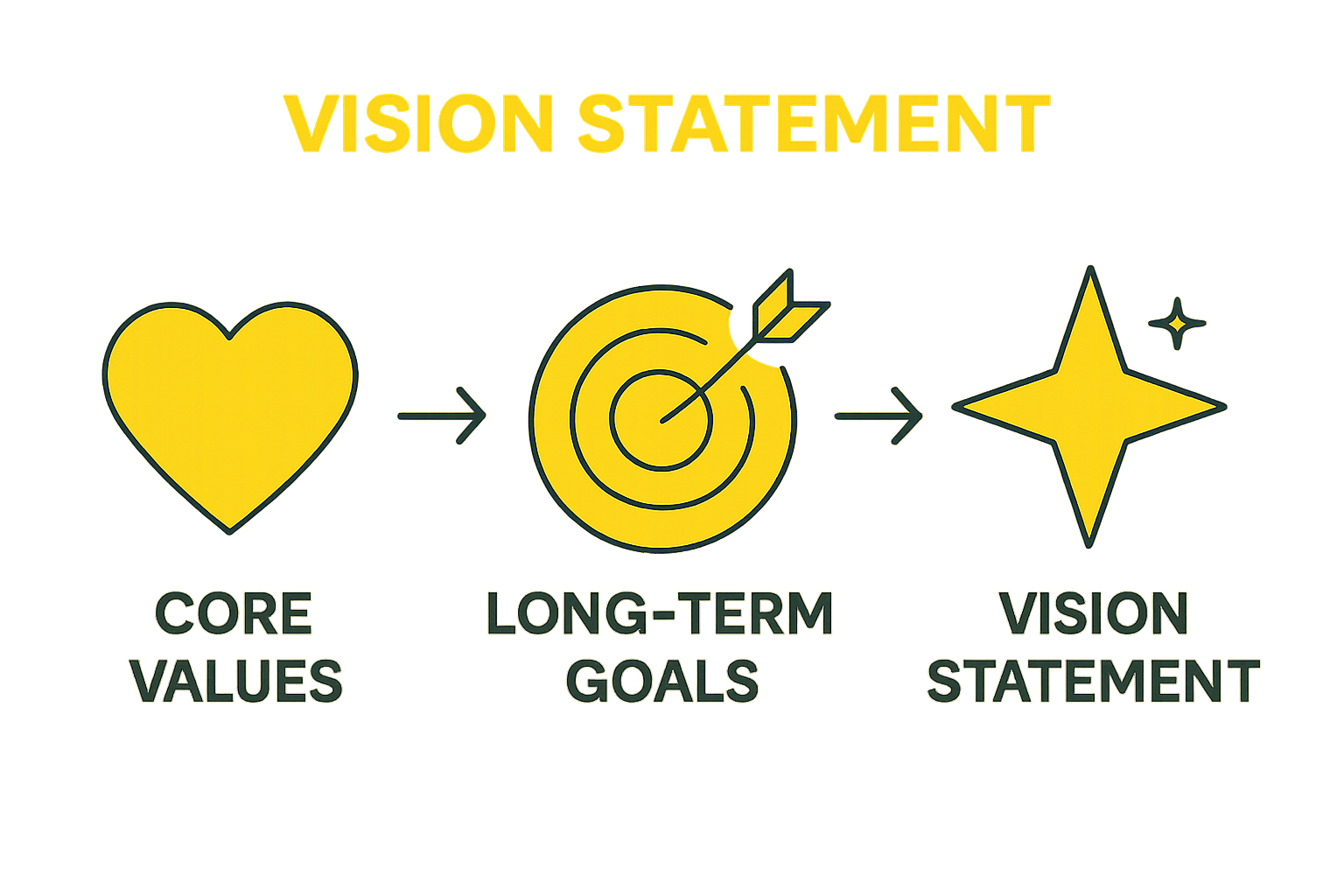
Begin by drafting multiple versions, treating each attempt as an experiment in self-articulation. Start your statement with strong, present-tense language that communicates your ultimate professional and personal aim. Think of it as a promise to yourself about the impact you want to create. For example, instead of writing “I hope to become a successful coach,” craft a statement like “I am a transformative coach who empowers professionals to unlock their most authentic potential and create meaningful, purpose-driven careers.”
The most effective vision statements share several critical characteristics. They are future-oriented, emotionally engaging, and reflect your unique perspective. They transcend mundane professional objectives and speak to a broader mission. Consider how your statement connects to wider societal needs or personal growth trajectories. Your words should not just describe what you do, but why you do it and the profound difference you aim to make.
Practical strategies for refining your vision statement include:
- Reading your draft aloud to assess its emotional resonance
- Seeking feedback from trusted mentors or colleagues
- Ensuring the statement feels authentic and genuinely motivating
- Checking that it connects clearly to your previously identified core values
Remember that your vision statement is not a static document but a dynamic expression of your evolving professional identity. It should be challenging enough to inspire continuous growth yet specific enough to provide clear guidance. Treat it as a living blueprint that can be periodically revisited and refined as you gain more experience and insight.
By the conclusion of this step, you should have a vision statement that feels simultaneously ambitious and achievable. It should create a sense of excitement about your professional journey and provide a clear philosophical framework for making future decisions. Your vision statement is more than words—it’s a declaration of your professional purpose and potential.
Step 4: Align Your Vision Statement with Your Daily Actions
Now that you have crafted a powerful vision statement, the critical work begins of translating those aspirational words into concrete, everyday behaviors. Alignment is not about perfection but about consistent, intentional actions that gradually bring your vision to life. This step transforms your vision from an abstract concept into a lived reality.
Start by conducting a comprehensive audit of your current daily routines and professional practices. Examine how your existing habits either support or contradict the vision you’ve created. This isn’t about radical overnight transformation but strategic, incremental adjustments. Explore morning routines that can help reinforce your professional goals and create momentum toward your vision.
According to research on organizational alignment, successful implementation requires breaking down your vision into specific, measurable behaviors. Create a personal accountability framework where you regularly assess whether your daily actions are moving you closer to or further from your defined vision. This might involve developing a weekly reflection practice where you honestly evaluate your professional choices and their alignment with your core purpose.
Practical strategies for alignment include designing intentional decision making filters. Before committing to a project, client, or opportunity, run it through the lens of your vision statement. Ask yourself: Does this action directly contribute to the professional impact I want to create? Will this move me closer to my long-term goals? This approach transforms your vision from a passive document into an active decision making tool.
Key indicators of successful vision-action alignment include:
- Increased sense of professional clarity and purpose
- Reduced time spent on misaligned activities
- Growing confidence in your professional trajectory
- Measurable progress toward long-term goals
Remember that alignment is an ongoing process, not a destination. Your vision will evolve, and so will the actions required to manifest it. Build flexibility into your approach, treating your vision as a dynamic compass rather than a rigid map. Periodic reassessment ensures that your daily actions continue to reflect your most authentic professional aspirations.
By the end of this step, you should feel a profound sense of integration between your inner vision and outer actions. Your vision statement is no longer just words on a page but a living, breathing framework that guides your professional decisions. Each deliberate action becomes a brushstroke in the larger masterpiece of your professional journey, creating alignment that is both purposeful and inspiring.
Step 5: Review and Revise Your Vision Statement Periodically
A vision statement is not a static document but a living blueprint that requires regular nurturing and refinement. Periodic review transforms your vision from a one-time exercise into a dynamic tool for continuous personal and professional growth. This final step ensures that your vision statement remains relevant, inspiring, and aligned with your evolving professional journey.
Establish a consistent review cycle that matches the rhythm of your professional development. According to research on institutional effectiveness, most successful organizations recommend reviewing strategic documents every six to twelve months. For individual professionals, this might translate to a structured biannual or annual reflection process where you critically examine your vision statement’s continued relevance.
During these review sessions, create a comprehensive assessment framework that goes beyond surface level evaluation. Examine not just what has changed in your professional landscape, but how you have transformed as a professional. Consider the goals you’ve achieved, the challenges you’ve encountered, and the unexpected opportunities that have emerged. Your vision statement should feel like a living document that reflects your growth, not a restrictive contract that limits your potential.
The review process involves deep introspection and honest assessment. Pull out your original vision statement and compare it against your current professional reality. Ask yourself powerful questions: Does this statement still ignite my passion? Do these words accurately represent my current aspirations? Have my core values shifted? This isn’t about wholesale reinvention but about subtle, meaningful recalibration that keeps your vision statement authentically aligned with your professional identity.
Key elements to evaluate during your vision statement review include:
- Relevance of existing goals and aspirations
- Alignment with current professional capabilities
- Emotional resonance and motivational impact
- Consistency with your most recent personal and professional experiences
Remember that revision is not a sign of weakness but of strength and self-awareness. Professional growth is rarely linear, and your vision statement should be flexible enough to accommodate unexpected detours and discoveries. Treat each review as an opportunity for recommitment, allowing yourself the grace to adjust your trajectory while maintaining the core essence of your professional purpose.
By the end of this step, you should feel a renewed sense of clarity and excitement. Your vision statement is no longer a distant, theoretical construct but a dynamic companion in your professional journey. Each review becomes a celebration of your growth, a moment of recommitment to your most authentic professional self, ensuring that your vision continues to inspire and guide you through changing landscapes and emerging opportunities.
Below is a checklist table to help ensure your vision statement process is effective, covering the key criteria for each step discussed in the article.
| Step | Completion Criteria |
|---|---|
| Identify Core Values and Beliefs | Clarity about core values, supported by real examples, and emotional resonance with your principles |
| Define Long-Term Goals and Aspirations | Goals are specific, measurable, and align with core values; genuine excitement and clarity present |
| Craft Vision Statement | Statement is concise, future-oriented, emotionally engaging, and authentic to your ambitions |
| Align Vision with Daily Actions | Daily habits and choices reflect your stated vision and long-term objectives |
| Review and Revise Regularly | Vision statement is revisited at least every 6-12 months and adjusted for continued relevance |
Bring Your Vision Statement to Life with Support from Plentiful
You have clarified your core values, articulated your long-term goals, and even crafted a compelling vision statement. But acting on these insights can feel overwhelming. Many readers reach this point and struggle to align daily decisions or meaningful action with their bigger vision. The gap between intention and transformation is real, and you are not alone if you feel uncertain about your next move.

What if you connected with expert coaches and transformational guides who help you make your vision a reality? At Plentiful, you can access one-to-one sessions, empowering workshops, and digital content designed to move vision into action. Whether you want help uncovering your core purpose or need practical support bringing your vision statement to life, our worldwide community of coaches, healers, and guides is ready to help you create lasting change. Do not let your vision stay on paper—make it your daily reality. Visit Plentiful now and discover the right support to build your most authentic future.
Frequently Asked Questions
What is a vision statement?
A vision statement is a clear and inspiring declaration of your long-term goals and aspirations, serving as a guiding framework for your professional journey.
How do I identify my core values for my vision statement?
To identify your core values, engage in reflective practices, ask yourself profound questions about your motivations, and document your reflections to uncover what truly matters to you.
Why is it important to align my vision statement with my daily actions?
Aligning your vision statement with daily actions ensures that your everyday decisions and practices consistently support your long-term goals, helping to create a coherent path towards your professional aspirations.
How often should I review my vision statement?
It is recommended to review your vision statement at least every six to twelve months to ensure that it remains relevant and aligned with your evolving professional identity.
Recommended
- Why Plentiful? We’re Here to Help You Chase Your Dreams
- Manifestation Techniques That Turn Dreams Into Reality
- Living On Purpose | Kate Nasuti
- Develop Your Dreamlife | Austin Kory
- Soul Replenishment | Rose Psychick
- Find Your Life Purpose | Milagros Phillips
Want your life to be more Plentiful?
Sign up for stories, experience info and launches, and event invites delivered right to your inbox.
Unsubscribe anytime.