




Art has always been more than color on a canvas or clay shaped by hand… it’s a mirror of the human spirit. Increasingly, research is proving what artists and healers have known for centuries: creative expression has the power to heal.
Studies published in the Journal of the American Art Therapy Association show that even a single hour of structured art therapy can lower cortisol levels, the body’s primary stress hormone. Other clinical research links art-making to reduced symptoms of anxiety, depression, and trauma — outcomes that rival or even surpass traditional talk therapy for many people.
Why does it work? Because art taps into a part of us that words often can’t reach. When you put paint to canvas, shape clay, or sketch a memory, you’re not just making art — you’re unlocking emotions stored deep in your subconscious. You’re giving form to feelings that might otherwise stay stuck.
In today’s high-stress, always-on world, healing through art offers a sanctuary: a way to regulate emotions, reclaim a sense of agency, and build resilience. This guide explores the science, psychology, and real-world applications of artistic healing — and shows you how creativity can become one of the most powerful tools in your mental wellness toolkit.
Table of Contents
- What Is Healing Through Art And Its Core Principles?
- Why Healing Through Art Is Important In Today’s World
- How Healing Through Art Facilitates Emotional And Mental Wellness
- Key Concepts And Theories Behind Healing Through Art
- Real-World Applications Of Healing Through Art In Professional Practice
Quick Summary
| Takeaway | Explanation |
|---|---|
| Engaging in art boosts emotional expression | Artistic activities allow individuals to externalize feelings in a tangible way, serving as a powerful emotional outlet. |
| Art fosters personal empowerment | Through creative processes, individuals gain insight into their emotions and develop stronger self-understanding and agency. |
| Art therapy enhances mental resilience | Engaging in creative expression develops adaptive coping strategies, making it a valuable tool for mental health. |
| Effective for diverse professional settings | Art therapy is used in mental health, rehabilitation, corporate wellness, and educational contexts to support emotional exploration and healing. |
| Art serves as a sanctuary for self-exploration | In a high-stress world, art offers a safe space for individuals to process complex emotions and experiences effectively. |
What is Healing Through Art and Its Core Principles?
Healing through art represents a profound therapeutic approach that transforms creative expression into a powerful mechanism for psychological and emotional restoration. At its core, this practice recognizes art not merely as an aesthetic endeavor but as a dynamic pathway to personal healing and self-discovery.
The Essence of Creative Recovery
Healing through art operates on the fundamental principle that creative processes can unlock deep emotional landscapes, providing individuals with alternative methods of processing complex feelings and experiences. When traditional verbal communication feels limited or challenging, art becomes a universal language of emotional expression.
According to NYU Steinhardt, art therapy integrates clinical efficacy with holistic wellness by focusing on strengthening vital aspects of individuals rather than concentrating on deficits. This approach offers a whole-body healing experience that goes beyond traditional therapeutic interventions.
Core Principles of Artistic Healing
The fundamental principles of healing through art include:
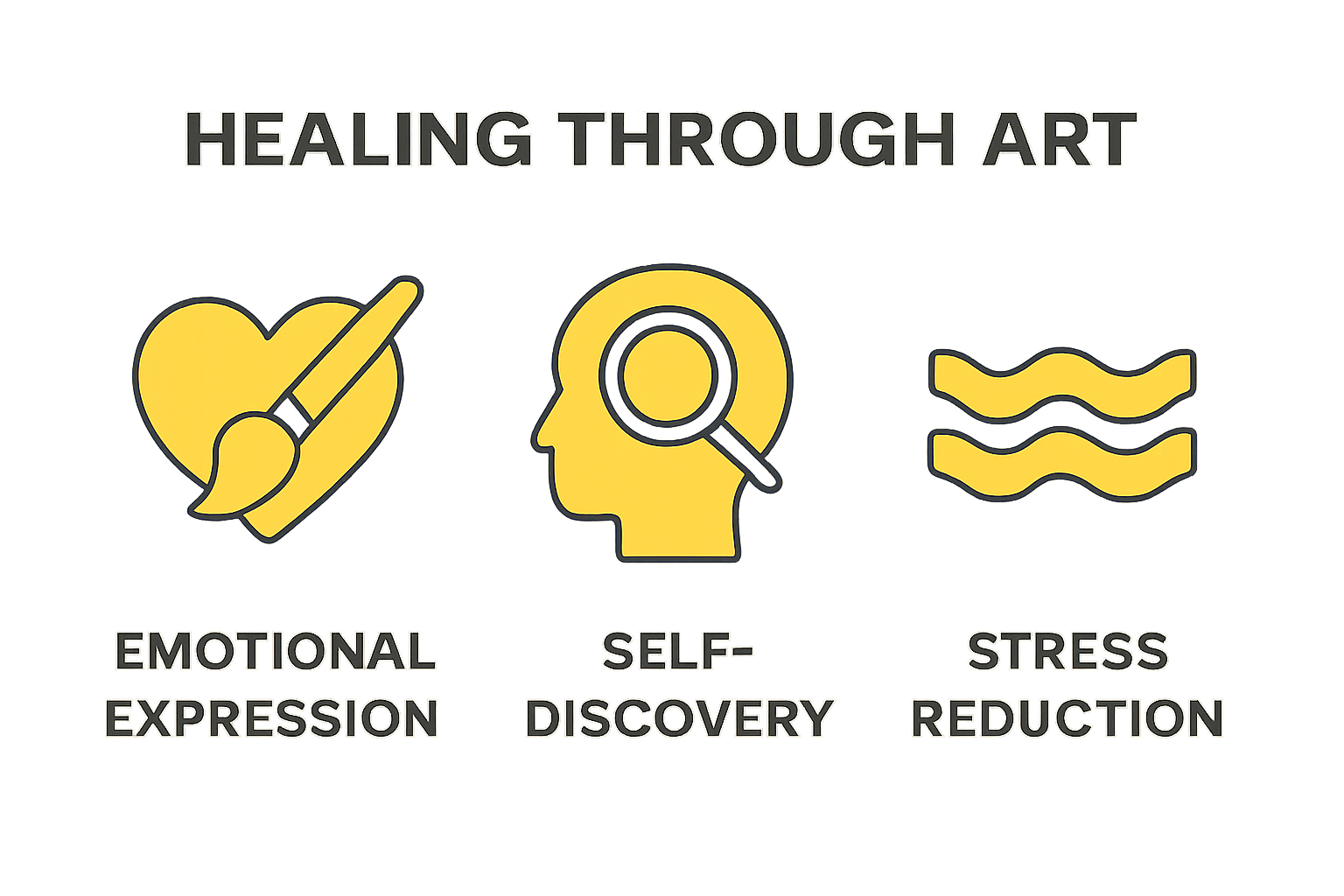
- Emotional Expression: Creating art allows individuals to externalize internal experiences in tangible forms
- Self-Discovery: Artistic processes reveal unconscious thoughts and feelings
- Stress Reduction: Engaging in creative activities promotes relaxation and emotional regulation
Artistic healing transcends traditional treatment models by empowering individuals to become active participants in their own recovery journey.
To clarify the foundational approach of healing through art, here is a concise table summarizing its three core principles and their specific purposes.
| Core Principle | Purpose |
|---|---|
| Emotional Expression | Externalizes internal experiences into tangible forms |
| Self-Discovery | Reveals unconscious thoughts and feelings |
| Stress Reduction | Promotes relaxation and emotional regulation |
For professionals interested in deeper understanding, read more about art therapy techniques and how they can be integrated into holistic wellness practices.
Why Healing Through Art is Important in Today’s World
In an era marked by unprecedented stress, digital overwhelm, and emotional complexity, healing through art emerges as a critical mechanism for personal restoration and psychological resilience. The modern world demands innovative approaches to mental wellness that transcend traditional therapeutic models.
Mental Health in a High-Stress Environment
Contemporary society presents unique psychological challenges that can overwhelm individual coping mechanisms. Work pressures, technological burnout, social media comparison, and global uncertainty create persistent emotional strain. Art provides a powerful counterpoint to these stressors, offering a sanctuary of self-expression and emotional processing.
Research from Scientific Journals demonstrates that engaging in creative activities can significantly boost self-esteem and provide individuals with a sense of accomplishment, particularly during challenging life transitions.
Holistic Wellness Through Creative Expression
Healing through art addresses multiple dimensions of human experience:
- Emotional Regulation: Art allows individuals to externalize complex feelings
- Psychological Resilience: Creative processes develop adaptive coping strategies
- Personal Empowerment: Artistic creation reinforces individual agency and self-understanding
Moreover, artistic healing transcends traditional therapeutic boundaries. It democratizes mental health support, making emotional exploration accessible to individuals who might feel intimidated by conventional counseling approaches.
Professionals seeking structured guidance can explore our specialized art therapy class designed for personal growth and emotional wellness.
How Healing Through Art Facilitates Emotional and Mental Wellness
Healing through art represents a sophisticated psychological intervention that transforms creative expression into a powerful mechanism for emotional regulation and mental health restoration. By engaging artistic processes, individuals can access deeper emotional landscapes, process complex feelings, and develop profound self understanding.
Neurological Mechanisms of Artistic Healing
Creative activities trigger intricate neurological responses that promote psychological well-being. When individuals engage in art making, their brains release neurotransmitters like dopamine and serotonin, which are directly associated with pleasure, relaxation, and emotional stability. These neurochemical shifts create a natural, sustainable pathway to emotional healing.
According to Art Therapy Journal, art therapy effectively supports personal treatment goals by improving cognitive functions, fostering self awareness, and reducing psychological distress.
Emotional Processing Through Creative Expression
Art provides a unique communication channel for emotions that might otherwise remain unexpressed:
- Nonverbal Communication: Art allows expression beyond linguistic limitations
- Symbolic Representation: Complex feelings can be externalized through visual metaphors
- Safe Emotional Distance: Creative processes provide psychological safety during challenging explorations
Moreover, artistic healing offers a structured yet flexible approach to mental wellness. By translating internal experiences into tangible forms, individuals gain perspective, insight, and a sense of agency over their emotional landscapes.
For those interested in personalized guidance, explore our curated art therapy sessions designed to support individual mental wellness journeys.
Key Concepts and Theories Behind Healing Through Art
Healing through art represents a sophisticated interdisciplinary approach that integrates psychological, neurological, and creative methodologies to support holistic human wellness. By understanding the fundamental theories underlying artistic healing, individuals can more effectively leverage creative processes for emotional and mental restoration.
Psychological Foundations of Artistic Expression
The psychological theories supporting healing through art are deeply rooted in understanding human emotional processing. Symbolic representation emerges as a critical mechanism for translating complex internal experiences into external, comprehensible forms. Artistic expression provides a unique language that transcends verbal communication, allowing individuals to explore and communicate feelings that might otherwise remain unexpressed.
According to National Institutes of Health research, art therapy integrates multiple therapeutic approaches, including cognitive behavioral techniques and mindfulness practices, creating a comprehensive framework for emotional healing.
Core Theoretical Frameworks
Several fundamental theories underpin the healing potential of artistic expression:
- Jungian Archetypal Theory: Art as a pathway to accessing collective unconscious and personal symbolism
- Narrative Therapy: Creative expression as a method of reconstructing personal stories and identity
- Cognitive Reframing: Art as a tool for transforming negative thought patterns
These theoretical approaches share a common understanding: creative processes are not merely aesthetic experiences but powerful instruments of psychological transformation.
The following table compares key theoretical frameworks discussed in the article, summarizing each theory’s main concept and how it informs the practice of healing through art.
| Theory | Main Concept | Role in Artistic Healing |
|---|---|---|
| Jungian Archetypal Theory | Accesses the collective unconscious and personal symbolism | Helps uncover deep personal and universal meanings |
| Narrative Therapy | Reconstructs personal stories and identity | Facilitates retelling and reframing of life experiences |
| Cognitive Reframing | Transforms negative thought patterns | Encourages positive shifts in perspective through art |
Professionals interested in deeper theoretical exploration can explore our comprehensive art therapy guide for advanced insights into these transformative methodologies.
Real-World Applications of Healing Through Art in Professional Practice
Healing through art has evolved from an experimental approach to a recognized therapeutic intervention with demonstrable outcomes across diverse professional settings. Its practical applications extend far beyond traditional counseling, offering innovative solutions for mental health, rehabilitation, and personal development.
Clinical and Healthcare Interventions
Art therapy emerges as a powerful complementary treatment in medical and psychological contexts. Healthcare professionals increasingly integrate creative approaches to address complex emotional and neurological challenges. Patients struggling with trauma, chronic illness, cognitive decline, and mental health disorders find meaningful recovery pathways through structured artistic interventions.
Research from Clinical Psychology indicates that targeted art therapy sessions can significantly reduce symptoms of depression, anxiety, and stress, particularly for individuals experiencing neurological challenges.
Professional Domains of Artistic Healing
Art therapy demonstrates remarkable versatility across professional domains:
- Mental Health Treatment: Supporting patients with PTSD, depression, and anxiety disorders
- Rehabilitation Services: Assisting patients in neurological recovery and physical trauma rehabilitation
- Corporate Wellness: Developing emotional intelligence and stress management strategies
- Educational Settings: Supporting student mental health and developmental challenges
These applications underscore art’s transformative potential as a nuanced, adaptable therapeutic tool. By providing a non-threatening medium for emotional exploration, artistic interventions enable professionals to access deeper psychological landscapes.
Professionals seeking advanced training can explore our specialized art therapy guide designed to equip practitioners with cutting-edge therapeutic techniques.
Ready to Experience the Transformative Power of Healing Through Art?
Are you feeling overwhelmed by daily stress or struggling to express deep emotions? This article revealed how creative expression can unlock healing, but sometimes it is difficult to begin the journey alone. Whether you are seeking emotional regulation, personal empowerment, or a safe space for self-discovery, you do not have to navigate this process on your own.

Discover a network of expert art therapists and holistic wellness guides on Plentiful. Here you can join live sessions, classes, and personalized workshops that put the core principles of artistic healing into action. Act now to start your personal journey with guided support and proven methods from practitioners around the world. Explore your options and take your next step by visiting Plentiful’s holistic well-being services.
Frequently Asked Questions
What is healing through art?
Healing through art is a therapeutic approach that utilizes creative expression as a means of psychological and emotional restoration, allowing individuals to explore and process their emotions through artistic activities.
How does art therapy support mental health?
Art therapy supports mental health by providing a safe environment for emotional expression, facilitating self-discovery, and enhancing coping strategies through creative processes, which help individuals manage stress and promote psychological resilience.
What are the core principles of healing through art?
The core principles of healing through art include emotional expression, self-discovery, and stress reduction. These principles emphasize the importance of creativity in accessing deep emotional experiences and promoting holistic well-being.
Can anyone benefit from healing through art?
Yes, healing through art can benefit anyone, regardless of artistic skill. It democratizes emotional exploration and offers a non-threatening medium for individuals to express complex feelings and foster self-understanding.
Recommended
- Art Therapy Basics 2025
- Art Therapy by Valentina
- Online Art Therapy Class for Personal Growth | Valentina Freifeld
- How To Start a Healing Journey in 5 Steps
- How to Nurture Creativity for Meaningful Growth
Want your life to be more Plentiful?
Sign up for stories, experience info and launches, and event invites delivered right to your inbox.
Unsubscribe anytime.