







We’ve all had those conversations… the ones that leave us buzzing with insight, seen in our deepest truths, connected like we’ve known someone forever. But here’s the truth bomb: those moments don’t happen by accident. They’re not about luck. And they’re definitely not reserved for therapists, coaches, or the ultra-charismatic.
They happen because someone knew how to ask the right question.
Not a “how’s work?”, “how’s it going?”, or “what’s new?” kind of question.
But the kind that unlocks someone’s story. The kind that disarms the guarded.
The kind that makes you feel less alone in the world.
Here’s the thing: most people think you have to be born with some magical gift to spark those kinds of soul-level conversations. That it’s intuition. Or charisma. Or vibes.
It’s not. It’s a learnable skill.
This guide will show you how to ask questions that go way beyond surface-level banter. So you can spark real trust, foster deeper intimacy, and start building relationships that actually nourish you. Whether you’re a coach, leader, partner, or just someone who’s tired of small talk, these techniques will transform the way you connect.
Ready to go from polite to powerful? Let’s dive in.
Table of Contents
- Step 1: Identify Your Purpose For Asking Questions
- Step 2: Research Effective Questioning Techniques
- Step 3: Craft Open-Ended Questions To Ignite Dialogue
- Step 4: Practice Active Listening During Conversations
- Step 5: Reflect And Adjust Your Approach Based On Feedback
Quick Summary
| Key Point | Explanation |
|---|---|
| 1. Identify Your Purpose for Questions | Clarify your intention before asking to ensure your questions are effective and meaningful in conversations. |
| 2. Utilize Open-Ended Questions | Ask questions that promote deeper thinking and avoid simple yes or no responses to encourage dialogue. |
| 3. Practice Active Listening | Engage fully with the speaker to understand their perspective, which fosters genuine communication and connection. |
| 4. Reflect on Your Communication | After conversations, assess your techniques and seek feedback to continuously improve your questioning and listening skills. |
| 5. Create a Safe Conversational Space | Use empathetic and supportive approaches in questioning to build trust and encourage vulnerability in dialogue. |
Step 1: Identify Your Purpose for Asking Questions
Before diving into the art of asking powerful questions, you must first understand why you are asking them. The purpose behind your questions determines their effectiveness and potential to create meaningful connections. Think of questions as strategic tools designed to unlock insights, build trust, and foster deeper understanding.
According to Harvard Medical School, aligning the purpose of questioning with the specific types of questions is crucial for achieving your desired outcome. Are you seeking to understand someone’s perspective, explore their emotions, solve a problem, or support their personal growth? Each purpose requires a different questioning approach.
Start by clarifying your intention. If you want to build rapport, your questions should be gentle and exploratory. When aiming to help someone work through a challenge, your questions will need to be more probing and analytical. For professional coaching or personal development scenarios, your questions should encourage self-reflection and deeper thinking.
To effectively identify your purpose, ask yourself these guiding questions: What do I hope to achieve through this conversation? What type of information or emotional response am I seeking? How can my questions create a safe and supportive environment for genuine dialogue?
Consider creating a quick pre-conversation checklist:
- Clarify your primary objective
- Determine the emotional tone you want to set
- Select question types that align with your goal
- Prepare to listen more than you speak
Remember, powerful questions are not about interrogation but about creating a space for authentic exchange. Your purpose should always center on understanding, supporting, and connecting with the other person. By being intentional and clear about your questioning goals, you set the foundation for meaningful and transformative conversations.
Here is a checklist table to help you verify your questioning approach and ensure more meaningful conversations.
| Verification Step | What to Look For | Example or Indicator |
|---|---|---|
| Clarify Objective | Know why you are asking questions | Clear purpose in mind before starting |
| Set Emotional Tone | Foster a safe and supportive space | Conversational tone matches your goal |
| Align Question Types | Use questions that match your intention | Choose open-ended for deeper dialogue |
| Prepare to Listen | Plan to listen more than speak | Take mental notes, minimize interruptions |
| Observe Responses | Look for emotional engagement and vulnerability | Speaker pauses, shares openly |
| Seek Feedback | Get input on your communication style | Ask partners after conversations |
| Reflect and Adjust | Identify what to improve next time | Keep a feedback journal for progress |
Step 2: Research Effective Questioning Techniques
Researching effective questioning techniques transforms how you connect with others, turning ordinary conversations into powerful moments of insight and understanding. Mastering these techniques requires deliberate study and practice, moving beyond simple conversational patterns to create meaningful dialogue.
According to Central Michigan University, advanced questioning involves developing skills that prompt deeper thinking and more complex responses. This means learning to craft questions that do more than just extract information they invite reflection, emotional exploration, and personal growth.
Begin your research by studying different questioning frameworks. Open-ended questions are your primary tools these are questions that cannot be answered with a simple yes or no. They typically start with phrases like “How do you feel about…”, “What was your experience with…”, or “Can you tell me more about…”. These questions create space for nuanced, thoughtful responses that reveal underlying emotions and perspectives.
Expand your technique repertoire by exploring various questioning styles. Socratic questioning, for instance, involves asking progressive questions that challenge assumptions and stimulate critical thinking. Reflective questioning focuses on helping individuals explore their inner landscape, encouraging self-awareness and personal insight.
To develop your skills, consider these recommended learning resources:
- Communication skills books focused on questioning techniques
- Online courses about active listening and dialogue facilitation
- Professional coaching workshops
- Communication psychology seminars
Practice is essential in mastering questioning techniques. Start by observing skilled communicators podcasts, interviews, and coaching sessions can provide excellent models. Record yourself practicing different questioning approaches and analyze your technique. Pay attention to your tone, timing, and the depth of responses you generate.
The following table summarizes common questioning techniques and their main uses to help you choose the right approach for deeper conversations.
| Technique | Description | Main Use |
|---|---|---|
| Open-Ended Questions | Questions that cannot be answered with yes/no | Invites deeper reflection and sharing |
| Socratic Questioning | Progressive inquiries that challenge assumptions | Stimulates critical thinking |
| Reflective Questioning | Helps explore feelings and thoughts | Encourages self-awareness |
| Invitational Language | Uses warm, inviting prompts | Creates emotional safety |
| Paraphrasing | Restating speaker’s key points | Shows understanding and engagement |
Verify your progress by assessing whether your questions consistently achieve these goals: creating a safe conversational space, encouraging genuine sharing, promoting self-reflection, and deepening mutual understanding. The most powerful questions are those that make people pause, think deeply, and feel truly heard.
Step 3: Craft Open-Ended Questions to Ignite Dialogue
Crafting open-ended questions is an art form that transforms ordinary conversations into profound explorations of human experience. These questions are powerful catalysts that invite vulnerability, spark curiosity, and create space for genuine connection. The magic lies not in the words themselves, but in the intention and openness behind them.
According to Mediators Beyond Borders International, effective open-ended questions generate curiosity and surface underlying assumptions. They invite people to share their deeper truths beyond surface-level responses.
Design your questions to start with powerful prompts like “How…”, “What…”, and “Tell me more about…”. These linguistic tools crack open rigid thought patterns and encourage expansive thinking. Instead of asking “Are you happy?”, reframe to “What does happiness look like in your life right now?” This subtle shift transforms a potential dead-end interaction into an invitation for meaningful reflection.
Pay close attention to your question construction. Avoid leading questions that suggest a predetermined answer. Your goal is to create genuine curiosity, not to validate your own perspective. Questions should feel like gentle explorations, not interrogations. Practice asking questions that make people pause, reflect, and feel truly heard.
Consider these guidelines for crafting remarkable open-ended questions:
- Begin with genuine curiosity
- Use invitational language
- Avoid judgment or assumptions
- Create emotional safety
- Listen more than you speak
If you’re looking to dive deeper into creating meaningful conversations, or want to feel more confident going into high-impact conversations, we highly recommend our very own Becca Darr’s “Communicate With Impact & Influence” 1:1 session. During one focused session, Coach Becca will review some principles of 1:1 influence conversations with you. She will then coach you through preparation for an important conversation with a specific person. Finally, she will then practice key elements of that conversation with you with the goal of improving each round.
To verify your progress, observe the responses your questions generate. Powerful questions create noticeable shifts they provoke thoughtful responses, spark emotional engagement, and reveal layers of personal experience. When someone takes a deep breath before answering, leans in, or shows vulnerability, you’ll know you’ve crafted a truly transformative question.
Step 4: Practice Active Listening During Conversations
Active listening transforms conversations from superficial exchanges to profound connections. It goes beyond simply hearing words it involves fully engaging with the speaker’s emotional landscape, understanding their perspective, and creating a safe space for genuine expression.
According to The Greater Good Science Center, active listening requires complete presence and intentional engagement. The goal is not to prepare your response, but to truly understand the other person’s experience.
Physical positioning matters significantly in active listening. Face the speaker directly, maintain comfortable eye contact, and adopt an open body posture. Your body language communicates as much as your words. Lean slightly forward to signal interest, keep your arms uncrossed, and create an environment that says “I am fully here with you”.
Mastering the art of reflection is crucial. After the speaker shares something, paraphrase their key points to demonstrate you’ve understood. Use phrases like “What I hear you saying is…” or “It sounds like…” This technique validates their experience and allows them to clarify or expand on their thoughts.
Silence is a powerful listening tool.
Resist the urge to fill every moment with words. Comfortable pauses allow speakers to dive deeper into their thoughts, revealing insights they might not have initially shared. When you create space for silence, people often share their most authentic feelings.
Consider these critical active listening practices:
- Remove all digital distractions
- Suspend judgment
- Ask clarifying questions
- Show empathy through non-verbal cues
- Reflect before responding
To verify your active listening skills, observe the speaker’s reactions. When people feel genuinely heard, they become more relaxed, speak more openly, and their body language softens. You’ll notice increased trust and a deeper sense of connection.
Use the following table as a quick reference for active listening practices and how to recognize genuine engagement from your conversation partner.
| Active Listening Practice | How to Implement | Sign of Success |
|---|---|---|
| Remove Distractions | Silence phone, ignore screens | Speaker speaks more openly |
| Maintain Eye Contact | Face the speaker directly | Speaker relaxes noticeably |
| Use Reflective Paraphrasing | Restate what the speaker shares | Speaker nods, clarifies, expands |
| Allow Silence | Let pauses linger before responding | Speaker shares deeper feelings |
| Show Empathy Non-Verbally | Nod, smile, open body posture | Trust and warmth increase |
Remember, active listening is a skill that improves with intentional practice. Be patient with yourself, stay curious, and approach each conversation as an opportunity to truly understand another human being.
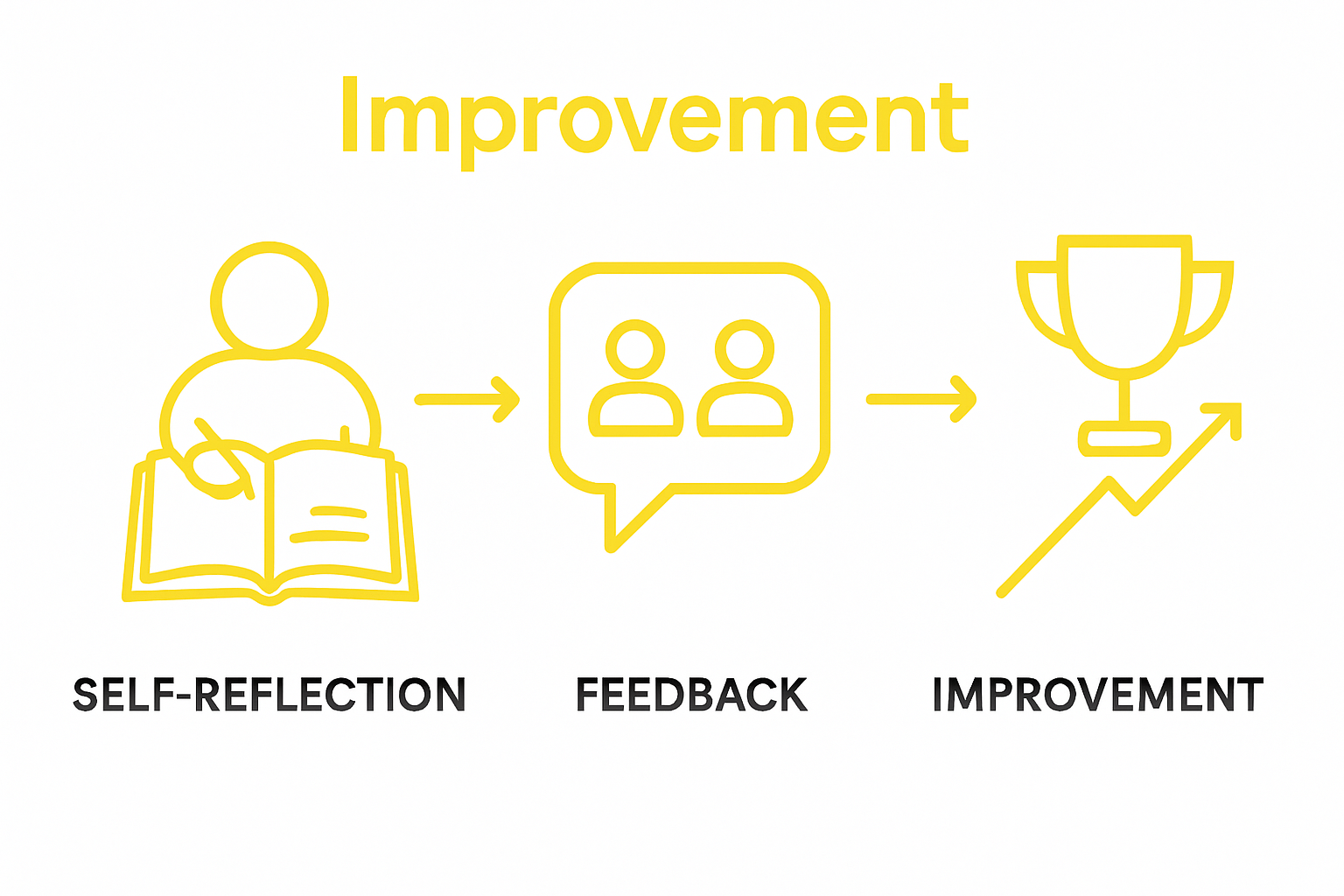
Step 5: Reflect and Adjust Your Approach Based on Feedback
Reflection is the secret ingredient that transforms good communication into exceptional dialogue. After engaging in meaningful conversations, you must create intentional space to examine your questioning techniques, listening skills, and overall conversational impact. This step is about honest self-assessment and continuous improvement.
According to University of Minnesota’s Office of Human Resources, powerful reflection involves asking yourself probing questions that challenge your current approach. Questions like “What worked well in my recent conversations?” and “Where did I notice resistance or discomfort?” become your tools for growth.
Develop a personal feedback journal where you document your conversational experiences. After each significant interaction, spend 10-15 minutes writing detailed observations. Note the questions that seemed to create meaningful dialogue, moments where the conversation felt stuck, and your emotional responses throughout the interaction. This practice transforms your communication skills from instinctive to intentional.
Seek external perspectives by asking trusted friends, colleagues, or mentors to provide honest feedback about your communication style. Request specific observations about your questioning techniques, listening skills, and ability to create safe conversational spaces. Constructive feedback is a gift that reveals blind spots you cannot see on your own.
Consider these critical reflection practices:
- Record and review conversation snippets
- Solicit direct feedback from conversation partners
- Practice radical self-honesty
- Identify specific behaviors to modify
- Celebrate communication wins
To verify your progress, look for tangible signs of improvement. Are your conversations becoming deeper and more meaningful? Do people seem more willing to share vulnerably with you? Are you asking more nuanced, thoughtful questions? These indicators suggest you’re developing advanced communication skills.
Remember that reflection is not about perfection but progression. Each conversation is an opportunity to learn, grow, and refine your approach to human connection.
 Embrace the journey of becoming a more empathetic, skilled communicator.
Unlock Deeper Connections With Expert Guidance
Are your conversations falling flat or staying on the surface, even when you want to connect on a deeper level? The article showed that truly powerful questions need intention, skill, and practice. If you struggle with crafting open-ended questions or want to grow your active listening abilities, you are not alone. Many people discover that meaningful dialogue takes more than just a good question. It requires support and the right tools, especially when trying to build trust or guide tough, vulnerable conversations.

Ready to transform your conversations and take your growth further? Explore one-on-one and group sessions with communication experts at Plentiful. Book a personalized coaching experience and put powerful questions into action. Start finding deeper connections today.
Frequently Asked Questions
What are powerful questions?
Powerful questions are open-ended inquiries designed to evoke deeper thought, reflection, and emotional exploration. They create space for meaningful conversations and connections.
How do I identify the purpose of my questions?
To identify the purpose of your questions, consider what you hope to achieve in the conversation, the type of information you seek, and how your questions can create a safe environment for dialogue.
What techniques can I use to craft better questions?
Using open-ended questions, Socratic questioning, and reflective questioning techniques can help you craft better questions that encourage deeper thinking and authentic sharing.
How can I improve my active listening skills?
To improve your active listening skills, focus on maintaining eye contact, reflecting key points back to the speaker, removing distractions, and allowing for pauses during the conversation.
Recommended
- How to Understand and Heal Your Inner Child
- Conversation Coaching | Communicate With Impact & Influence | Becca Darr
- Understanding the Importance of Authenticity in Life and Business
- 8 Spiritual Journaling Prompts for Deeper Self-Reflection
- Intuitive Clarity Mentorship | Sidse Powell
- Find Your Voice | Hossam Abostate
- Find Your Confidence | Hossam Abostate
Want your life to be more Plentiful?
Sign up for stories, experience info and launches, and event invites delivered right to your inbox.
Unsubscribe anytime.