Finding the perfect coach in 2025 can feel overwhelming when there are over 71,000 certified coaches worldwide according to the International Coaching Federation. You might think the most important factor is experience or a list of qualifications. The real difference lies in something completely unexpected. The best results come from a coach whose values and chemistry genuinely match yours, not just their résumé.
Table of Contents
- Understanding Your Coaching Needs And Goals
- Key Qualities To Look For In A Coach
- Evaluating Experience And Coaching Methods
- Making The Final Decision: Fit And Connection
Quick Summary
| Takeaway | Explanation |
|---|---|
| Identify your specific coaching needs | Conduct a self-assessment to clarify your personal and professional development objectives. |
| Look for emotional intelligence in a coach | Effective coaches demonstrate empathy, active listening, and powerful questioning skills that foster growth. |
| Evaluate a coach’s proven track record | Ensure the coach has tangible success with clients at similar career stages and can adapt their methods. |
| Assess personal chemistry and connection | Strong interpersonal chemistry is essential for a productive coaching relationship and overall success. |
| Align values and developmental objectives | Choose a coach whose professional ethics and goals align with your own for maximum effectiveness. |
Understanding Your Coaching Needs and Goals
Choosing the right coach requires deep self-reflection and a clear understanding of your personal and professional development objectives. Professional growth is not a one-size-fits-all journey, and identifying your specific needs is the critical first step in how to choose a coach who can genuinely transform your trajectory.
Mapping Your Personal and Professional Landscape
Before embarking on a coaching relationship, professionals must conduct a comprehensive self-assessment. Explore career development strategies that can help you pinpoint areas requiring strategic intervention. According to the U.S. Department of Education’s Needs Assessment Guidebook, effective goal setting involves identifying specific challenges and desired outcomes.
Your assessment should cover multiple dimensions:
- Career Progression: Are you seeking advancement, considering a career pivot, or looking to enhance leadership skills?
- Personal Development: What internal barriers might be limiting your potential?
- Skill Enhancement: Which specific competencies do you want to develop or refine?
Aligning Coaching Goals with Professional Aspirations
A national survey on professional coaching highlights the importance of targeted goal alignment. Research from medical education coaching studies emphasizes that successful coaching interventions are precisely tailored to an individual’s professional identity and developmental needs.
Professionals should consider:
- Specific challenges preventing current career momentum
- Long-term career vision and strategic milestones
- Personal values and how they intersect with professional objectives
Creating a Coaching Roadmap
Transforming your assessment into a strategic coaching roadmap requires clarity and commitment. This involves translating broad aspirations into concrete, measurable goals that a coach can help you navigate. Your roadmap should include specific outcomes, potential obstacles, and metrics for tracking progress.
Key elements of an effective coaching roadmap include:
- Clearly defined short-term and long-term objectives
- Potential skill gaps and strategies for addressing them
- Metrics for measuring personal and professional growth
Remember, the most successful coaching relationships emerge from a profound understanding of your unique professional landscape. By investing time in self-reflection and precise goal setting, you position yourself to select a coach who can truly catalyze your personal and professional transformation.
Key Qualities to Look for in a Coach
Selecting the right coach goes beyond credentials and surface-level impressions. The coaching relationship requires a nuanced understanding of specific qualities that distinguish exceptional coaches from merely average practitioners. Ambitious professionals must develop a discerning eye to identify coaches who can genuinely drive transformative personal and professional growth.
Professional Competence and Emotional Intelligence
The foundation of an exceptional coaching relationship rests on the coach’s professional competence and emotional intelligence. According to the International Coaching Federation, effective coaches demonstrate critical qualities that transcend traditional skill sets:
- Active Listening: The ability to hear beyond words and understand underlying motivations
- Powerful Questioning: Techniques that provoke deeper self-reflection and insights
- Empathy: Genuine understanding of your unique professional challenges
Proven Track Record and Adaptability
Professional credibility separates exceptional coaches from well-intentioned amateurs. Research from the Department of Defense highlights critical attributes that signal a coach’s capability:
- Demonstrable success with professionals in similar career stages
- Proven ability to adapt coaching strategies to individual needs
- Commitment to continuous personal and professional development
- Transparent communication about their coaching methodology
Psychological Safety and Trust
The most transformative coaching relationships are built on a foundation of psychological safety and trust. Look for coaches who create an environment where vulnerability is respected and professional growth is nurtured. Key indicators include:
- Non-judgmental approach to your challenges
- Ability to provide constructive feedback without diminishing your self-worth
- Commitment to maintaining strict confidentiality
- Demonstrated capacity to challenge your perspectives without creating defensiveness
Choosing a coach is a strategic investment in your professional development. By carefully evaluating these qualities, you position yourself to select a coach who can provide meaningful guidance, challenge your assumptions, and accelerate your personal and professional growth. Remember that chemistry matters as much as credentials the right coach will feel like a collaborative partner in your journey of transformation.
Here is a table summarizing key qualities to look for in an exceptional coach and their descriptions:
| Quality | Description |
|---|---|
| Professional Competence | Demonstrates a solid foundation of coaching skills and knowledge |
| Emotional Intelligence | Shows empathy, active listening, and insight into your challenges |
| Proven Track Record | Has success stories with clients in similar career stages |
| Adaptability | Tailors coaching strategies to fit individual needs |
| Psychological Safety & Trust | Provides a safe, confidential and non-judgmental environment |
| Constructive Challenge | Offers feedback and challenges your perspectives respectfully |
| Transparent Communication | Clearly explains coaching methods and expectations |
Evaluating Experience and Coaching Methods
Choosing the right coach requires a strategic approach to understanding their professional background, methodological expertise, and proven track record. Ambitious professionals must look beyond superficial credentials to assess the depth and relevance of a coach’s experience and coaching techniques.
Assessing Professional Training and Qualifications
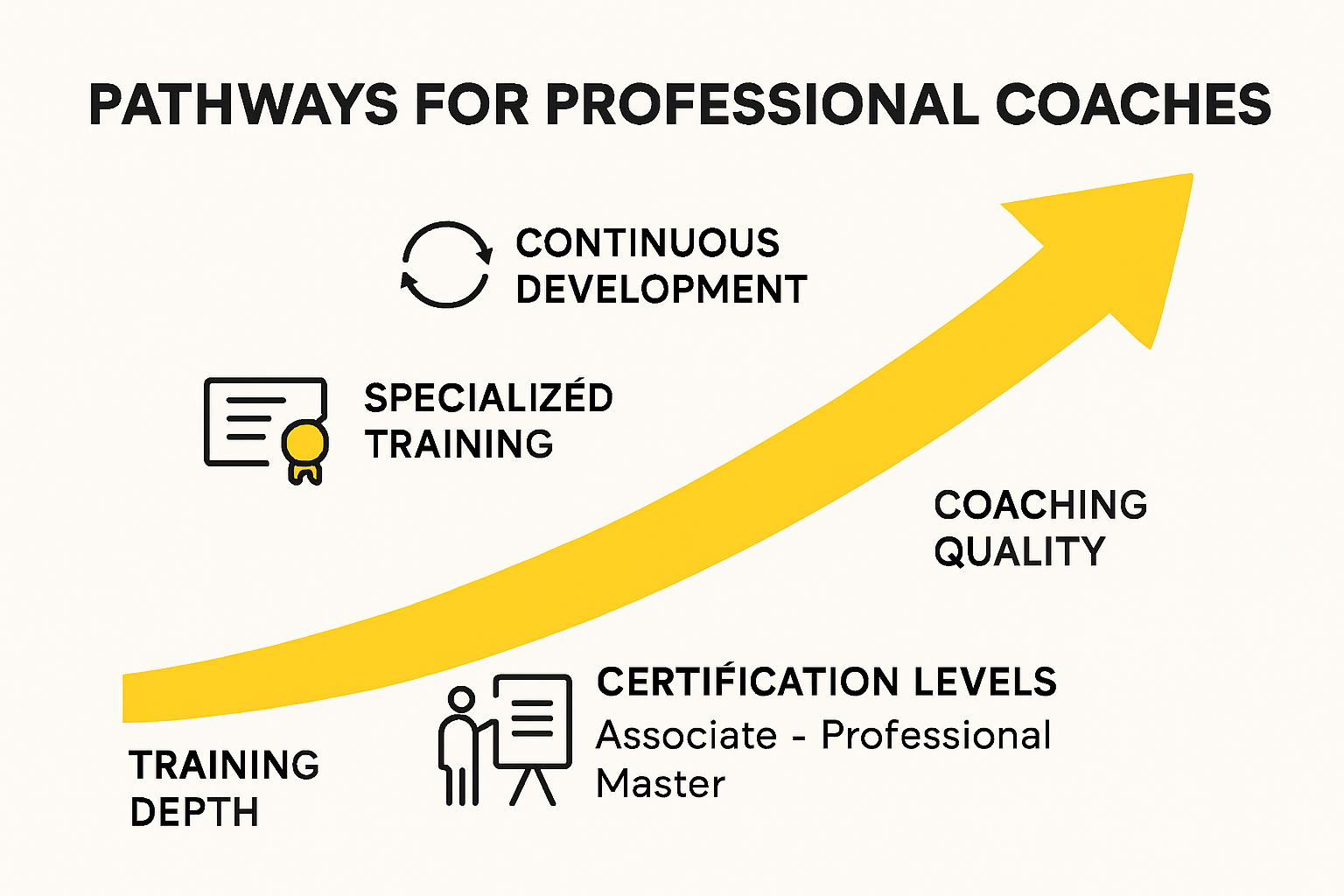
Explore effective communication coaching strategies to understand the nuances of professional development. According to research published in ‘Organisationsberatung, Supervision, Coaching’, higher levels of coach training are significantly linked to coaching quality, challenging the assumption that years of experience alone determine coaching effectiveness.
Key qualifications to evaluate include:
- Formal Coaching Certifications: Recognized credentials from reputable coaching institutions
- Specialized Training: Advanced programs in specific coaching methodologies
- Continuous Professional Development: Evidence of ongoing learning and skill enhancement
Analyzing Coaching Methodologies and Approaches
The Institute for Employment Studies emphasizes the importance of understanding a coach’s specific methodological framework. Each coaching approach offers unique techniques and perspectives that can significantly impact your professional growth.
Consider investigating:
- Specific coaching models they utilize (e.g., solution-focused, cognitive-behavioral)
- Their approach to setting and tracking goals
- Techniques for challenging and supporting client development
- Adaptability of their methodology to individual client needs
Evaluating Coaching Effectiveness and Impact
A comprehensive evaluation of a coach’s effectiveness goes beyond their marketing materials. The chapter on coaching interventions in ‘Advancing Executive Coaching’ recommends a rigorous assessment approach that considers multiple stakeholder perspectives.
Effective evaluation strategies include:
- Requesting detailed case studies or client testimonials
- Understanding their success metrics and tracking mechanisms
- Exploring their approach to measuring coaching outcomes
- Discussing potential challenges and how they typically address them
Professionals should approach coach selection as a strategic investment. By carefully examining a coach’s training, methodological expertise, and proven impact, you can make an informed decision that aligns with your personal and professional development goals. Remember that the right coaching relationship is a collaborative partnership that requires mutual understanding, trust, and a commitment to transformative growth.
The following table organizes and compares essential factors for evaluating a coach’s credentials, methodologies, and impact:
| Evaluation Area | What to Look For | Why It Matters |
|---|---|---|
| Certification | Recognized coaching credentials | Indicates formal expertise |
| Specialized Training | Advanced skills in specific coaching methodologies | Shows targeted knowledge |
| Coaching Methodology | Approach used (e.g., solution-focused, CBT), adaptability | Impacts technique fit and growth potential |
| Track Record | Documented client success stories or testimonials | Demonstrates effectiveness |
| Outcome Measurement | Use of metrics, progress tracking, and success evaluation | Assures real impact for your investment |
Making the Final Decision: Fit and Connection
Selecting a coach is ultimately about finding a profound personal and professional connection that transcends traditional transactional relationships. The final decision requires a holistic assessment of compatibility, alignment of values, and potential for transformative collaboration.
Evaluating Personal and Professional Chemistry
Explore personalized coaching consultation options to understand the nuanced dynamics of coach selection. According to the International Coaching Federation, interviewing multiple coaches is crucial to assess the intangible yet critical element of interpersonal chemistry.
Key aspects to consider during initial interactions include:
- Communication Style: Does their communication resonate with your preferred approach?
- Energy and Enthusiasm: Do they demonstrate genuine passion for your potential?
- Intuitive Understanding: Can they quickly grasp the essence of your professional challenges?
Assessing Alignment of Values and Objectives
The Association for Talent Development recommends evaluating both quantitative and qualitative factors to ensure comprehensive compatibility. This involves a deep exploration of shared professional values and mutual understanding of your developmental goals.
Critical alignment considerations include:
- Professional ethics and integrity
- Approach to personal and professional growth
- Perspectives on leadership and success
- Mutual respect and psychological safety
Conducting a Comprehensive Compatibility Assessment
Beyond initial impressions, a thorough compatibility assessment requires structured evaluation. The International Coaching Federation emphasizes the importance of emotional intelligence and empathetic connection in coaching relationships.
Recommended assessment strategies:
- Request an initial consultation or discovery session
- Discuss specific scenarios and observe their problem-solving approach
- Evaluate their ability to challenge and support your growth simultaneously
- Trust your intuition about the potential for a transformative partnership
Choosing a coach is a deeply personal journey that requires careful introspection and strategic evaluation. The right coaching relationship should feel like a collaborative partnership where vulnerability meets professional rigor. By prioritizing genuine connection and alignment, you create the foundation for meaningful personal and professional transformation. Remember that the most impactful coaching relationships are built on mutual trust, respect, and a shared commitment to your extraordinary potential.
Frequently Asked Questions
How do I identify my coaching needs and goals?
To identify your coaching needs, conduct a self-assessment that clarifies your personal and professional development objectives. Consider the areas of career progression, personal development, and skill enhancement that are important to you.
What qualities should I look for in a coach?
Look for qualities such as professional competence, emotional intelligence, a proven track record, adaptability, and the ability to create a psychologically safe environment. These qualities are crucial for building a successful coaching relationship.
How can I evaluate a coach’s experience and methodologies?
Evaluate a coach’s experience by examining their professional training, certifications, and methodologies. Analyze their approach to coaching and how they measure success with their clients to ensure their methods align with your needs.
What is the importance of personal chemistry in a coaching relationship?
Personal chemistry is essential in a coaching relationship as it fosters trust and openness. A strong connection allows for better communication and a supportive atmosphere, which can lead to more significant personal and professional growth.
Ready to Find the Right Coach for Your Next Big Step?
You discovered in this guide that choosing a coach in 2025 is about so much more than picking a knowledgeable expert. It is about personal chemistry, shared values, and a clear roadmap that aligns with your dreams. If you feel overwhelmed by the sheer number of options or worry about finding someone who truly understands your professional and personal goals, you are not alone. Thousands of ambitious professionals struggle to identify coaches who match their unique aspirations and can help break through barriers to growth. That is why your next move matters.

Experience a personalized approach at Plentiful, where you can connect with career coaches, life coaches, and specialized guides through private sessions, group workshops, or transformative retreats. You do not have to navigate this journey by yourself. Book an impactful conversation package today or start exploring the full Plentiful community. Take control of your growth and find a coach who helps you unlock real change. An opportunity to connect with your ideal guide is just a click away.
Recommended
- Top Benefits of Career Coaching for Professionals in 2025 – Plentiful
- Coach Ang | Certified Life Coach
- The Worklife Coach | Life Coach
- Coaching with Becca Darr
- SHE Awakens | Stella Brookes
- Transformational Coaching | Janaé Kama
- Therapy Versus Coaching: Choose the Right Support for 2025 – Mastering Conflict
Ready to improve your life?
Access our free newsletter designed to help you become the best version of yourself.
Learn how to find your path, understand yourself, and make progress toward your dream life.