







When was the last time you hit pause and looked honestly at your life? Most of us keep moving (i.e., chasing deadlines, juggling relationships, ticking off to-dos) without ever asking if the path we’re on is truly ours. The result? Burnout, frustration, sadness, and that nagging sense (aka pit in our stomach!) that something’s missing.
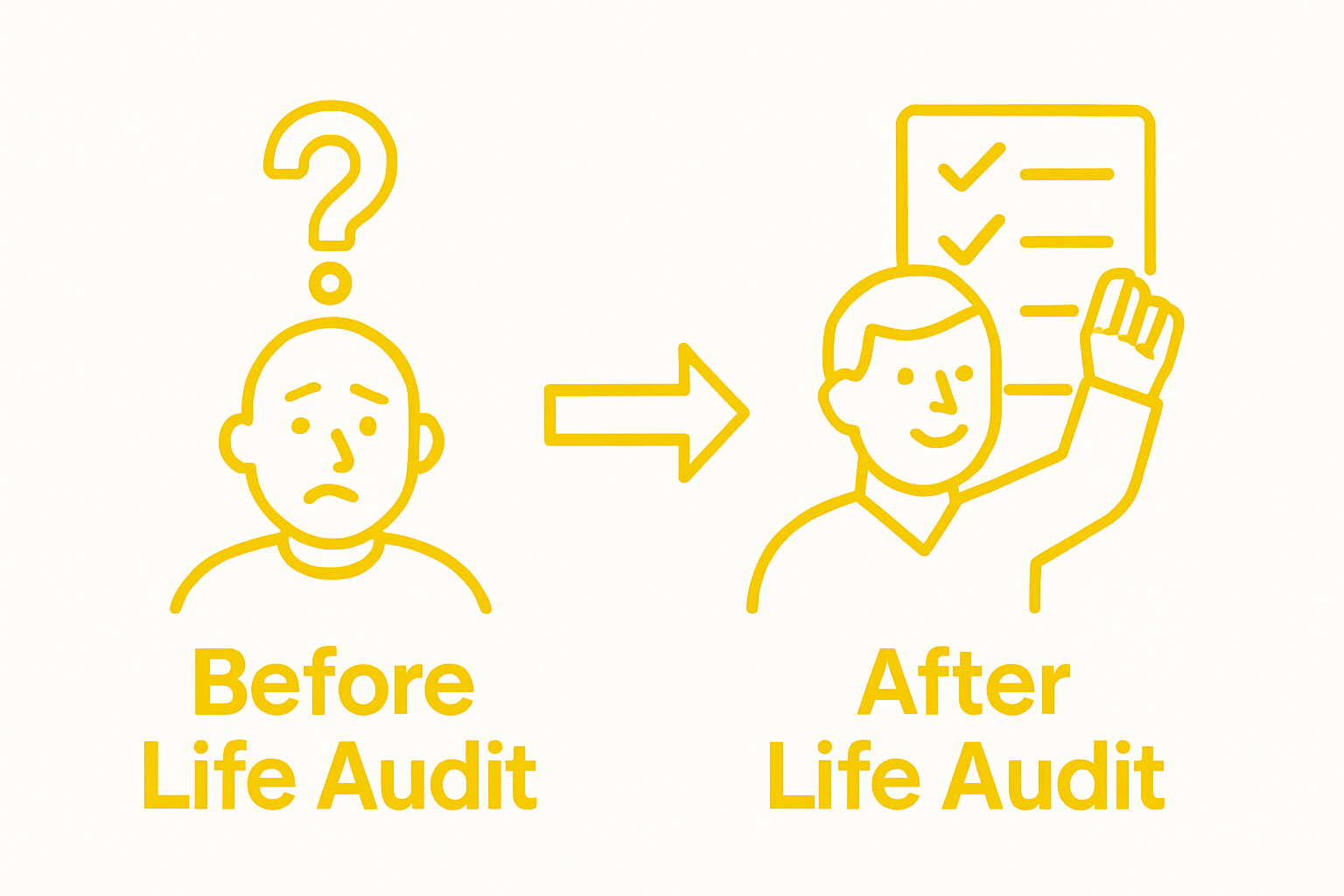
A life audit is your reset button. It’s not about tearing everything down… it’s about shining a light on where you are, what matters most, and where you’re out of alignment. Research published by the National Center for Biotechnology Information shows that reflective practices like journaling and structured self-assessment can significantly boost psychological well-being, life satisfaction, and sense of purpose.
Here’s the truth: the biggest barrier to change isn’t laziness or lack of ambition. It’s avoidance. We’re afraid to look too closely at the parts of life that aren’t working. But once you do, even small adjustments can create a ripple effect of transformation: more energy, more clarity, and a renewed sense of direction.
This guide will walk you through the steps of conducting a meaningful life audit. From honest reflection to setting goals, tracking progress, and building accountability. So you can stop living on autopilot and start moving intentionally toward the life you actually want.
Table of Contents
- Step 1: Reflect On Your Current Life And Values
- Step 2: Identify Areas For Improvement And Focus
- Step 3: Set Clear Goals And Action Steps
- Step 4: Evaluate Progress And Adjust As Necessary
- Step 5: Create A Support System For Accountability
Quick Summary
| Key Point | Explanation |
|---|---|
| 1. Reflect on life dimensions honestly | Assess your career, relationships, health, and values without self-criticism for deeper clarity on your current life. |
| 2. Identify areas for meaningful improvement | Analyze reflections to find emotional and energy patterns, focusing on areas needing growth and development. |
| 3. Set SMART goals for progress | Transform insights into Specific, Measurable, Achievable, Relevant, and Time-bound goals for structured advancement. |
| 4. Regularly evaluate progress and adjust | Schedule consistent check-ins to reflect on achievements, challenges, and necessary adjustments to your goals. |
| 5. Build a supportive accountability network | Create a diverse support system for encouragement, feedback, and structured check-ins to maintain commitment to your goals. |
Step 1: Reflect on Your Current Life and Values
A life audit begins with honest self-reflection. This initial step is about creating a transparent snapshot of your current reality, understanding where you are, and identifying the gap between your present circumstances and your deepest aspirations. Your goal is to develop a clear, unfiltered view of your life across multiple dimensions.
Start by finding a quiet, distraction-free environment where you can think deeply and write candidly. Grab a journal or open a digital document that allows you to capture your thoughts without judgment. Begin by mentally walking through the key areas of your life: career, relationships, personal growth, health, finances, and spiritual well-being. Ask yourself penetrating questions that cut through surface-level satisfaction.
Reflect on each life domain with brutal honesty. What aspects are truly fulfilling? Where do you feel stuck or frustrated? Which relationships energize you, and which drain your emotional resources? Consider your career trajectory – are you growing, learning, and feeling challenged in meaningful ways? Examine your personal habits, daily routines, and how they align with your core values. Read our guide on self-discovery to dig deeper into understanding your authentic self.
According to research from the National Center for Biotechnology Information, reflecting on everyday experiences can significantly enhance psychological well-being, particularly in developing positive relationships and discovering your life’s purpose. This scientific insight underscores the importance of the introspective work you’re undertaking.
Below is a checklist table to help you structure your life audit reflection, ensuring you address all key areas as outlined in the article.
| Reflection Category | Example Guiding Question | Completion Status |
|---|---|---|
| Career Satisfaction | Are you growing and challenged in your current role? | |
| Relationships | Which relationships energize or drain you? | |
| Personal Growth | Are your habits and routines aligned with your values? | |
| Health and Wellness | Do you feel physically and mentally balanced? | |
| Finances | Are you secure and progressing toward financial goals? | |
| Spiritual/Emotional Well-Being | Do you feel connected to your deeper purpose? | |
| Patterns or Recurring Challenges | What issues keep resurfacing in your life? |
To make this reflection structured and comprehensive, consider documenting your insights using these key categories:
- Current satisfaction level in each life domain (scale of 1-10)
- Specific emotions and energy levels associated with each area
- Misalignments between your current reality and your ideal vision
- Underlying patterns or recurring challenges you’ve noticed
Remember, this is not about self-criticism but about gaining clarity. The most successful life audits emerge from a place of compassionate, objective observation. You’re creating a baseline understanding that will serve as the foundation for meaningful personal transformation. Your honest reflection is the first crucial step toward intentional, strategic life design.
If you want to continue exploring what matters, what feels out of alignment and what could change, try these personal growth exercises.
The table below offers an overview of key life audit steps, including their purpose and recommended frequency, to provide a clear roadmap for the entire process.
| Life Audit Step | Purpose | Recommended Frequency |
|---|---|---|
| Reflect on Current Life & Values | Gain honest clarity on your life’s status | At the start and annually |
| Identify Areas for Improvement | Pinpoint growth opportunities | After initial reflection |
| Set Clear Goals & Action Steps | Turn insights into actionable plans | After assessment / As needed |
| Evaluate Progress & Adjust | Track results and make necessary changes | Monthly or quarterly |
| Build a Support System for Accountability | Maintain motivation and track accountability | Ongoing / Regular check-ins |
Step 2: Identify Areas for Improvement and Focus
After your initial reflection, the next critical phase of your life audit is identifying specific areas where meaningful improvement can transform your current trajectory. This step is about converting introspective insights into actionable pathways for personal growth. Think of it as creating a strategic roadmap that bridges the gap between your current reality and your desired future.
Analyzing your earlier reflections, look for patterns and recurring themes that signal opportunities for development. Pay attention to the emotional energy connected to different life domains. Areas that consistently feel draining or generate feelings of frustration are often prime candidates for intentional improvement. Don’t just focus on perceived weaknesses these could be opportunities for radical personal transformation.
According to internal audit principles from the Institute of Internal Auditors, effective personal assessment involves systematic evaluation of key life dimensions. Create a comprehensive assessment matrix that rates your satisfaction and potential for growth across critical areas:
- Personal development and skills
- Career progression and professional satisfaction
- Relationships and social connections
- Physical and mental health
- Financial stability and goals
- Spiritual and emotional well-being
For each dimension, identify specific indicators of stagnation or misalignment. In your career, this might mean feeling unchallenged or disconnected from your original professional vision. In relationships, it could signal communication barriers or unresolved interpersonal dynamics. The goal is not perfection but purposeful, incremental improvement.
Consider utilizing assessment tools like personality evaluations, skills inventories, or professional coaching consultations to gain additional insights. External perspectives can reveal blind spots and provide nuanced understanding of your growth potential. Some individuals find journaling or discussion with trusted mentors helpful in clarifying areas requiring focused attention.
Remember that improvement is not about harsh self-criticism but compassionate, strategic personal development. Your life audit is a dynamic process of continuous refinement. By systematically identifying and addressing areas of potential growth, you’re creating a proactive approach to personal transformation that honors your unique journey and aspirations.
Step 3: Set Clear Goals and Action Steps
Transforming your life audit insights into tangible goals requires strategic planning and precise execution. This step is about converting reflection into intentional, measurable progress. Your previous self-assessment provides the foundation for crafting goals that are not just aspirational but truly achievable.
Begin by translating your identified areas of improvement into specific, concrete objectives. Instead of vague statements like “I want to be happier,” articulate precise goals such as “I will dedicate 30 minutes daily to meditation and personal reflection” or “I will expand my professional network by attending two industry conferences this year.” Learn more about creating transformative life changes with our coaching program to support your journey.
According to research from the American Psychological Association, effective goal setting follows the SMART framework: Specific, Measurable, Achievable, Relevant, and Time-bound. This approach transforms abstract desires into structured action plans. For each life domain you’ve identified for improvement, develop goals that meet these criteria.
Break down larger objectives into smaller, manageable action steps.
If your goal is career advancement, your action steps might include updating your resume, scheduling networking meetings, completing an online certification, or setting up informational interviews. The key is creating a clear, sequential pathway that makes progress feel both achievable and motivating.
Document your goals and action steps in a dedicated journal or digital tracking system. Create a visual representation that allows you to monitor progress and maintain accountability. Consider establishing milestone check-ins to assess your advancement and adjust strategies as needed.
Consider developing goals across multiple life domains to ensure holistic growth:
- Professional development and career progression
- Personal health and wellness
- Relationship enhancement
- Financial planning and stability
- Emotional and spiritual growth
- Skill acquisition and learning
Remember that goal setting is an iterative process. Be compassionate with yourself, remain flexible, and view each step as an opportunity for learning and growth. Your life audit is not about perfection but about intentional, meaningful progress toward a more aligned and fulfilling life.
Step 4: Evaluate Progress and Adjust as Necessary
Progress is rarely linear, and your life audit journey requires consistent reflection, honest assessment, and strategic recalibration. This step is about transforming your initial goals into a dynamic, responsive roadmap for personal growth. Think of it as maintaining the navigation system of your life, making real-time adjustments to ensure you remain aligned with your core values and aspirations.
Schedule regular progress check-ins at consistent intervals – monthly or quarterly work best for most individuals. During these sessions, create a comprehensive review environment that allows for deep, uninterrupted reflection. Explore our coaching resources to support your personal development if you need additional guidance in this process.
According to research from California State University San Marcos, effective progress evaluation involves a multifaceted approach. Begin by objectively measuring your achievements against the original goals you established. Use quantitative metrics where possible – track completed actions, time invested, skills acquired, and tangible outcomes. However, equally important are qualitative assessments that capture emotional and intuitive insights about your journey.
Embrace flexibility as a core principle of personal growth. Some goals may need complete redesign, while others might require minor adjustments. Pay attention to goals that consistently feel challenging or uninspiring. This could signal a misalignment between your current objectives and your authentic self. Be willing to pivot, eliminate goals that no longer serve you, and introduce new objectives that emerge from your evolving understanding.
Document your progress using a structured approach that allows for honest self-reflection:
- Achievements and milestones reached
- Challenges and obstacles encountered
- Emotional energy and motivation levels
- Insights and lessons learned
- Potential modifications to existing goals
Consider leveraging technology and tools to support your evaluation process. Digital journals, progress tracking apps, or simple spreadsheets can help you maintain a clear, visual representation of your journey. Some individuals find mind mapping or visual goal tracking particularly effective in understanding their progress holistically.
Remember that adjustment is not a sign of failure but a testament to your commitment to personal growth. Each revision brings you closer to a more authentic, intentional life path. Your life audit is a living document, constantly evolving alongside your understanding of yourself and your aspirations.
Step 5: Create a Support System for Accountability
Creating a robust support system is the critical infrastructure that transforms personal goals from abstract intentions into tangible achievements. Accountability is the bridge between your aspirations and actual progress, turning individual commitment into a collective journey of growth and transformation. This step is about strategically surrounding yourself with individuals who will challenge, support, and propel you toward your life audit objectives.
Explore our transformational coaching programs to help you build a powerful accountability network. Begin by identifying individuals who demonstrate genuine investment in your personal development. These are not just cheerleaders, but honest, constructive partners who can provide both emotional support and strategic guidance.
According to research from California State University San Marcos, effective accountability systems require clear communication, mutual trust, and structured check-in processes. Seek out mentors, coaches, or peers who have successfully navigated similar personal transformation journeys. Their lived experiences can provide invaluable insights and realistic perspectives on overcoming challenges.
Diversify your support network to ensure comprehensive guidance. This might include professional coaches who offer specialized expertise, peer groups focused on personal development, trusted friends who understand your deeper aspirations, and potentially family members who can provide emotional grounding. Each relationship serves a unique role in maintaining your momentum and holding you accountable to your commitments.
Establish clear, mutually agreed-upon accountability mechanisms that work for everyone involved:
- Regular scheduled check-in meetings
- Shared goal tracking documents
- Specific reporting protocols
- Defined consequences and rewards for goal achievement
- Transparent communication channels
Consider implementing technology and digital tools to enhance your accountability system. Virtual meeting platforms, shared progress tracking spreadsheets, and communication apps can help maintain consistent connection with your support network, especially if geographic distance is a factor. Some individuals find weekly video calls or monthly in-depth review sessions particularly effective in maintaining focus and motivation.
Remember that accountability is a collaborative process. Be open to feedback, willing to adjust your approach, and committed to reciprocating support for others in your network. Your support system is not just about external validation but about creating a dynamic, mutually supportive environment that accelerates personal growth and helps you stay true to your life audit objectives.
Ready to Turn Your Life Audit Into Real Progress?
Feeling stuck after reflecting on your current path or struggling to find practical ways to move from introspection to action? You are not alone. Many people identify the gaps in their lives but find it difficult to connect deep personal reflection to tangible change. This is where your journey can truly gain momentum.

Step beyond self-assessment and accelerate your transformation with expert support. At Plentiful you can find world-class life coaches, meditation teachers, career coaches, and other specialists who are ready to help you set strategic goals, create structure, and maintain accountability. Whether you want tailored 1:1 coaching sessions or group workshops to amplify your results, you can find the right guide to match your unique life audit outcomes. Do not let another season pass you by. Visit Plentiful today to turn your insights into sustainable, life-changing action.
Frequently Asked Questions
What is a life audit?
A life audit is a reflective process that allows individuals to assess various aspects of their lives, identify areas for improvement, and set actionable goals for personal growth.
How do I start a life audit?
To start a life audit, find a quiet space for self-reflection, and evaluate key areas of your life such as career, relationships, health, and finances. Document your insights without judgment to create a clear snapshot of your current situation.
What framework should I use for goal setting during a life audit?
Employ the SMART framework for goal setting: ensure your goals are Specific, Measurable, Achievable, Relevant, and Time-bound. This approach helps translate insights from your life audit into actionable and realistic goals.
How can I maintain accountability during my life audit journey?
Create a support system by surrounding yourself with mentors, friends, or accountability partners. Establish regular check-ins and communication methods to ensure you stay committed to your goals.
Recommended
- How to Embark On a Self-Discovery Journey
- Life Purpose Coaching Program | Lizzy Sutton
- 90-Day Journey to Body Wisdom, Self-Love & Empowerment | Sonia Ferreira
- Burst Of Joy: A 30-Minute Creativity Boost | Jenn Baljko
Want your life to be more Plentiful?
Sign up for stories, experience info and launches, and event invites delivered right to your inbox.
Unsubscribe anytime.


