







Everyone wants to know how to increase happiness, yet most people search in the wrong places, thinking it takes a promotion, a bigger house, or a perfect relationship. In reality, science shows happiness isn’t about major life changes at all. It’s about the small, consistent habits that reshape your brain, strengthen your relationships, and help you find joy in the everyday.
From practicing gratitude to building deeper connections, these six research-backed strategies will guide you toward greater fulfillment. The best part? Each one is simple, natural, and realistic to integrate into your daily routine, so you can start feeling happier today, not someday.
Table of Contents
- Step 1: Assess Your Current Happiness Levels
- Step 2: Identify Sources Of Joy And Gratitude
- Step 3: Create An Action Plan For Daily Happiness
- Step 4: Incorporate Mindfulness And Meditation Practices
- Step 5: Build Supportive Relationships And Community
- Step 6: Evaluate Progress And Adjust Your Strategies
Quick Summary
| Key Point | Explanation |
|---|---|
| 1. Conduct a personal happiness assessment | Analyze your current emotional state honestly to identify areas of improvement and set a roadmap for your happiness journey. |
| 2. Practice daily gratitude reflections | Dedicate time each day to acknowledge things you are grateful for, which can enhance your overall well-being and shift your perspective. |
| 3. Create a strategic happiness action plan | Develop a personalized daily routine with achievable practices that promote happiness and can be maintained consistently. |
| 4. Implement mindfulness and meditation | Establish a regular mindfulness or meditation practice to improve emotional regulation and foster resilience against stress. |
| 5. Build and nurture supportive relationships | Focus on creating meaningful connections and engaging with a community that uplifts and supports your happiness journey. |
Step 1: Assess Your Current Happiness Levels
Understanding your current happiness baseline is the critical first step in creating meaningful personal transformation. Before you can intentionally increase your happiness, you need an honest, objective snapshot of your present emotional landscape. This initial assessment provides a roadmap for targeted improvements and helps you track progress along your happiness journey.
To begin your happiness assessment, you’ll want to engage in a systematic yet introspective evaluation of your emotional state. Self-reflection is key. Start by finding a quiet, comfortable space where you can think without distractions. Take out a journal or open a digital document and prepare to conduct a comprehensive personal happiness audit.
According to research from the National Research Council, measuring subjective well-being requires a multifaceted approach. Consider rating different life domains on a scale from 1 to 10, including:
- Personal relationships
- Career satisfaction
- Physical health
- Mental well-being
- Financial stability
- Personal growth and development
Be brutally honest with yourself during this process. Your ratings should reflect your genuine feelings, not what you think they should be. Notice patterns and areas where your happiness feels consistently low or stagnant. These insights will become your roadmap for targeted improvement in subsequent steps.
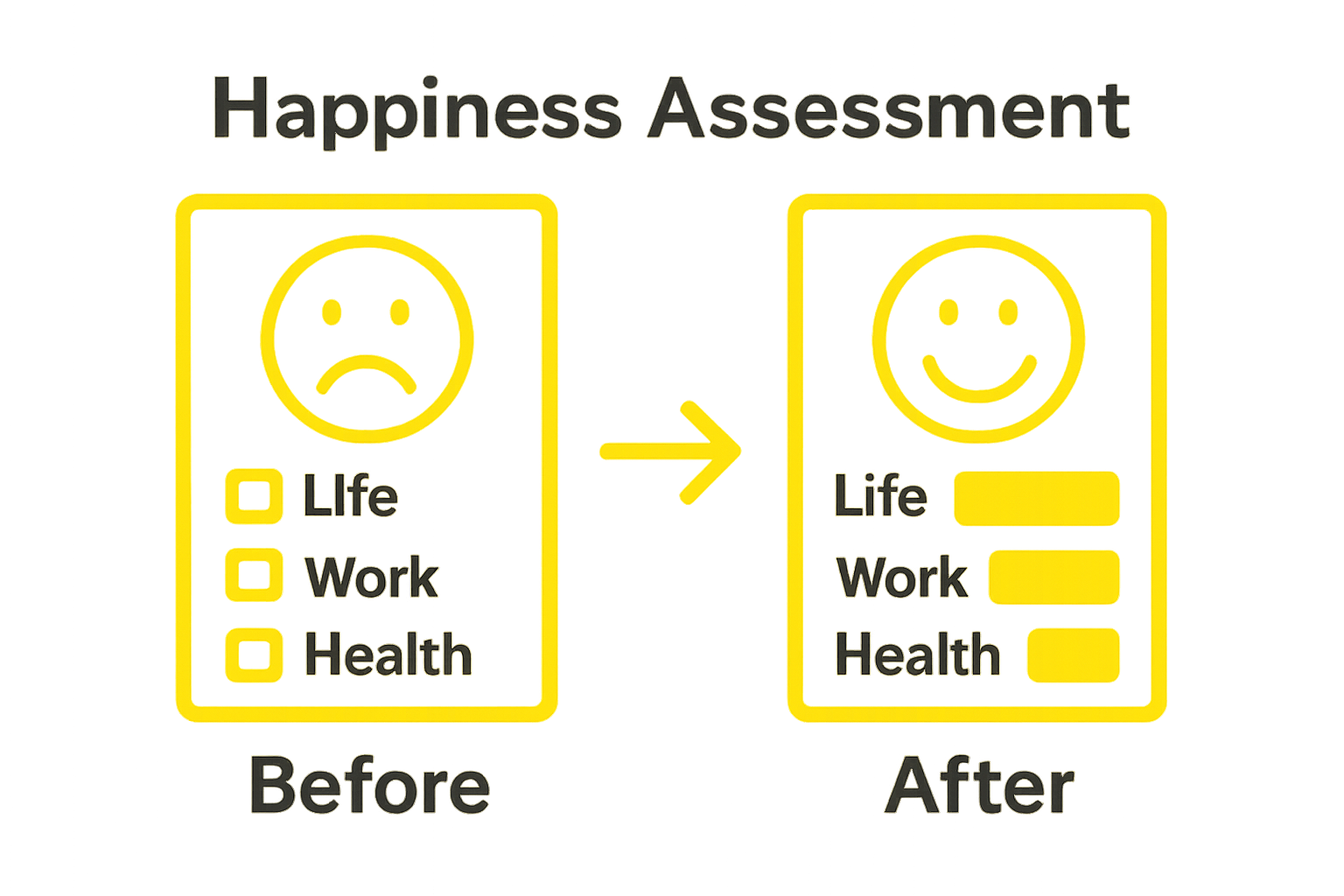
Verify your assessment by looking for specific indicators: Are you feeling consistently drained? Do you struggle to find joy in activities that once excited you? Are your relationships feeling superficial or unfulfilling? These signs suggest areas requiring deeper attention and potential transformation in your happiness journey.
Remember, this initial assessment is not about judgment but understanding. View it as a compassionate exploration of your inner emotional landscape, setting the stage for meaningful personal growth and increased happiness.
Step 2: Identify Sources of Joy and Gratitude
After establishing your happiness baseline, the next crucial step is uncovering and amplifying the genuine sources of joy and gratitude in your life. This process transforms your perspective from passive observation to active appreciation, creating a powerful emotional foundation for increased happiness. Gratitude is not just a feeling, but a deliberate practice that rewires your brain to recognize positive experiences more readily.
According to research from Harvard Health, consistently acknowledging what you’re grateful for can significantly improve your overall well-being. Begin by setting aside 15 minutes each day for a dedicated gratitude reflection. Find a quiet space where you can write freely without interruption. Select a journal or digital document where you’ll capture your thoughts, creating a permanent record of your emotional discoveries.
Start your gratitude exploration by considering different life domains. Reflect on moments of connection with loved ones, professional achievements, personal growth experiences, or simple pleasures like a warm cup of coffee or a beautiful sunset. Look beyond grand gestures and focus on subtle, everyday miracles. Ask yourself probing questions: What made me smile today? Who supported me recently? What challenges have I successfully navigated?
To deepen your practice, you might explore our guide on understanding gratitude’s transformative power. Consider creating a structured approach to your reflection:
- Write down three specific things you’re grateful for each day
- Describe why each moment or experience matters to you
- Note the emotions and sensations these memories evoke
Verify your progress by observing changes in your emotional landscape. Are you becoming more attuned to positive experiences? Do you find yourself naturally noticing joy more frequently? The key is consistency and genuine emotional engagement. Remember, identifying sources of joy and gratitude is not about manufacturing happiness, but revealing the abundant positivity already present in your life.
Step 3: Create an Action Plan for Daily Happiness
Transforming happiness from a vague concept into a tangible daily reality requires a strategic, intentional approach. Your action plan is the critical bridge between understanding your current emotional landscape and actively cultivating joy. This step transforms passive awareness into deliberate, consistent action, turning happiness from a fleeting emotion into a sustainable lifestyle choice.
According to research in the International Journal of Wellbeing, structured interventions dramatically improve long-term happiness when performed consistently. Begin by designing a personalized daily happiness framework that integrates seamlessly with your existing routine. Consider your unique lifestyle, work schedule, and personal preferences when crafting this plan.
Start by identifying three to five specific, achievable daily practices that genuinely resonate with you. These might include morning meditation, a 15-minute walk in nature, journaling, connecting with a loved one, or practicing a hobby that brings you genuine fulfillment. Consistency matters more than complexity.
Select activities you can realistically maintain, even on challenging days.
To support your journey, explore our morning routines for success that can help establish a happiness-focused daily rhythm. Create a visual tracker or dedicated happiness journal to monitor your progress. This could be a physical notebook or a digital app where you log your daily practices, emotional states, and reflections.
Your action plan should include specific, measurable elements:
- Exact time allocated for each happiness practice
- Specific activities or interventions
- Potential backup plans for days when your primary routine feels challenging
- Weekly review and adjustment periods
Verify your plan’s effectiveness by tracking your emotional well-being. Are you feeling more resilient? Do you notice increased moments of spontaneous joy? Remember, an action plan is a living document. Be compassionate with yourself, remain flexible, and view this as an ongoing journey of emotional discovery and personal growth.
Step 4: Incorporate Mindfulness and Meditation Practices
Mindfulness and meditation represent powerful transformative practices that can fundamentally rewire your brain’s approach to happiness, stress management, and emotional resilience. These practices are not mystical rituals, but scientifically validated techniques for emotional regulation that can dramatically enhance your overall well-being. By intentionally training your mind to remain present and non-reactive, you create a sustainable pathway to inner peace and joy.
According to research from the National Center for Complementary and Integrative Health, mindfulness meditation can significantly reduce symptoms of anxiety and depression while improving overall quality of life. Begin your meditation journey by establishing a realistic, consistent practice that fits seamlessly into your daily routine. Start with just five minutes per day, gradually increasing duration as you become more comfortable.
To support your meditation practice, explore our guide on how to begin meditation and discover techniques that resonate with your personal style. Choose a quiet, comfortable space where you can sit undisturbed. Consider using guided meditation apps or online resources if you’re new to the practice. The key is finding a method that feels natural and enjoyable for you, whether that’s breath-focused meditation, body scan techniques, or mindful walking.
Your meditation toolkit should include:
- A consistent time and place for practice
- Comfortable seating or cushion
- Optional meditation timer or guided audio
- Journal for tracking insights and experiences
Verify your progress by observing changes in your emotional landscape. Are you becoming more patient with yourself and others? Do you notice increased ability to stay calm during stressful situations? Remember that meditation is a skill developed through consistent, compassionate practice. Some days will feel easier than others, and that’s perfectly normal. Approach your practice with curiosity and self-kindness, understanding that each moment of mindfulness is a step toward greater happiness and emotional freedom.
Step 5: Build Supportive Relationships and Community
Human connection is the cornerstone of genuine happiness, transcending individual practices and creating a rich, supportive ecosystem that nurtures emotional well-being. Relationships are not just social interactions, but powerful emotional nutrition that feeds your inner landscape. Building meaningful connections requires intentional effort, vulnerability, and a genuine commitment to mutual understanding and growth.
According to research from Harvard T.H. Chan School of Public Health, strong relationships are among the most significant predictors of long-term happiness and personal fulfillment. Begin by conducting an honest assessment of your current social network. Identify relationships that energize you, those that drain you, and potential opportunities for deeper, more authentic connections.
To expand your supportive community, start exploring interest-based groups and activities that align with your passions. Check out our guide on connecting with like-minded individuals to discover strategies for meaningful engagement. Consider joining local clubs, attending workshops, participating in online communities, or volunteering for causes that resonate with your values. Quality matters infinitely more than quantity when building relationships.
Your relationship-building toolkit should include:
- Regular communication practices
- Active listening skills
- Boundaries that protect your emotional energy
- Willingness to be vulnerable and authentic
- Commitment to mutual growth and support
Verify your progress by observing shifts in your emotional landscape. Are you feeling more supported and understood? Do your interactions leave you feeling energized rather than depleted?
Remember that building a supportive community is a gradual process requiring patience, openness, and consistent effort. Approach each interaction with curiosity, compassion, and a genuine desire to create meaningful connections that uplift both yourself and others.
Step 6: Evaluate Progress and Adjust Your Strategies
The journey to sustainable happiness is not a linear path but a dynamic, evolving process that requires continuous reflection, honest assessment, and strategic adaptation. Progress is not about perfection, but about consistent, intentional growth. This final step transforms your happiness strategy from a static plan into a living, breathing framework that responds to your changing emotional landscape and personal development.
According to research from the National Institutes of Health, periodic self-reflection is crucial in maintaining and enhancing personal well-being. Schedule a monthly or quarterly comprehensive review of your happiness journey. This is not a judgment session, but a compassionate exploration of your emotional growth, challenges, and emerging insights.
Learn more about tracking your personal development and creating meaningful progress markers. Your evaluation should encompass both quantitative and qualitative measurements. Review the happiness practices you’ve implemented, noting which strategies resonate most deeply and which feel less impactful. Pay attention to subtle shifts in your emotional resilience, interpersonal dynamics, and overall sense of fulfillment.
Your progress evaluation toolkit should include:
- A dedicated journal for tracking emotional experiences
- Specific, measurable happiness indicators
- Space for honest, non-judgmental reflection
- Flexibility to modify your approach
- Celebration of small victories and learnings
Verify your progress by assessing key indicators: Are you experiencing more moments of spontaneous joy? Do you handle stress more effectively? Have your relationships deepened? Remember that happiness is not a destination but a continuous journey of self-discovery.
Below is a checklist table to help you verify your progress and ensure you are implementing each happiness-building habit successfully.
| Habit or Step | Key Verification Question | Signs of Progress |
|---|---|---|
| Assess Happiness Levels | Am I honest about my emotional state? | Notice specific areas of satisfaction or dissatisfaction |
| Practice Daily Gratitude | Do I reflect on gratitude each day? | Increased awareness of positive moments |
| Follow Action Plan | Am I consistent with daily practices? | Greater resilience and spontaneous joy |
| Practice Mindfulness and Meditation | Have I established a regular routine? | Improved emotional regulation and calm in stressful times |
| Build Supportive Relationships | Do I nurture and assess my relationships? | Feeling more supported, deeper connections |
| Track & Adjust Progress | Do I schedule regular self-reflections? | Clearer understanding of what works best for my happiness |
Unlock Real Happiness With Guided Support From Plentiful
Struggling to consistently boost your happiness despite using proven self-reflection, gratitude, and mindfulness techniques? Many people find it hard to turn knowledge into action or sustain joy without encouragement from others. If you felt inspired by this article’s six natural steps but want deeper transformation, you’re not alone. Real change often requires more than just reading—it depends on the right guidance and community.

Imagine what you could achieve with expert coaches, mindfulness teachers, and supportive guides walking alongside you each step of the way. At Plentiful, you can connect with trusted professionals for personalized coaching, group workshops, or wellness classes—all designed to help you stay accountable and motivated. This is your chance to turn your happiness action plan into daily reality with real guidance tailored to your needs. Do not wait for happiness to find you. Start exploring Plentiful’s well-being and growth services now and experience support that brings your emotional journey to life.
Frequently Asked Questions
How can I start assessing my current happiness levels?
Begin by engaging in self-reflection to create an emotional audit of your life. Rate different life domains on a scale from 1 to 10, considering areas such as relationships, career, health, and personal growth. This will help you identify patterns and areas that require improvement.
What are effective ways to practice gratitude?
Set aside time each day to reflect on what you are grateful for. Write down three specific things, along with why they matter to you and the emotions they evoke. This helps to cultivate a habit of appreciation for everyday moments.
How do I create a daily action plan for happiness?
Design a personalized framework that integrates easily into your routine. Identify three to five achievable practices, like meditation, exercise, or connecting with a friend, and commit to doing them consistently to foster happiness.
What role do mindfulness and meditation play in increasing happiness?
Mindfulness and meditation are scientifically validated practices that help reduce stress, manage emotions, and enhance overall well-being. By training your mind to stay present, you create a pathway to inner peace, which contributes significantly to your happiness.
Recommended
- Discover the Importance of Laughter for a Fulfilling Life
- How to Increase Motivation in 2025: 6-Step System That Works
- How to Practice Gratitude And Unlock More Meaning and Success
- Understanding the Power of Gratitude and Its Impact
- The Glow-Up: 3-Month Health Coaching Program
- Meditate to Illuminate | Lexy Davis
- Art Therapy | Valentina Freifeld
Want your life to be more Plentiful?
Sign up for stories, experience info and launches, and event invites delivered right to your inbox.
Unsubscribe anytime.