







It’s 2 AM and you’re wide awake again, your mind racing with all the things you should be doing but aren’t. The business idea that’s been sitting in your notes app for months. The creative project you keep putting off. The life changes that feel simultaneously urgent and impossible.
You’ve tried the morning routines, the vision boards, the 30-day challenges. You’ve bookmarked dozens of productivity articles and downloaded every habit-tracking app. Yet here you are, feeling like you’re running on empty while everyone else seems to have figured out some secret formula for unstoppable drive.
What if I told you the problem isn’t your lack of discipline. It’s that you’ve been approaching motivation completely backwards?
Most people treat motivation like a feeling they need to summon, waiting for inspiration to strike before taking action. But neuroscience research reveals that motivation isn’t something you find. It’s something you systematically build. When researchers studied people who successfully transformed their lives, they discovered a counterintuitive truth: lasting motivation comes from specific daily actions that rewire your brain’s reward system, not from fleeting moments of inspiration.
The 6-step system you’re about to discover has helped thousands of people break free from the motivation-procrastination cycle. It’s not about working harder or wanting it more. It’s about understanding how your brain actually creates drive, and then designing your life around that science.
Table of Contents
- Step 1: Assess Your Current Mindset And Goals
- Step 2: Identify Your Core Values And Passions
- Step 3: Set Specific And Achievable Objectives
- Step 4: Develop Daily Routines That Foster Motivation
- Step 5: Monitor Progress And Adjust As Needed
- Step 6: Celebrate Milestones And Renew Your Commitment
Quick Summary
| Key Point | Explanation |
|---|---|
| 1. Self-Assessment is Crucial | Begin by honestly evaluating your current mindset and identify your core values. This establishes a foundation for motivation. |
| 2. Define Specific Goals | Create clear, actionable objectives using the SMART criteria to turn aspirations into measurable outcomes. |
| 3. Establish Supportive Routines | Develop daily habits that align with your goals to foster consistent motivation and meaningful progress. |
| 4. Regularly Monitor Progress | Implement a weekly review process to assess your achievements and adapt your strategies when necessary. |
| 5. Celebrate Achievements | Recognize and reward your milestones to maintain motivation and renew your commitment to your goals. |
Step 1: Assess Your Current Mindset and Goals
Making meaningful progress toward fulfillment requires an honest internal assessment of your current mental landscape and aspirational trajectory. This initial step is about creating a clear, realistic snapshot of where you are right now and understanding the psychological foundations that will support your motivation journey.
Begin by carving out dedicated quiet time for deep self-reflection. This isn’t about creating an exhaustive list of achievements or failures, but developing a nuanced understanding of your current emotional and psychological state. Grab a journal or digital document and start exploring your inner narrative. Ask yourself critical questions that probe beyond surface-level observations: What underlying beliefs are currently driving my actions? Where do I feel stuck or limited? What dreams have I been suppressing?
According to research from the National Institutes of Health, understanding your self-efficacy and perceived barriers is crucial for effective goal setting. This means examining not just what you want to achieve, but why those goals matter to you. Map out your core values and assess how closely your current lifestyle and pursuits align with those fundamental principles.
For professionals seeking deeper insights, our Energetic Vibe Check can provide structured guidance through this self-assessment process. The key is creating a holistic view that connects your inner motivations with tangible, actionable goals.
Verify you’ve completed this step by ensuring you have:
- A clear written description of your current emotional and professional state
- Identified at least 3 core values driving your motivation
- Outlined potential psychological barriers preventing your progress
- Developed an initial, rough vision of your desired future state
Remember, this assessment is not about perfection but about honest, compassionate self-understanding. The more authentically you engage with this process, the stronger your foundation for sustainable motivation becomes.
Step 2: Identify Your Core Values and Passions
Transitioning from self-assessment to purposeful motivation requires a deep exploration of your core values and authentic passions. This critical step transforms vague aspirations into concrete motivational fuel by uncovering what genuinely drives and inspires you at the most fundamental level.
Understanding your core values is about discovering the non-negotiable principles that define your authentic self. These are the deeply held beliefs that guide your decisions, shape your worldview, and provide intrinsic motivation beyond external rewards. To begin this exploration, create a quiet environment where you can reflect without distractions. Consider moments in your life when you felt most alive, proud, or deeply satisfied. What common threads connect these experiences? For me, one of those common threads is being out in nature, es. the mountains, hiking, swimming in lakes, grilling, and skiing.
According to research from Frontiers in Psychology, identifying personal values is crucial for developing intrinsic motivation. Professional development often requires aligning your goals with these core values. If you find yourself struggling to pinpoint your true passions, explore our guide on discovering your career calling for additional insights.
Start by listing experiences that have brought you genuine joy and fulfillment. Look beyond professional achievements and examine moments of personal satisfaction. What activities make you lose track of time? What causes ignite a sense of purpose within you? These reflections will help you map your intrinsic motivators.
Verify you’ve completed this step by ensuring you have:
- A written list of 5-7 core personal values
- Identified at least 3 activities or causes that genuinely excite you
- Recognized patterns connecting your most fulfilling experiences
- Created a preliminary connection between your values and potential motivational goals
Remember, identifying your core values is an ongoing journey of self-discovery. Be patient and compassionate with yourself as you uncover the deeper motivations driving your personal and professional aspirations.
Step 3: Set Specific and Achievable Objectives
Transforming your core values and passions into tangible progress requires creating objectives that are not just aspirational, but strategically constructed to drive meaningful change. This step bridges the gap between abstract desires and concrete action, turning your motivational insights into a structured roadmap for personal fulfillment.
Precision is the key to effective goal setting. Vague intentions like “I want to be successful” quickly dissolve into background noise, while specific, well-defined objectives create a clear path forward. Begin by breaking down your broader passions into granular, measurable targets. Instead of saying “I want to improve my career,” craft an objective like “I will complete two professional development courses and network with three industry leaders in the next six months.”
According to guidance from the Substance Abuse and Mental Health Services Administration, developing objectives requires a strategic approach. If you find yourself struggling to crystallize your goals, it might be helpful for you take one of our career courses called “Discover What Life Is Calling You To Do.”
Implement a systematic approach by using the SMART framework: Specific, Measurable, Achievable, Relevant, and Time-bound. Each objective should have clear metrics that allow you to track progress. For instance, if personal growth is a priority, an objective might be “I will meditate for 15 minutes daily and journal my insights weekly for the next three months.”
Verify you’ve completed this step by ensuring you have:
- Developed 3-5 specific objectives aligned with your core values
- Created measurable indicators for each objective
- Established realistic timelines for achieving these goals
- Identified potential obstacles and preliminary strategies to overcome them
Remember that objective setting is an iterative process. Your goals will evolve as you grow, so approach this step with flexibility and self-compassion.
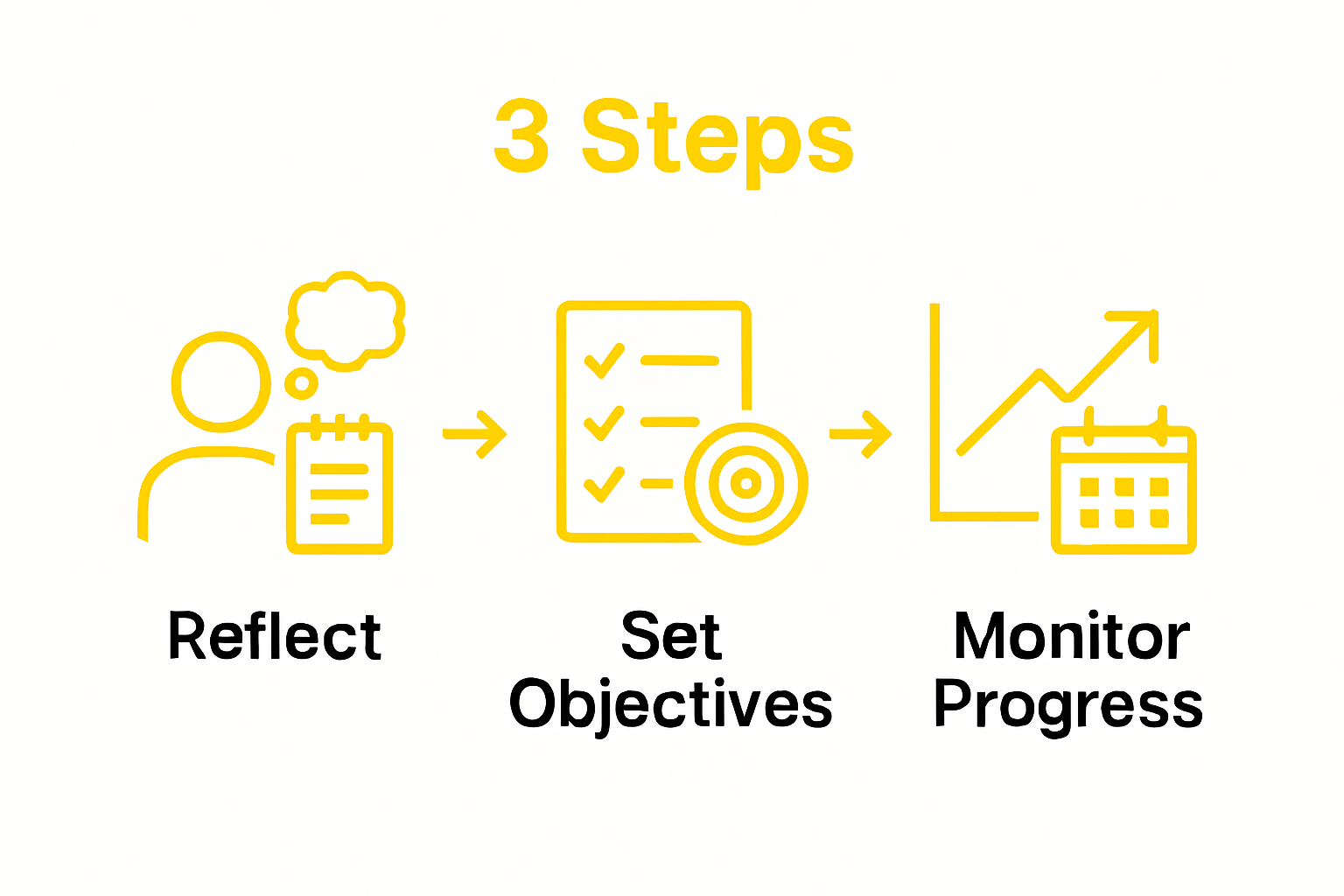 The most powerful objectives are those that challenge you while remaining authentically connected to your deepest motivations.
Step 4: Develop Daily Routines that Foster Motivation
Motivation is not a magical force that appears randomly, but a deliberate practice cultivated through consistent daily actions. This step transforms your objectives from abstract concepts into lived experiences by creating structured routines that naturally propel you toward your goals.
Intentional daily habits are the foundation of sustainable motivation. Begin by designing a morning routine that sets a positive tone for your entire day. This doesn’t require a complete lifestyle overhaul but rather strategic, incremental changes that align with your core values and objectives. Explore our guide on morning routines for success to discover personalized strategies that resonate with your specific goals.
According to research involving college students, incorporating wellness behaviors like exercise, mindfulness, and consistent sleep patterns significantly improves mood and motivation. Start by selecting 2-3 small, manageable habits that directly support your identified objectives. For instance, if professional growth is a priority, this might mean dedicating 30 minutes each morning to skill development, journaling about your progress, or engaging in purposeful networking.
The key is creating a routine that feels sustainable and energizing, not punitive. Experiment with different approaches and be willing to adjust your routine as you learn more about what truly motivates you. Some professionals find morning meditation powerful, while others might prefer an evening reflection practice. The most effective routine is one you can consistently maintain.
Verify you’ve completed this step by ensuring you have:
- Established a consistent morning or evening routine
- Identified specific daily actions that directly support your objectives
- Created a flexible system for tracking and adapting your routine
- Developed at least two habit-tracking mechanisms (journal, app, calendar)
Remember that developing motivational routines is an iterative process. Be patient with yourself, celebrate small victories, and remain open to refining your approach as you grow and evolve.
Step 5: Monitor Progress and Adjust as Needed
Progress monitoring transforms your motivation journey from a static plan into a dynamic, responsive pathway of personal growth. This critical step ensures that your objectives remain aligned with your evolving aspirations, preventing stagnation and maintaining momentum through intentional reflection and strategic recalibration.
Consistent tracking is the heartbeat of meaningful progress. Implement a weekly review system where you honestly assess your performance against the objectives you established earlier. This isn’t about harsh self-criticism but about compassionate observation. Create a dedicated time each week—perhaps Sunday evening or Monday morning—to reflect on your achievements, challenges, and potential adjustments. If you’re struggling to maintain accountability, our guide on getting out of a rut might provide additional strategies.
According to research from the U.S. Department of Education, learners who regularly monitor their progress are more likely to persist and achieve their goals. Develop a tracking mechanism that feels natural to you. This could be a digital spreadsheet, a dedicated journal, or a specialized goal-tracking app. The key is selecting a method that you’ll consistently use and that provides clear, visual representations of your progress.
Embrace flexibility as a strength, not a weakness. Your initial objectives are hypotheses, not immutable laws. If you discover that certain strategies aren’t producing the desired results, view this as valuable information rather than a personal failure. Be prepared to modify your approach, adjust timelines, or even redefine objectives based on your evolving understanding of yourself and your capabilities.
Verify you’ve completed this step by ensuring you have:
- Established a consistent progress review schedule
- Created a reliable tracking system for your objectives
- Developed criteria for when and how to adjust your goals
- Practiced non-judgmental self-reflection
Remember that progress is rarely linear. Some weeks you’ll make significant strides, while others might feel like a standstill. The most important quality is persistent, compassionate attention to your personal growth journey.
Step 6: Celebrate Milestones and Renew Your Commitment
Celebrating milestones is not merely an act of self-indulgence but a strategic approach to sustaining motivation and reinforcing your personal growth journey. This critical step transforms incremental achievements into powerful moments of recognition, giving you the emotional fuel to continue pursuing your long-term objectives.
Acknowledgment is the catalyst that transforms effort into momentum. Design a personalized milestone celebration system that feels authentic and meaningful to you. This doesn’t require elaborate gestures but intentional recognition of your progress. Our You vs You Journey program offers structured approaches to tracking and celebrating personal achievements if you need additional guidance.
According to research from the University of Maryland, Baltimore County, self-recognition plays a crucial role in maintaining motivation. Create a reward structure that matches the significance of each milestone. Small achievements might warrant a special coffee or dedicated reading time, while more substantial accomplishments could merit a weekend retreat or a meaningful personal purchase that symbolizes your growth.
Renewing commitment is equally important. After celebrating, take time to reflect on your journey. What insights have you gained? How have your initial objectives evolved? This is not about criticizing past performance but understanding your growth trajectory. Reconnect with the core values and passions that initially inspired your motivation, allowing them to reignite your enthusiasm for continued progress.
Verify you’ve completed this step by ensuring you have:
- Established a personal milestone recognition system
- Created meaningful rewards for different achievement levels
- Scheduled regular reflection sessions
- Documented your growth and learning
Remember that celebration is a personal practice. Some individuals thrive on public acknowledgment, while others prefer quiet, introspective moments of recognition. The most important aspect is genuine appreciation for your own commitment and progress.
Below is a checklist table to help you verify completion of each main step in increasing your motivation for fulfillment in 2025.
| Step | Completion Criteria | Verified (Yes/No) |
|---|---|---|
| Assess Mindset & Goals | Written description of current state, 3 core values, psychological barriers outlined, vision of desired future state | |
| Identify Values & Passions | List of 5-7 core values, 3 activities that excite you, connection between values and motivational goals | |
| Set Specific Objectives | 3-5 objectives, measurable indicators, realistic timelines, obstacles and strategies outlined | |
| Develop Daily Routines | Consistent routine, daily supportive actions, tracking system, 2 habit-tracking mechanisms | |
| Monitor Progress | Review schedule, tracking method, criteria for adjusting goals, self-reflection practice | |
| Celebrate Milestones | Recognition system, meaningful rewards, reflection sessions, documented growth |
Take Action on Your Motivation Journey with Plentiful
Have you ever struggled to turn your self-assessment and goal setting into real-world growth? You are not alone. The article highlighted the importance of honest reflection, identifying true values, and building daily routines—yet it is easy to lose momentum without expert support and daily accountability. When psychological barriers or lack of clarity hold you back from greater fulfillment, a guide by your side makes all the difference.

Plentiful connects you with skilled coaches and holistic guides who understand the science of sustainable motivation. Whether you need a personalized Energetic Vibe Check, a career transformation, or ongoing support for new routines, you will find practical solutions here. Do not wait for another year to pass feeling stuck. Start your journey toward purpose and satisfaction now at Plentiful. Your path to fulfillment begins with one click.
Frequently Asked Questions
How can I assess my current mindset to increase motivation?
To assess your current mindset, carve out time for self-reflection. Use a journal to explore your emotional and psychological state, identify core values, and note any barriers to your progress.
What framework should I use for setting objectives?
Utilize the SMART framework for setting objectives: Specific, Measurable, Achievable, Relevant, and Time-bound. This approach will help ensure your goals are clear and actionable.
What daily routines can I create to boost my motivation?
Establish intentional habits, such as a structured morning routine or daily goal tracking. Choose small, manageable actions that align with your values and objectives to foster motivation consistently.
How often should I monitor my progress toward my goals?
It’s beneficial to implement a weekly review system. This time allows for honest assessment of your progress and helps adjust your strategy as necessary to stay aligned with your evolving aspirations.
Recommended
- How to Choose a Coach in 2025: A Guide for Ambitious Professionals
- How to Nurture Creativity for Meaningful Growth
- What Is Holistic Wellbeing? Unlock Your True Potential in 2025
- A Lack Of Motivation Can Impact Desires, Impulses & Happiness
- Develop Your Dreamlife | Austin Kory
- Cultivating Joy | Erin Meyer
- When Burnout Takes Over And Nothing Helps | Anne-Marie Pereira
Want your life to be more Plentiful?
Sign up for stories, experience info and launches, and event invites delivered right to your inbox.
Unsubscribe anytime.