






Everyone wants more creative ideas, and yet most people feel stuck or uninspired in their daily routine. It sounds wild, but walking can increase creative inspiration by an average of 60 percent… even indoors or on a treadmill. In fact, 81 percent of participants showed a boost in divergent, idea-generating thinking, while improvements in more focused, convergent thought were much smaller (only 23 percent improved). Outdoor walking proved even more potent: people generated the most novel and highest-quality analogies outside, whose effects often lasted even after they sat down again — making walking a surprisingly powerful and enduring spark for creative thinking.
Table of Contents
- Understanding What Blocks Creativity
- Daily Habits To Spark Creative Thinking
- Leveraging Community And Collaboration
- Turning Creativity Into Real-World Impact
Quick Summary
| Takeaway | Explanation |
|---|---|
| Identify and address creativity blocks | Understanding psychological, cognitive, and environmental barriers is vital to overcoming creativity limitations. |
| Incorporate daily movement for creativity | Engaging in physical activity, like walking, can significantly enhance your creative output. |
| Cultivate collaborative environments | Sharing ideas in communal spaces fosters innovative thought and accelerates creative processes. |
| Develop actionable creative strategies | Transform imaginative ideas into practical solutions through structured implementation pathways. |
| Leverage emotional intelligence in creativity | Building trust and psychological safety enhances team creativity and drives innovative outcomes. |
Understanding What Blocks Creativity
Creativity is not a mystical force that appears randomly but a complex cognitive process that can be significantly impeded by various internal and external barriers. Understanding these blockages is crucial for professionals seeking to unlock their creative potential and drive meaningful personal and professional growth.
Psychological Barriers to Creative Expression
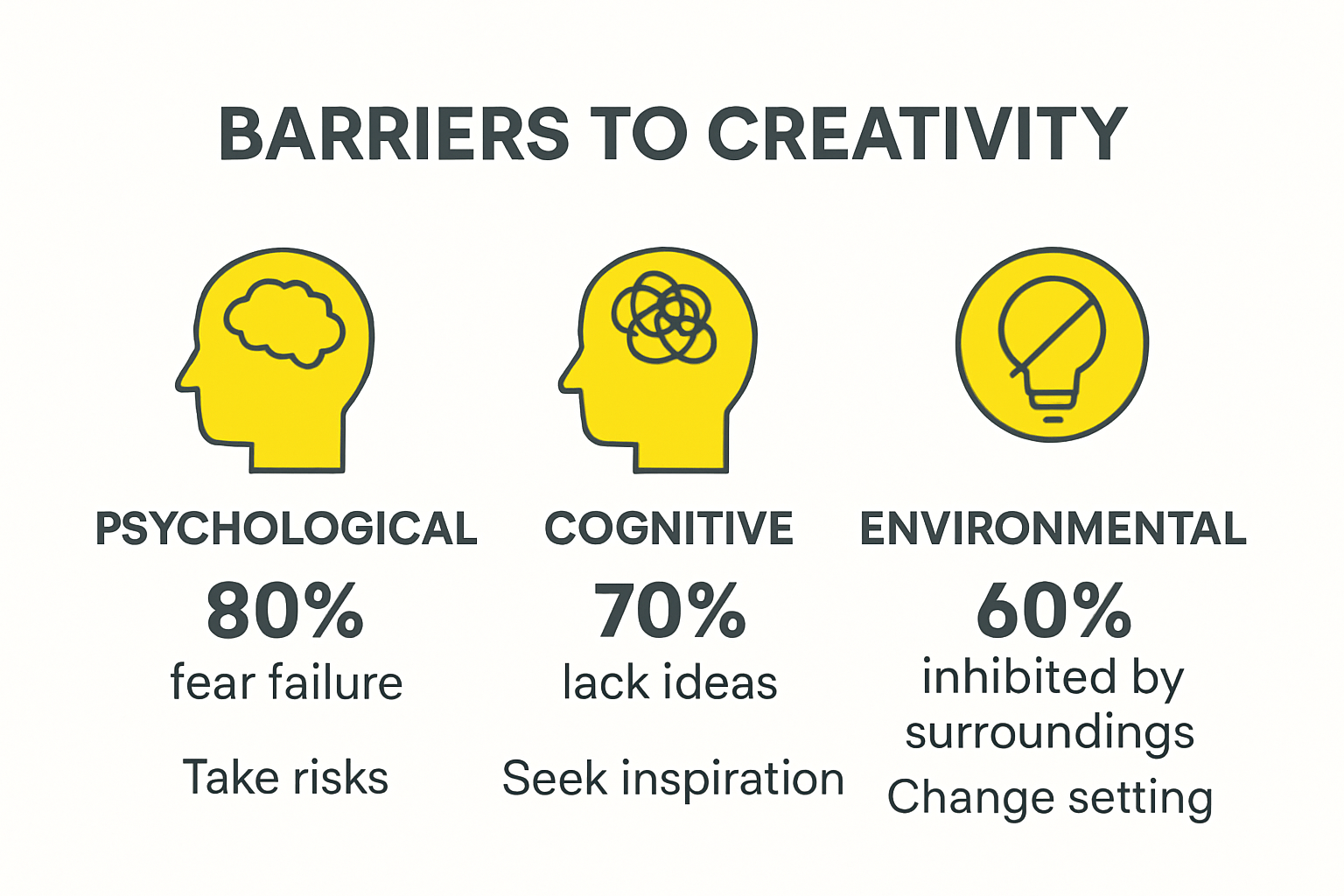
Individuals often struggle with creative expression due to deep-rooted psychological obstacles. Research from psychological studies reveals that low self-confidence and creative self-efficacy are critical impediments to creativity. When professionals doubt their innovative capabilities, they unconsciously limit their potential for generating novel ideas.
Personality traits play a significant role in creativity suppression. Shyness, conservatism, and fear of judgment can create invisible walls that prevent individuals from exploring unconventional thinking. These internal barriers manifest as self-censorship, where potentially brilliant ideas are dismissed before they can fully form.
Cognitive Blocks in Creative Thinking
Cognitive processes can dramatically impact creative output. Production blocking demonstrates how group dynamics and mental constraints inhibit idea generation. In professional settings, individuals often become paralyzed by the fear of speaking out of turn or worry about how their ideas might be perceived by colleagues.
Epistemic motivation significantly influences creative potential. Professionals with low epistemic motivation typically demonstrate a rigid need for closure and an intense fear of invalidation. This mindset creates a mental environment hostile to creative exploration. Conversely, individuals with high epistemic motivation remain open to experience, actively seek new information, and demonstrate a greater willingness to challenge existing paradigms.
Environmental and Systemic Creativity Suppressors
External factors can be equally detrimental to creativity. Rigid organizational structures, excessive bureaucracy, and punitive approaches to innovation can systematically discourage creative thinking. When professionals perceive that unconventional ideas are unwelcome or potentially risky, they naturally retreat into safer, more predictable modes of thinking.
Workplace cultures that prioritize efficiency over exploration often inadvertently stifle creativity. The constant pressure to deliver immediate results creates an environment where incremental, safe approaches are rewarded over transformative, potentially disruptive innovations. Explore our guide on cultivating creative mindsets to understand how to overcome these systemic barriers.
Recognizing these blocks is the first step toward dismantling them. By understanding the psychological, cognitive, and environmental factors that impede creative expression, professionals can develop targeted strategies to nurture their innovative potential and drive meaningful personal and professional growth.
Below is a summary table that categorizes the main types of creativity blocks discussed, along with their causes and effects. This helps readers quickly identify different barriers and how they manifest:
| Type of Creativity Block | Causes/Catalysts | Effects on Creativity |
|---|---|---|
| Psychological Barriers | Low self-confidence, fear of judgment, shyness | Self-censorship, limited idea sharing |
| Cognitive Blocks | Production blocking, rigid need for closure | Hesitation, lack of idea generation |
| Environmental/Systemic Suppressors | Rigid structures, bureaucracy, risk-averse cultures | Reticence to suggest new ideas |
| Workplace Efficiency Over Exploration | Pressure for quick results, focus on predictability | Stifled innovation, incremental ideas |
Daily Habits to Spark Creative Thinking
Creativity is not a spontaneous event but a skill that can be systematically cultivated through intentional daily practices. By incorporating specific habits into your routine, professionals can transform their cognitive landscape and unlock unprecedented levels of innovative thinking.
Movement and Physical Stimulation
Research from Stanford University reveals a fascinating connection between physical movement and creative output. Walking can increase creative inspiration by an average of 60 percent, even when done indoors or on a treadmill. This significant boost suggests that physical movement is not just beneficial for physical health but also serves as a powerful catalyst for creative thinking.
Professionals can integrate movement-based creativity practices into their daily routine. This might involve taking walking meetings, practicing brief midday stretching sessions, or using standing desks that encourage dynamic physical engagement. The key is to interrupt sedentary patterns and stimulate cognitive flexibility through gentle, consistent physical activity.
Mindful Reflection and Cognitive Reset
Deliberate mental practices play a crucial role in nurturing creativity. Meditation and mindfulness techniques offer powerful tools for resetting mental pathways and creating space for innovative thinking. Our guide on enhancing workplace productivity highlights how brief meditative practices can dramatically transform cognitive functioning.
Implementing a daily meditation routine does not require extensive time commitment. Even 10-15 minutes of focused breathing, journaling, or guided visualization can help professionals clear mental clutter, reduce stress, and create cognitive space for novel ideas to emerge. These practices train the brain to be more flexible, allowing unexpected connections and insights to surface.
Structured Creativity Exploration
Creativity thrives when professionals create intentional spaces for exploration and experimentation. This involves developing daily habits that challenge existing thought patterns and encourage divergent thinking. Practical strategies include maintaining an idea journal, dedicating time for unstructured brainstorming, or engaging with diverse sources of inspiration.
Set aside specific times for creative exploration where traditional productivity metrics are suspended. During these periods, focus on generating ideas without immediate judgment or evaluation. Experiment with techniques like mind mapping, free writing, or engaging with art and music from unfamiliar genres. The goal is to create a consistent practice of mental wandering and curiosity.
By integrating these daily habits, professionals can transform creativity from an elusive concept into a tangible, consistently accessible skill. The journey toward enhanced creative thinking is not about grand gestures but about small, intentional practices that gradually reshape cognitive landscapes and unlock extraordinary potential.
The following table organizes daily habits that can spark creative thinking, along with practical examples and their intended creative benefits. This provides an at-a-glance guide for implementing these strategies:
| Daily Habit | Practical Example | Creative Benefit |
|---|---|---|
| Movement & Physical Stimulation | Walking meetings, stretching, using standing desk | Boosts inspiration, increases flexibility |
| Mindful Reflection & Cognitive Reset | Meditation, journaling, guided visualization | Clears mental clutter, reduces stress |
| Structured Creativity Exploration | Idea journal, brainstorming, mind mapping | Encourages divergent thinking, curiosity |
Leveraging Community and Collaboration
Creativity is not a solitary journey but a collaborative process that flourishes through meaningful interactions and shared experiences. By intentionally cultivating community connections and embracing collaborative environments, professionals can unlock unprecedented levels of creative potential.
Digital Platforms for Creative Exchange
Research exploring online creative communities reveals the transformative power of digital platforms designed for sharing works-in-progress. These spaces provide professionals with unique opportunities to receive feedback, gain diverse perspectives, and refine their innovative ideas through collective insights.
Online collaborative environments offer flexible, low-barrier entry points for creative exchange. Digital forums, specialized networking platforms, and virtual workshops enable professionals to transcend geographical limitations and connect with like-minded individuals across different domains. Explore our strategies for virtual engagement to understand how technology can facilitate meaningful creative interactions.
Interdisciplinary Collaboration Dynamics
Scientific research on collaboration diversity demonstrates that teams spanning multiple disciplines and institutions are significantly more likely to generate groundbreaking innovations. When professionals from varied backgrounds converge, they bring unique cognitive frameworks that challenge existing paradigms and spark novel thinking approaches.
Interdisciplinary collaboration requires intentional strategy. Professionals can cultivate these interactions by attending cross-sector conferences, participating in multidisciplinary workshops, or deliberately seeking perspectives outside their immediate professional ecosystem. The goal is to create intellectual friction that generates unexpected creative breakthroughs.
Physical and Virtual Communal Spaces
Research on educational innovation highlights the critical role of communal spaces in nurturing creativity. These environments, whether physical or virtual, serve as catalysts for peer learning, knowledge exchange, and collective ideation.
Professionals can design intentional communal experiences through regular mastermind groups, collaborative project spaces, or structured peer review sessions. These interactions should prioritize psychological safety, encouraging open dialogue and constructive feedback. The most effective creative communities create environments where vulnerability is celebrated and diverse perspectives are genuinely welcomed.
By strategically leveraging community and collaboration, professionals transform creativity from an individual pursuit into a collective journey of continuous learning and innovation. The most powerful creative insights often emerge not in isolation, but through meaningful connections that challenge, inspire, and expand our understanding of what is possible.
Turning Creativity Into Real-World Impact
Creativity transcends abstract ideation. The true measure of innovative thinking lies in its capacity to generate tangible, meaningful transformations across personal and professional domains. Translating creative potential into concrete outcomes requires strategic approaches that bridge imagination with practical implementation.
Developing Actionable Creative Strategies
Research from educational innovation studies emphasizes the critical need for creating adaptive creative ecosystems that prepare individuals for complex, uncertain environments. This approach goes beyond traditional problem-solving, focusing on developing frameworks that systematically convert creative insights into actionable strategies.
Professionals can implement this by establishing clear pathways from ideation to execution. This involves creating structured processes that validate creative concepts, develop prototype solutions, and establish measurable implementation metrics. The goal is to transform creative thinking from an ephemeral experience into a disciplined approach for generating real-world value.
Emotional Intelligence and Creative Transformation
Research from the Yale Center for Emotional Intelligence reveals a profound connection between emotional intelligence and creative achievement. Positive learning environments that build trust and foster a sense of belonging directly correlate with enhanced creative behaviors and outcomes.
To translate this insight into practice, professionals must cultivate emotional resilience and create psychological safety within their teams and personal creative processes. This involves developing skills like constructive feedback reception, embracing vulnerability, and maintaining a growth mindset that views creative challenges as opportunities for learning and innovation. Explore our proven methods for boosting creative potential to understand how emotional intelligence can drive meaningful creative impact.
Systemic Approaches to Creative Implementation
Research from early childhood education experts provides valuable insights into creating environments that systematically nurture and channel creativity. The key is designing comprehensive ecosystems that support creative expression across multiple domains.
Professionals can adopt this systemic approach by implementing cross-functional collaboration strategies, creating dedicated innovation spaces, and establishing clear pathways for experimenting with and scaling creative ideas. This might involve developing internal innovation labs, organizing regular creative problem-solving workshops, or establishing mentorship programs that support creative skill development.
Turning creativity into real-world impact is not about sporadic moments of inspiration but about building robust, repeatable systems that consistently transform innovative thinking into meaningful outcomes. By integrating emotional intelligence, strategic frameworks, and systematic approaches, professionals can elevate creativity from a passive concept to an active, transformative force driving personal and organizational growth.
Frequently Asked Questions
How can I overcome psychological barriers to creativity?
Understanding and addressing psychological barriers like low self-confidence and fear of judgment is crucial. Practicing self-affirmation, seeking constructive feedback, and maintaining a growth mindset can help foster a more confident approach to sharing innovative ideas.
What daily habits can stimulate creative thinking?
Incorporating movement such as walking, practicing mindfulness through meditation, and engaging in structured brainstorming sessions can significantly enhance creative output. These habits help clear mental clutter and encourage cognitive flexibility.
How does collaboration impact creativity?
Collaboration fosters diverse perspectives and can lead to groundbreaking ideas. Engaging in interdisciplinary teamwork and creating supportive communal spaces enhances the creative process by allowing for shared knowledge and experiences.
What role does emotional intelligence play in creativity?
Emotional intelligence is essential for fostering a positive environment that promotes creativity. Building trust, practicing empathy, and embracing vulnerability can enhance team dynamics, which in turn supports innovative thinking and expression.
Take the Next Step in Your Creative Growth
Do you feel limited by psychological blocks or struggle to turn creative ideas into action? The article highlighted how challenges like self-doubt, fear of judgment, and rigid routines can keep you from unlocking your potential. It also showed that small daily changes and the right support network make all the difference.

Plentiful connects you with experienced coaches, healers, and guides who specialize in holistic well-being and creative personal growth. Whether you want to build new daily habits, overcome mindset obstacles, or nurture your creative confidence, you can find trusted professionals on Plentiful for one-on-one sessions, group workshops, and more. Get started and invest in your future with Plentiful’s well-being solutions today. Discover how fast your creativity can grow when you have the right guidance—visit Plentiful and unlock your next creative breakthrough.
Recommended
- How To Boost Your Creativity: 4 Proven Methods – Plentiful
- About Plentiful – The Online Marketplace for Finding Your Purpose
- How To Live a Meaningful Life: 7 Ways – Plentiful
- Burst of Joy: A 3-Minute Creativity Boost | Jenn Baljko
- Laughter As a Tool | Fall in Laugh
- Creativity – Plentiful
Ready to improve your life?
Access our free newsletter designed to help you become the best version of yourself.
Learn how to find your path, understand yourself, and make progress toward your dream life.