







Ever feel like life is on autopilot? The days blur together, your goals feel distant, and that spark that once drove you forward has quietly dimmed. You’re not alone. More than 70% of professionals report feeling stuck or unfulfilled at some point, even when everything looks “successful” from the outside.
The truth is, stagnation isn’t failure… it’s feedback. It’s your inner compass signaling that something deeper wants to grow, evolve, or shift. When you learn to listen, those feelings of boredom or disconnection become powerful clues pointing you back to meaning and momentum.
In this guide, you’ll discover six practical steps to overcome stagnation and rediscover your sense of purpose—from assessing where you are and identifying what’s missing, to setting meaningful goals and creating an action plan that actually sticks. By the end, you’ll know exactly how to turn feeling stuck into an opportunity for renewal, direction, and authentic fulfillment.
Because the opposite of stagnation isn’t hustle, it’s aliveness.
Table of Contents
- Step 1: Assess Your Current Situation
- Step 2: Identify Areas For Growth
- Step 3: Set Clear, Achievable Goals
- Step 4: Create An Action Plan
- Step 5: Monitor Progress And Adjust
- Step 6: Celebrate Milestones And Reflect
Quick Summary
| Key Point | Explanation |
|---|---|
| 1. Assess Your Current Situation | Conduct a life audit to understand where you are versus where you want to be. |
| 2. Identify Growth Areas | Cross-reference your life audit with aspirations to find strategic development opportunities. |
| 3. Set Clear, Achievable Goals | Create specific, measurable goals that drive you toward your desired outcomes. |
| 4. Create an Action Plan | Develop a strategic roadmap with specific steps and checkpoints for implementing your goals. |
| 5. Monitor Progress and Adjust | Regularly review and adapt your plan, treating it as a flexible guide for your growth. |
| 6. Celebrate Milestones and Reflect | Acknowledge your achievements and reflect on personal growth through intentional practices. |
Step 1: Assess Your Current Situation
Stagnation sneaks up silently, often disguised as comfort and routine. Assessing your current situation means taking an honest, unfiltered look at where you are versus where you genuinely want to be. This critical first step helps you understand the gap between your present reality and your deeper aspirations.
Begin by creating a comprehensive life audit. Pull out a journal or open a digital document and start mapping out different domains of your existence: career, personal relationships, physical health, emotional wellbeing, spiritual growth, and personal development. For each area, ask yourself penetrating questions that reveal your true feelings. What energizes you? What feels draining? Where do you sense potential but lack momentum?
A powerful technique for this assessment involves practicing radical self-honesty. Many professionals get trapped in narratives they’ve constructed about themselves, believing they should feel satisfied because they’ve achieved certain external markers of success. Discover how a career transition coach can help you navigate this process if you find yourself struggling to break through internal barriers.
As you document your reflections, pay attention to emotional responses. Feelings of numbness, consistent low-grade frustration, or a sense of going through motions without genuine excitement are clear indicators of stagnation. These emotional signals are not weaknesses but valuable data points guiding you toward necessary changes.
The goal of this assessment isn’t to criticize yourself but to create a compassionate, clear snapshot of your current landscape.
The table below outlines typical areas to include in your life audit and provides guiding questions to help you assess each category honestly.
| Life Domain | Reflective Questions |
|---|---|
| Career | What energizes you at work? What feels unfulfilling or draining in your professional life? |
| Personal Relationships | Are your interactions supportive and uplifting? Where do you experience friction or distance? |
| Physical Health | How do you feel physically on a daily basis? Where do you notice low energy or discomfort? |
| Emotional Wellbeing | Do you feel mostly engaged or emotionally numb? What triggers stress or calm for you? |
| Spiritual Growth | Are you connected to a deeper sense of meaning or purpose? Do you feel spiritually aligned? |
| Personal Development | In what ways are you learning and growing? Where do you sense untapped potential? |
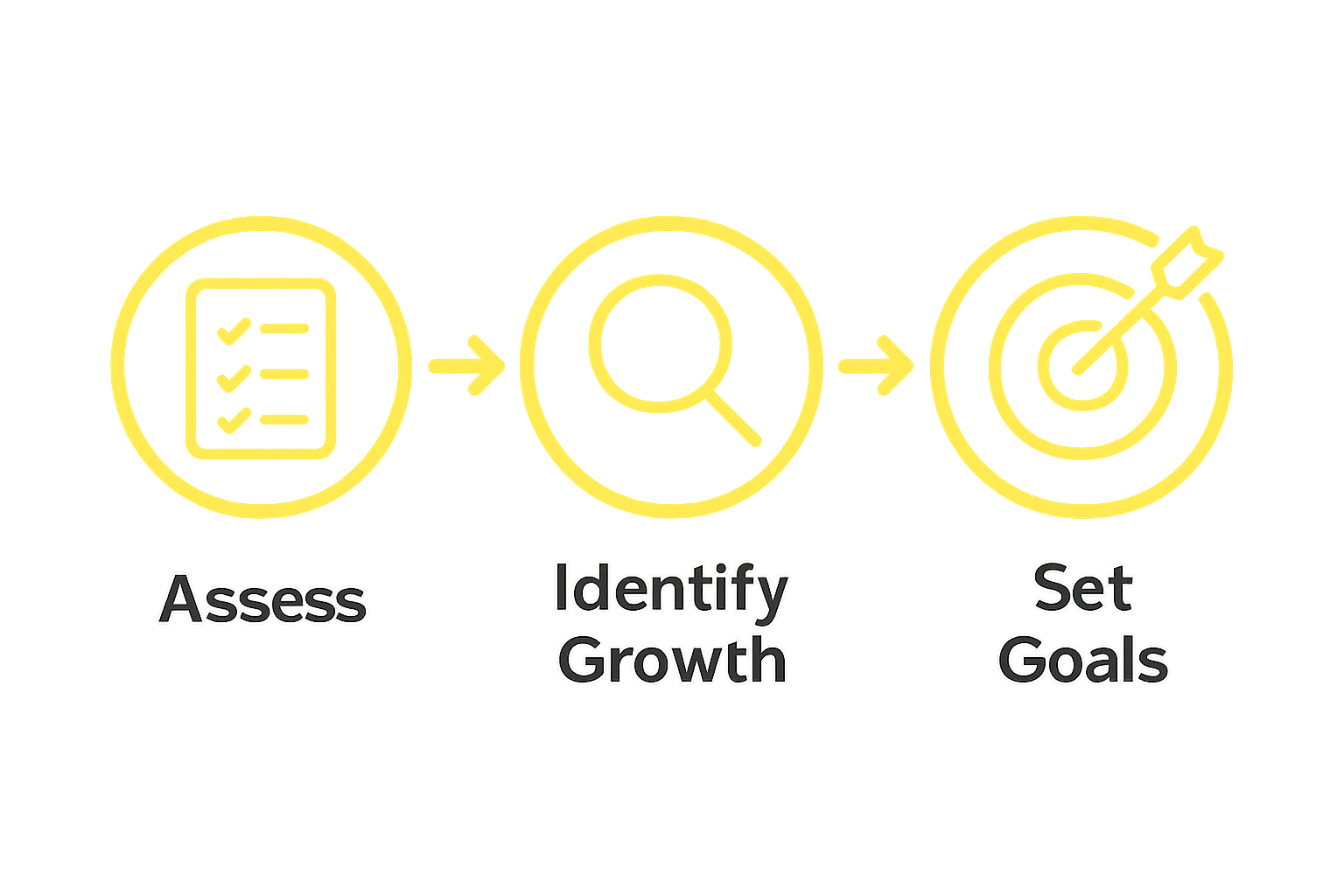 Think of this process as drawing a detailed map before embarking on a transformative journey. By understanding exactly where you stand, you’ll be better equipped to chart a meaningful path forward, turning stagnation into an opportunity for profound personal reinvention.
Step 2: Identify Areas for Growth
Identifying areas for growth transforms your previous self-assessment from passive reflection into an active blueprint for personal transformation. This step is about converting insights into intentional development opportunities, creating a targeted approach to breaking through your current stagnation.
Begin by cross-referencing your life audit with your deepest aspirations. Look for discrepancies between your current reality and your authentic vision. These gaps are not failures but invitations for strategic personal development. Perhaps you feel professionally unfulfilled, sensing untapped potential in your career trajectory, or you recognize emotional patterns that consistently undermine your relationships and personal satisfaction.
Learn how a personalized career coaching session can help clarify your growth opportunities if you find yourself struggling to pinpoint specific areas of potential improvement. Professional guidance can offer external perspective and structured strategies for identifying growth pathways.
During this identification process, categorize potential growth areas into three primary dimensions: skill development, emotional intelligence, and inner belief systems. Skill development might involve acquiring new professional capabilities or learning techniques that expand your personal effectiveness. Emotional intelligence growth could mean developing better communication strategies, enhancing self-awareness, or learning to manage stress more effectively. Transforming inner belief systems involves challenging limiting narratives that have unconsciously restricted your potential.
Be ruthlessly compassionate with yourself during this exploration. Growth is not about self-criticism but about recognizing your inherent capacity for evolution. Each identified area represents an opportunity for meaningful personal expansion, a doorway to experiencing more authentic versions of yourself. The most powerful growth emerges when you approach these areas with curiosity, patience, and a commitment to continuous learning rather than rigid perfectionism.
Step 3: Set Clear, Achievable Goals
Transforming potential into tangible progress requires crafting goals that are both inspiring and realistic.
Setting clear, achievable goals bridges the gap between your current situation and your desired future, turning abstract aspirations into concrete action plans.
The art of effective goal setting lies in creating precise, meaningful objectives that resonate with your deeper purpose. Instead of vague statements, construct goals that are specific, measurable, and time-bound. For instance, rather than saying “I want to improve my career,” articulate a goal like “I will complete two professional certification courses and network with three industry leaders in the next six months.”
Explore comprehensive goal setting strategies for professionals to refine your approach and maximize your potential. Professional guidance can help you structure goals that are both challenging and attainable.
Break down larger objectives into smaller, manageable milestones. This approach prevents overwhelm and creates a sense of consistent progress. Each small victory builds momentum and confidence, helping you overcome the inertia of stagnation. Consider creating a visual representation of your goals—a vision board, a detailed spreadsheet, or a dedicated journal—that allows you to track progress and maintain motivation.
Remember that goal setting is not about perfection but about intentional movement. Some goals may shift as you grow and gain new insights, and that’s perfectly normal. The key is maintaining flexibility while staying committed to your overall vision. Regularly review and adjust your goals, treating them as living documents that evolve with your personal growth journey. By approaching goal setting as a dynamic, compassionate process, you transform potential stagnation into a powerful opportunity for continuous personal and professional development.
Step 4: Create an Action Plan
An action plan transforms abstract goals into a concrete roadmap, providing the strategic framework that bridges aspiration and achievement. This critical step moves you from conceptualizing change to systematically implementing it, turning potential energy into kinetic momentum.
Develop a structured approach that breaks down each goal into specific, actionable steps. Start by creating a comprehensive timeline that outlines precise milestones, deadlines, and required resources. Consider utilizing digital tools or a dedicated notebook to map out your journey, ensuring each goal has multiple intermediate checkpoints that allow for tracking progress and maintaining motivation.
Explore personalized strategies for professional goal implementation to refine your action planning approach. Professional guidance can help you create more robust and adaptable strategies.
Anticipate potential obstacles by developing contingency strategies for each major goal. According to research from the National Academies, effective action plans include identifying potential barriers and proactively planning methods to overcome them. This means creating alternative pathways and maintaining flexibility when initial approaches encounter resistance.
Integrate accountability mechanisms into your action plan. This might involve scheduling regular self-review sessions, partnering with an accountability coach, or creating a support network of peers who understand your growth objectives. The key is building a system that keeps you consistently engaged and motivated, transforming your action plan from a static document into a dynamic tool for personal transformation. Remember that an exceptional action plan is not about perfection but about consistent, intentional movement toward your most meaningful aspirations.
Step 5: Monitor Progress and Adjust
Monitoring progress is not about creating rigid performance metrics but developing a compassionate, dynamic relationship with your personal growth journey. This step transforms your action plan from a static document into a living, breathing roadmap that responds to your evolving needs and insights.
Establish a consistent review rhythm that allows for honest self-reflection and strategic recalibration. Schedule monthly or quarterly personal progress check-ins where you thoroughly examine your goals, achievements, and emerging challenges. During these sessions, approach yourself with curiosity rather than judgment, treating every insight as valuable information for continued development.
Explore professional coaching strategies for effective self-monitoring to enhance your progress tracking approach. Professional guidance can provide structured techniques for maintaining momentum.
According to research on personal development strategies, regular self-monitoring significantly increases accountability and adaptability. Develop a tracking system that feels natural to you—this might be a digital spreadsheet, a dedicated journal, or a visual progress board. The key is creating a method that provides clear visibility into your journey without becoming an additional source of stress.
Remember that adjusting your plan is not a sign of failure but of intelligence and growth. Stagnation emerges when we become rigidly attached to initial strategies instead of remaining flexible. Be willing to modify goals, timelines, and approaches as you gain new perspectives. Your action plan should serve you, not constrain you. Celebrate small victories, learn from setbacks, and maintain a forward-moving mindset that views every experience as an opportunity for deeper understanding and personal transformation.
Step 6: Celebrate Milestones and Reflect
Celebrating milestones is not a superficial exercise but a profound psychological practice that reinforces personal growth and sustains motivation. This critical step transforms your journey from a series of tasks into a meaningful narrative of transformation, acknowledging both your progress and the wisdom gained through challenges.
Create intentional rituals that honor your achievements, no matter how small. Design personal celebration practices that resonate with your authentic self. This might involve journaling about your progress, sharing accomplishments with a trusted friend, treating yourself to an experience that symbolizes your growth, or creating a visual representation of your journey.
Discover personalized strategies for mindful personal reflection to deepen your understanding of your growth process. Professional guidance can help you develop more meaningful reflection techniques.
According to research on psychological development, reflective practice is essential for building resilience and deepening self-understanding. During your reflection, examine not just what you’ve accomplished, but how you’ve grown internally. What beliefs have you challenged? What emotional patterns have you transformed? What unexpected insights have emerged from your journey?
Approach this reflection with radical self-compassion. Recognize that growth is rarely linear, and setbacks are not failures but valuable learning opportunities. By celebrating milestones and reflecting deeply, you’re not just tracking progress—you’re weaving a rich, nuanced story of personal evolution.
Use this checklist to keep track of essential completion criteria for overcoming stagnation, from self-assessment to personal reflection at key milestones.
| Step | Completion Criteria |
|---|---|
| Assess Your Current Situation | Completed a life audit and documented honest reflections |
| Identify Areas for Growth | Pinpointed specific areas for skill, emotional, and belief growth |
| Set Clear, Achievable Goals | Created at least one specific, measurable, and time-bound goal |
| Create an Action Plan | Developed action steps, anticipated obstacles, and set milestones |
| Monitor Progress and Adjust | Scheduled regular reviews and updated plans as needed |
| Celebrate Milestones and Reflect | Practiced personal rituals and documented lessons learned |
Turn Stagnation Into Authentic Growth With Plentiful
Feeling stuck or disconnected from your purpose is more common than you think. This article helped you reflect on your life audit, recognize emotional barriers, and identify where you want to grow. But you do not have to navigate these challenges alone. Real change requires guided support, accountability, and a holistic approach that addresses every part of your journey.

Join a global community that understands what you are going through. Plentiful connects you with trusted professionals, from career coaches and healers to yoga instructors and personal growth guides, all ready to help you break free from routine and create lasting transformation. Do not let another day go by feeling unfulfilled. Explore our holistic offerings and personalized services today at Plentiful. For direct support on breaking past stagnation, consider starting with a tailored session such as our Kickstart Your Career Shift. Rediscover your purpose and move forward with confidence.
Frequently Asked Questions
What steps can I take to assess my current situation and overcome stagnation?
Begin by conducting a life audit where you evaluate various aspects of your life, including career, relationships, health, and personal development. Utilize radical self-honesty to identify feelings of stagnation, and document your reflections to create a clear snapshot of your current status.
How can I identify specific areas for growth in my life?
Cross-reference your life audit with your deepest aspirations, looking for discrepancies between your reality and your vision. Focus on skill development, emotional intelligence, and changing limiting beliefs to pinpoint opportunities for personal transformation.
What are some effective goal-setting strategies to combat stagnation?
Set specific, measurable, achievable, relevant, and time-bound (SMART) goals that resonate with your purpose. Break larger objectives into smaller milestones to create a sense of progress and maintain motivation throughout your journey of self-improvement.
How can I monitor my progress and make necessary adjustments?
Establish a consistent schedule for self-reflection, such as monthly check-ins, where you review your goals and experiences. Use a tracking system that works for you, and remain flexible in adjusting your plans as needed to stay aligned with your growth journey.
Recommended
- How to Get Out of a Rut: 7 Simple Steps to Take Today – Plentiful
- What Is My Purpose In Life? Feeling Lost in Life and Unfulfilled? – Plentiful
- A Guide to Finding Your Way: I Don’t Know What to Do with My Life
- Midlife Crisis – What Is Your Purpose In Life | Plentiful
- Find Your Life Purpose | Milagros Phillips
- Develop Your Dream Life | Austin Kory
- Inject More Joy Into Your Job | Casie Tennin
Want your life to be more Plentiful?
Sign up for stories, experience info and launches, and event invites delivered right to your inbox.
Unsubscribe anytime.