







Are you eating with intention… or just autopiloting through your plate?
Every single day, you make over 200 food-related decisions, most without even realizing it. From mindlessly grabbing snacks between Zoom calls to devouring dinner while doom-scrolling, unconscious eating has become the norm in our fast-paced world. But here’s the truth: your relationship with food shapes more than your waistline. It affects your energy, focus, emotional balance, and long-term well-being.
That’s where mindful eating practices come in.
Mindful eating isn’t a diet. It’s not about restriction, guilt, or perfection. It’s about presence. About truly tasting your food, tuning into your body’s needs, and honoring the full experience of nourishment.
In this practical, science-backed guide, you’ll learn how to:
- Assess your current eating habits with honesty (no shame, just awareness)
- Transform your environment to support better choices effortlessly
- Implement powerful techniques that reconnect you to your body and plate
- Reflect and recalibrate when life throws you off track
- And finally, integrate mindful eating into your daily rhythm. So it becomes second nature
If you’re ready to break free from emotional eating, late-night snacking regret, and food autopilot… this is your starting point. Let’s bring intention back to the table.
Table of Contents
- Step 1: Assess Your Current Eating Habits
- Step 2: Create A Mindful Eating Environment
- Step 3: Implement Mindful Eating Techniques
- Step 4: Reflect And Adjust Your Practices
- Step 5: Incorporate Mindful Eating Into Daily Life
Quick Summary
| Key Point | Explanation |
|---|---|
| 1. Document Your Eating Habits | Keep a detailed record of everything you eat for a week to identify patterns and triggers. |
| 2. Create a Mindful Eating Environment | Designate a distraction-free space for meals to enhance your nutritional experience and focus. |
| 3. Practice Mindful Eating Techniques | Use techniques like the three-bite rule and breath control to engage fully with your meals. |
| 4. Reflect on Your Eating Patterns | Maintain a weekly journal to review your experiences and identify areas for improvement. |
| 5. Incorporate Mindfulness in Daily Routines | Establish consistent rituals around meals to integrate mindful eating into everyday life. |
Step 1: Assess Your Current Eating Habits
Understanding your current eating patterns is the foundational step in developing mindful eating practices. Most individuals operate on autopilot when consuming food, rarely pausing to examine the nuanced relationship between their eating behaviors and overall wellness. By carefully analyzing your existing habits, you create a personalized roadmap for transformative nutritional awareness.
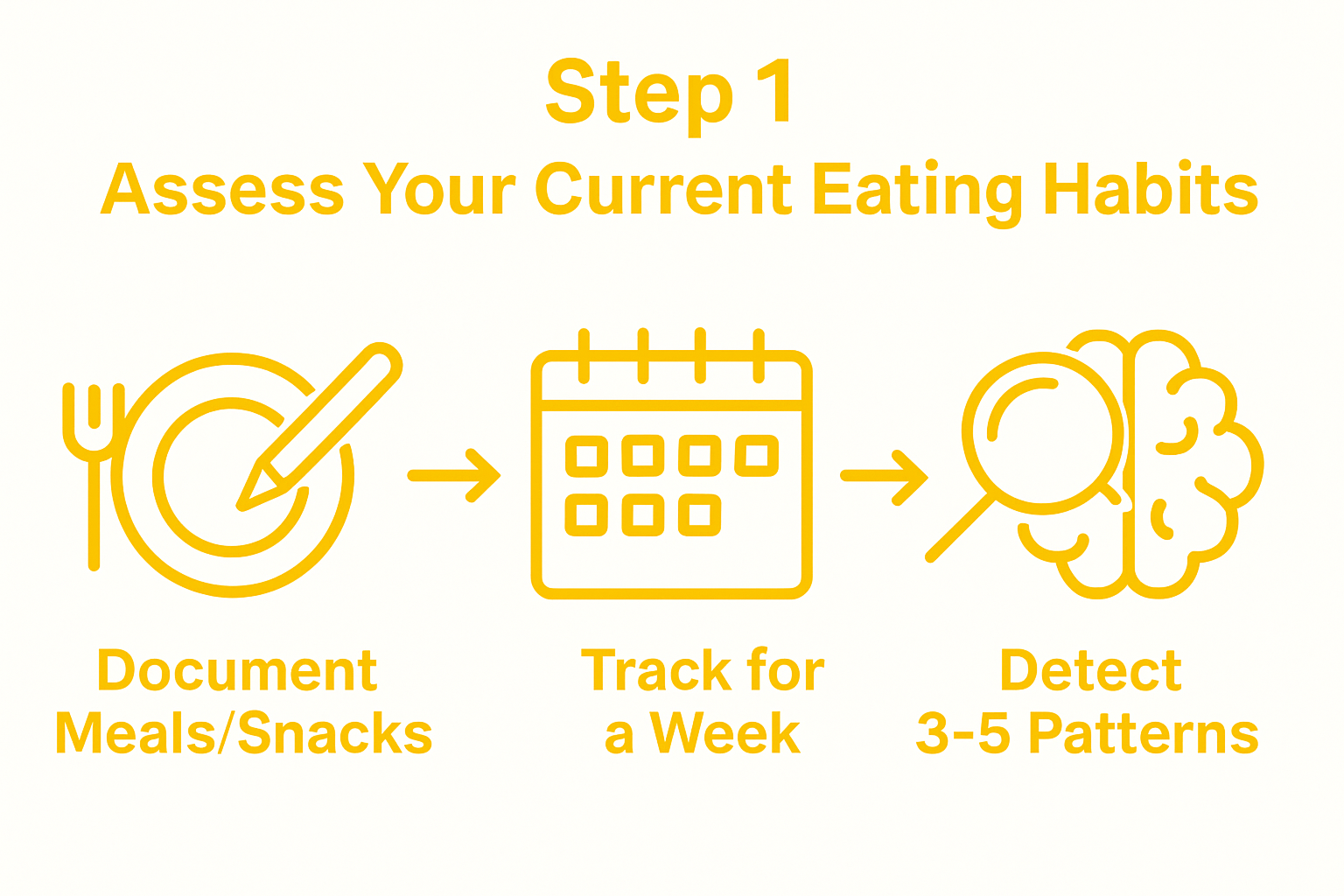
Begin this assessment by documenting your typical daily food intake with meticulous honesty. For one week, record everything you consume, including meals, snacks, beverages, and even mindless nibbling. Use a dedicated journal or digital tracking app to capture not just what you eat, but how and when you eat. Note environmental factors like location, emotional state, time of day, and potential triggers for unintentional eating.
As you record your eating patterns, pay special attention to subtle behaviors that reveal deeper nutritional relationships. Are you eating in response to genuine hunger, or are emotional states driving your consumption? Do you find yourself munching while watching television or working? Are meals consumed quickly without genuine appreciation for flavor and texture? These observations provide critical insights into your current eating dynamics.
Learn more about tracking your food and mood connection to develop a comprehensive understanding of your nutritional landscape. The goal is not judgment, but compassionate self-awareness.
To verify successful completion of this assessment, review your documented week and identify three to five consistent patterns or behaviors that surprise you. These revelations become your personalized entry points for introducing mindful eating practices.
 Remember, this initial step is about understanding your current relationship with food without criticism, creating a foundation for intentional, nourishing nutritional choices.
Step 2: Create a Mindful Eating Environment
Transforming your physical and psychological eating environment is crucial in developing sustainable mindful eating practices. Your surroundings profoundly influence food choices, consumption patterns, and overall nutritional experiences. A thoughtfully designed eating environment becomes a powerful catalyst for intentional nourishment.
Start by decluttering your eating spaces, removing distractions that fragment your attention during meals. This means creating dedicated eating zones free from televisions, smartphones, computers, and work materials. Your dining area should feel like a sanctuary of nourishment, not a multitasking battlefield. Choose plates, utensils, and table settings that invite presence and appreciation. Soft, neutral colors can help create a calm atmosphere that supports slower, more deliberate eating.
Consider the sensory experience of your eating environment. Natural lighting, minimal noise, and comfortable seating contribute to a relaxed state that promotes mindful consumption. Arrange your dining space to face windows or pleasant views when possible, allowing visual tranquility to complement your meal. Invest in quality tableware that makes each meal feel like a considered experience rather than a rushed necessity.
Explore our guide to transforming your eating journey and discover deeper strategies for creating intentional nutritional spaces. To verify successful implementation, assess whether your eating environment now feels deliberately calm and inviting. Your space should spark a sense of anticipation and respect for nourishment, transforming meals from mere fuel intake to meaningful, present moments of connection with yourself and your food.
Step 3: Implement Mindful Eating Techniques
Mindful eating transforms nutrition from a mechanical process into a profound sensory experience. This step introduces practical techniques that shift your relationship with food from unconscious consumption to intentional nourishment. The goal is to cultivate deep awareness and appreciation during every meal, turning eating into a deliberate, enriching practice.
Slow down and engage all your senses during meals. Begin by taking three deep breaths before eating, signaling to your body that it is time to be present. Use smaller utensils, chew each bite thoroughly, and pause between mouthfuls. Notice the colors, textures, aromas, and flavors of your food. When you eat slowly, you not only enhance digestion but also create space for genuine enjoyment and recognition of your body’s hunger and fullness signals.
Practice the three-bite rule for mindful tasting. With each new food item on your plate, take three intentional bites. During the first bite, simply observe the food’s initial flavor. The second bite allows you to explore its complexity and nuanced taste profile. By the third bite, assess how the food makes you feel physically and emotionally. This technique transforms eating from automatic consumption to a conscious, exploratory experience.
Connect with nutrition experts who can guide your mindful eating journey and provide personalized strategies. To verify successful implementation, reflect on your meals. Can you recall the specific flavors and textures? Did you notice when you began feeling satisfied? Were you fully present during your meal? These questions reveal your progress in developing mindful eating techniques, marking a significant step toward more intentional, nourishing nutritional practices.
Step 4: Reflect and Adjust Your Practices
Reflection transforms mindful eating from a temporary practice into a sustainable lifestyle. This crucial step involves honest self-assessment, compassionate observation, and strategic recalibration of your nutritional approach. The goal is not perfection, but continuous gentle improvement and deeper understanding of your unique relationship with food.
Create a weekly mindful eating journal to track your experiences, challenges, and insights. After each week, set aside 30 minutes for intentional review. Examine your eating patterns without judgment, looking for recurring themes and emotional connections to food. Note moments of unconscious eating, triggers that disrupt mindful practices, and instances where you successfully maintained present-moment awareness during meals. Pay special attention to physical sensations, emotional states, and the environmental factors that influence your eating behaviors.
Develop a flexible adaptation strategy that responds to your observations. If you notice consistent stress-driven eating patterns, explore alternative stress management techniques. When you recognize specific environments or times that challenge your mindful eating practices, design targeted interventions. Small, incremental adjustments are more sustainable than dramatic overhauls. Experiment with different strategies, understanding that mindful eating is a personalized journey of continuous learning and self-discovery.
Explore intuitive guidance techniques to support your mindful eating journey and deepen your self-awareness. To verify successful implementation, assess your ability to approach your eating habits with curiosity rather than criticism. Can you identify patterns without shame? Are you developing a more compassionate relationship with your nutritional choices? These reflective capacities indicate meaningful progress in your mindful eating transformation.
Step 5: Incorporate Mindful Eating into Daily Life
Transforming mindful eating from an occasional practice to a consistent lifestyle requires strategic integration into your daily routines. This step focuses on weaving intentional nutritional awareness into the fabric of your everyday experiences, making mindfulness as natural as breathing.
Develop morning and evening rituals that anchor your mindful eating approach. Begin each day by setting a nutritional intention, visualizing nourishing meals that support your wellness goals. Create a morning routine that includes preparing a mindful breakfast, where you consciously select ingredients, appreciate their colors and textures, and eat without digital distractions. Evening rituals might involve reflecting on your day’s nutritional choices, expressing gratitude for the nourishment you received, and planning intentional meals for the following day.
Extend mindfulness beyond meal times by cultivating a holistic relationship with food. Practice conscious food selection during grocery shopping, treating each item as an opportunity for nourishment. Touch produce, smell herbs, and make selections that align with your body’s genuine needs rather than impulse or habit. Learn to distinguish between physical hunger and emotional cravings by pausing and checking in with your body before eating. Consider how different foods make you feel not just immediately, but hours after consumption.
Explore strategies for plant-based nourishment that support mindful eating and enhance your holistic wellness journey. To verify successful implementation, assess your daily eating patterns. Are you more present during meals? Can you name the specific sensations and emotions associated with your food choices? Do you feel a deeper connection to your nutritional experiences? These reflections indicate that mindful eating has transitioned from a practice to an integrated lifestyle, marking a significant milestone in your wellness transformation.
Below is a checklist table to help you verify completion of each step as you incorporate mindful eating practices into your daily routine.
| Step | Completion Criteria | How to Verify |
|---|---|---|
| 1: Assess Eating Habits | Documented all meals, snacks, and drinks for one week | Identified 3-5 patterns or behaviors that surprised you |
| 2: Create Eating Environment | Designated a calm, clutter-free dining area | Eating area feels inviting, free of distractions, and used for meals only |
| 3: Mindful Techniques | Practiced slow eating, deep breaths, and three-bite rule | Can describe specific flavors, textures, and levels of fullness after eating |
| 4: Reflect & Adjust | Kept a weekly mindful eating journal and reviewed experiences | Noted recurring themes and emotional connections, adjusted strategies as needed |
| 5: Daily Integration | Established morning/evening meal rituals and conscious grocery shopping | Feel more present and aware of sensations and emotions during and after meals |
Transform Your Mindful Eating Journey with Personalized Support
If trying to build mindful eating habits feels overwhelming or isolating, you are not alone. Many people discover hidden patterns in their eating behaviors yet struggle to turn self-awareness into lasting change. The article revealed how real-life obstacles like emotional triggers, mindless snacking, or difficulty creating calm eating environments can hold you back from the lasting wellness you seek.

Ready to break through these challenges and unlock sustainable results? At Plentiful, you can work directly with mindful eating coaches, nutrition experts, and holistic guides who offer proven solutions. Explore guided tools like the Food and Mood Journal Analysis to deepen your self-awareness. Discover live guidance for creating a mindful eating environment so you can build nourishing rituals that fit your lifestyle. Begin your personal transformation now and connect with experts who understand your journey. Visit Plentiful to find the support you deserve and take the next step today.
Frequently Asked Questions
What is mindful eating?
Mindful eating is the practice of being fully present and aware during meals, focusing on the sensory experience of eating and recognizing hunger and fullness cues without judgment.
How can I create a mindful eating environment at home?
To create a mindful eating environment, declutter your eating spaces, remove distractions like electronics, and use calming colors and quality tableware to invite presence and appreciation during meals.
What techniques can I use to practice mindful eating?
Techniques for mindful eating include slowing down to engage all senses during meals, using the three-bite rule to fully experience new foods, and taking deep breaths before and during meals to signal presence.
How can I incorporate mindful eating into my daily routine?
Incorporate mindful eating by developing morning and evening rituals that set nutritional intentions, consciously selecting ingredients while grocery shopping, and reflecting on your food choices to foster a deeper connection with your nutrition.
Recommended
- Savor & Nourish: A Mindful Eating Journey | Erin Meyer
- Deep Health Coaching with Erin Meyer
- Joyful Health Julia | Certified Nutritional Therapy Practitioner
- Nutrition Health Assessment & Plan | Julia Stephens
- Can You Run, Walk, Or Swim Away Fat?
Want your life to be more Plentiful?
Sign up for stories, experience info and launches, and event invites delivered right to your inbox.
Unsubscribe anytime.


