







Ever walked into a meeting and thought, “Any minute now, they’ll realize I have no idea what I’m doing”? You’re not alone. Up to 70% of professionals, from interns to CEOs, experience imposter syndrome at some point in their careers. It’s that gnawing fear that your success is a fluke, that you’ve somehow fooled everyone, and that sooner or later, the truth will come out.
The irony? The more accomplished you become, the louder that inner critic tends to get. But here’s the good news: imposter syndrome isn’t proof that you’re a fraud; it’s proof that you care, that you’re growing, and that you’re stretching beyond your comfort zone.
In this guide, you’ll learn five proven steps to break free from the endless cycle of self-doubt and comparison. From recognizing the subtle signs of imposter thoughts to reframing negative self-talk, documenting your wins, and seeking meaningful feedback, you’ll discover how to turn insecurity into fuel for confidence and growth.
By the end, you’ll understand what imposter syndrome really is, why even the most successful people experience it, and—most importantly—how to silence that inner critic once and for all. You’ll walk away with practical tools to build lasting confidence, so you can stop questioning your worth and start owning your brilliance.
Table of Contents
- Step 1: Identify And Acknowledge Your Feelings
- Step 2: Analyze Your Achievements And Skills
- Step 3: Reframe Your Negative Self-Talk
- Step 4: Seek Feedback From Trusted Sources
- Step 5: Set Realistic Goals And Celebrate Progress
Quick Summary
| Key Point | Explanation |
|---|---|
| 1. Recognize Your Emotions | Identify feelings driving self-doubt and document them. Awareness is the first step to overcoming imposter syndrome. |
| 2. Analyze Achievements Objectively | Create a professional portfolio detailing accomplishments and skills. Quantifying success provides evidence against self-doubt. |
| 3. Reframe Negative Self-Talk | Challenge and reshape negative thoughts into constructive narratives. This encourages a supportive internal dialogue. |
| 4. Seek Trustworthy Feedback | Build a feedback network with mentors and colleagues. External perspectives help validate abilities and challenge negative perceptions. |
| 5. Set Realistic Goals and Celebrate | Develop achievable goals and celebrate small wins. Recognition of progress reinforces confidence and counters feelings of inadequacy. |
Step 1: Identify and Acknowledge Your Feelings
Overcoming imposter syndrome begins with a critical first step: understanding and recognizing the complex emotions driving your self-doubt. Many professionals experience these feelings but struggle to name and address them effectively. Learn to Trust Your Gut! | A Small Group Virtual Workshop can provide additional support in this journey.
The initial challenge lies in distinguishing between genuine performance concerns and the irrational narrative of imposter syndrome. These feelings often manifest as persistent self-criticism, an overwhelming sense that your achievements are mere luck, and a constant fear of being “found out” as incompetent. Professional success paradoxically intensifies these sensations, making high achievers particularly vulnerable.
Recognizing the Signs
To effectively combat imposter syndrome, you must become a keen observer of your internal dialogue. Pay attention to recurring thought patterns that undermine your confidence. Do you frequently discount your accomplishments? Do you attribute successes to external factors or luck rather than your skills and hard work? These are telltale signs of imposter syndrome.
Start by maintaining a thought journal where you document moments of self-doubt. Record specific instances when you feel inadequate, the context surrounding these feelings, and the underlying beliefs driving them. This practice transforms abstract emotions into concrete observations, allowing you to analyze and challenge these destructive thought patterns.
According to research from the American Psychological Association, acknowledging these feelings is not about elimination but understanding. Recognize that experiencing imposter syndrome doesn’t diminish your capabilities. Instead, it reveals a complex psychological response common among high-achieving professionals.
Successful completion of this step means developing a compassionate, objective perspective on your internal experiences. You should emerge with increased self-awareness, ready to challenge the irrational narratives that have been holding you back. The goal is not to eradicate self-doubt entirely but to develop a more balanced, realistic view of your abilities and achievements.
Step 2: Analyze Your Achievements and Skills
After identifying the emotional landscape of imposter syndrome, the next crucial step is objectively examining your professional journey and capabilities. This process transforms self-doubt into concrete evidence of your competence. Identify Your Strengths with a Gallup-Certified Coach can provide additional structured guidance during this exploration.
Begin by creating a comprehensive professional achievement portfolio. This is not merely a resume but a detailed narrative of your accomplishments, skills, and unique professional contributions. Gather documentation that validates your expertise: performance reviews, project outcomes, client testimonials, awards, and measurable professional milestones.
Quantifying Your Success
Most professionals suffering from imposter syndrome struggle to recognize their genuine capabilities. The key is transforming subjective experiences into objective data. For each professional role or significant project, document specific metrics that demonstrate your impact. Did you increase team productivity? Reduce operational costs? Implement successful strategies? Quantify these achievements with precise numbers and percentages.
Consider creating a personal assessment framework that breaks down your skills into tangible categories. Technical competencies, leadership qualities, problem solving abilities, and interpersonal skills should all be evaluated. Rate yourself honestly but compassionately, using evidence from your professional history. This systematic approach helps neutralize emotional self-criticism by anchoring your self-perception in factual accomplishments.
According to research from the American Psychological Association, reflecting on past achievements allows individuals to gain perspective and reduces the belief that success is purely coincidental. By methodically documenting your professional journey, you transform nebulous feelings of inadequacy into a clear, confident narrative of competence.
Successful completion of this step means developing a comprehensive, evidence-based understanding of your professional value. You should feel more grounded in your capabilities, with a documented record that objectively validates your skills and achievements. The goal is not self-aggrandizement but realistic, compassionate self-assessment.
Step 3: Reframe Your Negative Self-Talk
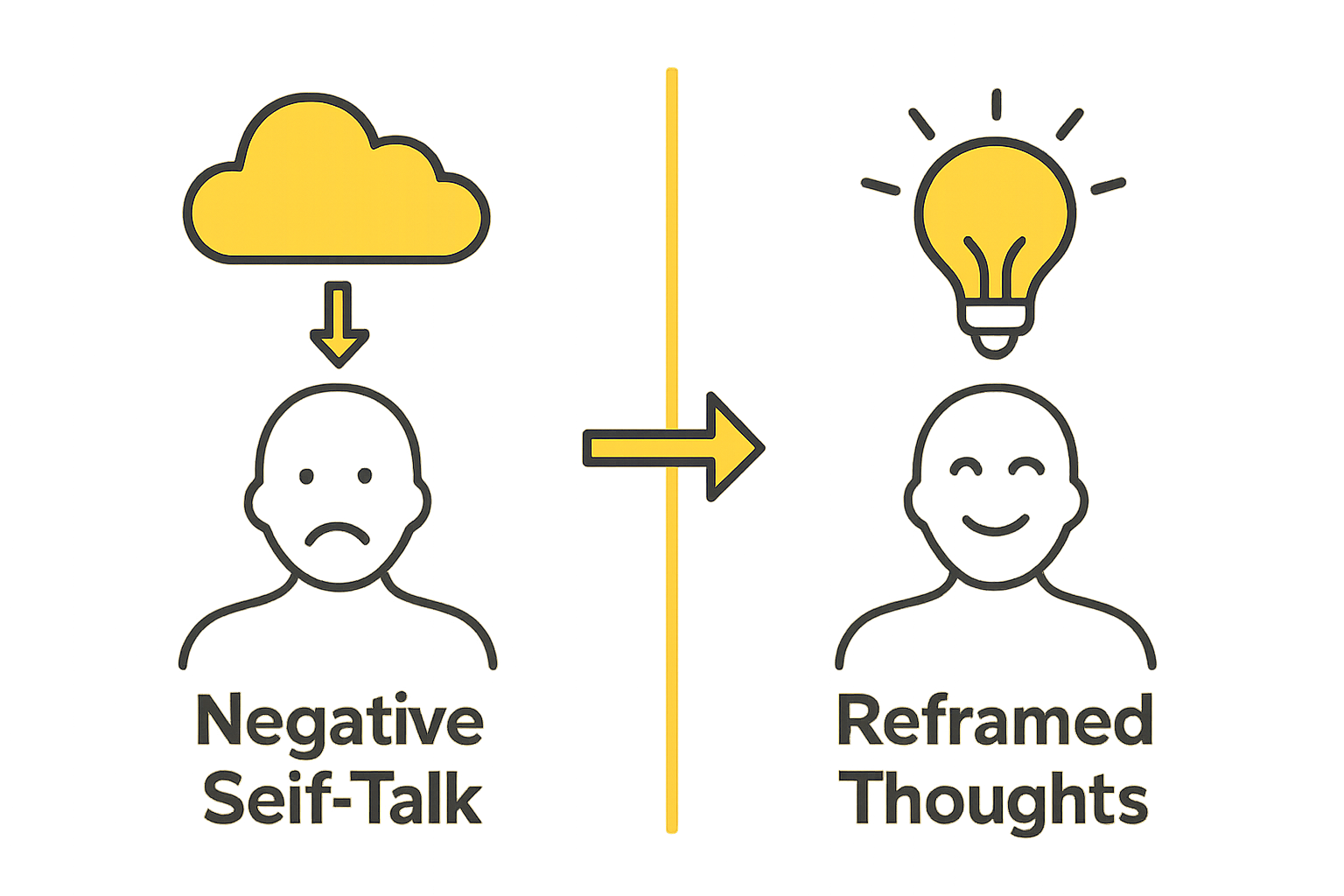
Reframing negative self-talk represents a transformative approach to overcoming imposter syndrome, turning destructive internal narratives into constructive, empowering perspectives. This critical step builds directly on your previous work of identifying emotions and analyzing achievements. Change Careers with the Help of a Virtual Job Coach can offer additional support in developing a more positive professional mindset.
Negative self-talk operates like an internal critic, constantly undermining your confidence with harsh, often irrational commentary. The goal is not to silence this voice completely but to challenge and reshape its messaging. Start by creating awareness of your typical negative thought patterns. When you catch yourself thinking, “I’m not good enough” or “I just got lucky,” pause and deliberately analyze the statement’s validity.
Cognitive Restructuring Techniques
Develop a systematic approach to intercepting and transforming negative thoughts. For each critical inner statement, create a corresponding evidence-based counter-narrative. If your mind says, “I’m going to fail,” respond with specific instances of past successes and skills that directly contradict this pessimistic assumption. This method, known as cognitive reframing, gradually rewires your brain’s automatic response mechanisms.
Practice self-compassion as a fundamental strategy in this process. Treat yourself with the same kindness you would offer a respected colleague or friend facing similar challenges. Recognize that making mistakes and experiencing uncertainty are universal human experiences, not personal failings. Your worth is not determined by perfect performance but by your willingness to learn, grow, and persist.
According to research from the American Psychological Association, developing a more balanced internal dialogue can significantly reduce the psychological impact of imposter syndrome. By systematically challenging negative self-talk, you create mental space for more realistic, supportive thought patterns.
Successful completion of this step means developing a more nuanced, compassionate internal dialogue. You should feel increasingly capable of recognizing destructive thought patterns and transforming them into constructive, empowering perspectives. The ultimate goal is not eliminating self-doubt entirely but learning to navigate it with greater resilience and self-understanding.
Step 4: Seek Feedback from Trusted Sources
Seeking external perspectives represents a critical strategy in overcoming imposter syndrome, providing an objective counterpoint to your internal self-doubts. This step transforms your isolated perception into a collaborative understanding of your professional capabilities. Find Your Dream Job with our Online Career Coaching Program can offer additional support in navigating professional feedback.
Building a strategic feedback network requires intentional and thoughtful selection. Focus on identifying mentors, colleagues, and supervisors who demonstrate genuine understanding and constructive communication skills. These individuals should possess not only professional expertise but also emotional intelligence to provide nuanced, supportive insights into your performance and potential.
Constructive Feedback Strategies
When requesting feedback, approach the conversation with specific, targeted questions that invite detailed responses. Instead of general inquiries like “How am I doing?”, frame questions that reveal concrete performance insights. Ask about specific projects, your problem solving approaches, or areas where you demonstrate consistent strengths. This targeted approach transforms feedback from generic commentary into actionable professional development guidance.
Create a structured feedback framework that encourages honest, balanced perspectives. Schedule regular check ins with trusted professional contacts, establishing a consistent dialogue about your growth and performance. During these conversations, practice active listening. Your goal is not defensive justification but genuine understanding. Pay attention to patterns in the feedback, noting both areas of excellence and potential development opportunities.
According to research from the American Psychological Association, external feedback provides crucial perspective that can validate professional abilities and offer meaningful guidance. By seeking structured, compassionate input from trusted sources, you create a powerful counterweight to internal imposter syndrome narratives.
Successful completion of this step means developing a robust, supportive feedback network that offers consistent, constructive professional insights. You should feel increasingly confident in your abilities, armed with external validation and clear pathways for continued growth. The ultimate objective is transforming isolated self perception into a collaborative, dynamic understanding of your professional potential.
Step 5: Set Realistic Goals and Celebrate Progress
Transforming imposter syndrome requires a strategic approach to goal setting that balances ambition with self-compassion. This step focuses on creating achievable objectives that build confidence incrementally while providing meaningful opportunities for recognition. Goal Setting Strategies for Professionals can offer additional guidance in developing effective personal development strategies.
The foundation of effective goal setting lies in creating measurable, realistic milestones that challenge you without overwhelming your psychological resources. Begin by breaking down larger professional aspirations into smaller, manageable objectives. These micro goals serve as stepping stones, allowing you to accumulate evidence of your capabilities through consistent, achievable progress.
Designing Your Success Framework
Develop a goal setting approach that emphasizes incremental growth and intentional recognition. Create a structured documentation system where you track not just objectives, but the specific skills, strategies, and insights gained during each milestone. This approach transforms goal achievement from a binary success failure metric into a rich learning experience that directly counters imposter syndrome’s negative narrative.
Implement a personal accountability and celebration mechanism. After completing each goal, design a meaningful way to acknowledge your achievement. This might involve a dedicated journal entry detailing your journey, a small personal reward, or sharing your progress with a trusted mentor or colleague. The key is creating a positive reinforcement cycle that gradually rebuilds your professional confidence.
According to research from the American Psychological Association, structured goal setting can significantly mitigate feelings of professional inadequacy by providing concrete evidence of personal growth and capability. By methodically documenting your progress, you create a tangible record that challenges imposter syndrome’s underlying assumptions.
Successful completion of this step means developing a personalized goal setting system that provides consistent motivation and validates your professional capabilities. You should feel increasingly confident in your ability to set, pursue, and achieve meaningful objectives. The ultimate objective is transforming goal achievement from a source of anxiety into a powerful tool for personal and professional growth.
This table provides a checklist of completion criteria for each step to help ensure progress as you navigate overcoming imposter syndrome.
| Step | Completion Criteria |
|---|---|
| Step 1 | Maintained a thought journal, identified patterns |
| Step 2 | Created a detailed achievement portfolio, listed measurable results |
| Step 3 | Developed evidence-based responses to negative thoughts, practiced self-compassion |
| Step 4 | Received feedback from at least one trusted mentor or peer |
| Step 5 | Set incremental goals, documented and celebrated progress |
Below is a summary table outlining each step in overcoming imposter syndrome, including the focus of the step and the intended key outcome.
| Step | Focus | Key Outcome |
|---|---|---|
| 1. Identify & Acknowledge Feelings | Recognize self-doubt, document emotions | Increased self-awareness and objectivity |
| 2. Analyze Achievements & Skills | Document accomplishments and quantify success | Evidence-based confidence in skills |
| 3. Reframe Negative Self-Talk | Challenge and restructure thought patterns | More supportive, realistic self-dialogue |
| 4. Seek Feedback | Request targeted feedback from trusted sources | External validation and professional growth |
| 5. Set Realistic Goals & Celebrate Progress | Create and track achievable goals, celebrate wins | Tangible progress and reinforced confidence |
Ready to Silence Your Inner Critic and Step Into Your Confidence?
If you find yourself questioning your successes or dismissing your achievements as luck, you are not alone. In this article, you learned how self-doubt, negative self-talk, and the fear of being exposed as a “fraud” can hold you back from personal and professional growth. Plentiful is here to help you move from overwhelm to a place of empowered self-belief. Our global network of experienced coaches and wellbeing guides offers personalized support tailored to your journey so you can tackle imposter syndrome where it starts—in your own mind and habits.

Take the first step to lasting confidence. Book a 1:1 session, join a supportive group workshop, or access on-demand resources today. Discover how Plentiful’s holistic growth services can help you identify your strengths, shift your mindset, and celebrate every win. Your path to real change and renewed self-assurance begins now—explore your options and connect with a guide who gets it. Visit Plentiful and start your transformation.
Frequently Asked Questions
How can I identify if I have imposter syndrome?
To identify imposter syndrome, pay attention to recurring feelings of self-doubt, attributing your successes to luck, and an overwhelming fear of being exposed as a fraud. Keeping a thought journal can help track these feelings and recognize patterns.
What steps can I take to analyze my achievements?
Start by creating a professional achievement portfolio that details your accomplishments, skills, and contributions. Include performance reviews, project outcomes, and specific metrics that showcase your impact, which helps transform self-doubt into objective evidence of your competence.
How can I effectively reframe negative self-talk?
Begin by creating awareness of your negative thought patterns, then develop evidence-based counter-narratives for each harmful thought. Practicing self-compassion and treating yourself kindly can also help in transforming your internal dialogue into a more supportive and realistic perspective.
What is the best way to seek feedback on my performance?
Identify trusted mentors or colleagues who can provide constructive feedback. When asking for input, be specific about the areas you want feedback on, and approach the discussions as opportunities for growth rather than for defensive justification.
Recommended
- How to Build Real Confidence That Actually Lasts
- How to Stop Feeling Not Good Enough – Plentiful
- Overcoming Perfectionism: Achieve Balance and Fulfillment – Plentiful
- How to Not Get Nervous When Presenting – Plentiful
- Release Your Anxiety | Austin Kory
- Find Your Confidence | Hossam Abostate
Want your life to be more Plentiful?
Sign up for stories, experience info and launches, and event invites delivered right to your inbox.
Unsubscribe anytime.