Perfectionism sounds noble… striving for the best, holding yourself to high standards, never settling for “good enough.” But here’s the truth: perfectionism isn’t about excellence. It’s about fear. Fear of being judged. Fear of failing. Fear that if you’re not flawless, you’re not enough. And it’s everywhere – at work, in relationships, even in the smallest daily choices.
Studies reveal that more than 30% of adults wrestle with perfectionism linked to anxiety and depression. Left unchecked, it steals your joy, drains your energy, and convinces you that nothing you do will ever measure up. The cruel irony? Perfectionism doesn’t help you live better. It keeps you from living at all.
Breaking free doesn’t mean lowering your standards or giving up on ambition. It means rewriting your definition of success, so it includes growth, joy, and self-compassion. It means embracing progress over perfection and daring to live fully… even when things get messy.
This guide will show you exactly how to do that.
Table of Contents
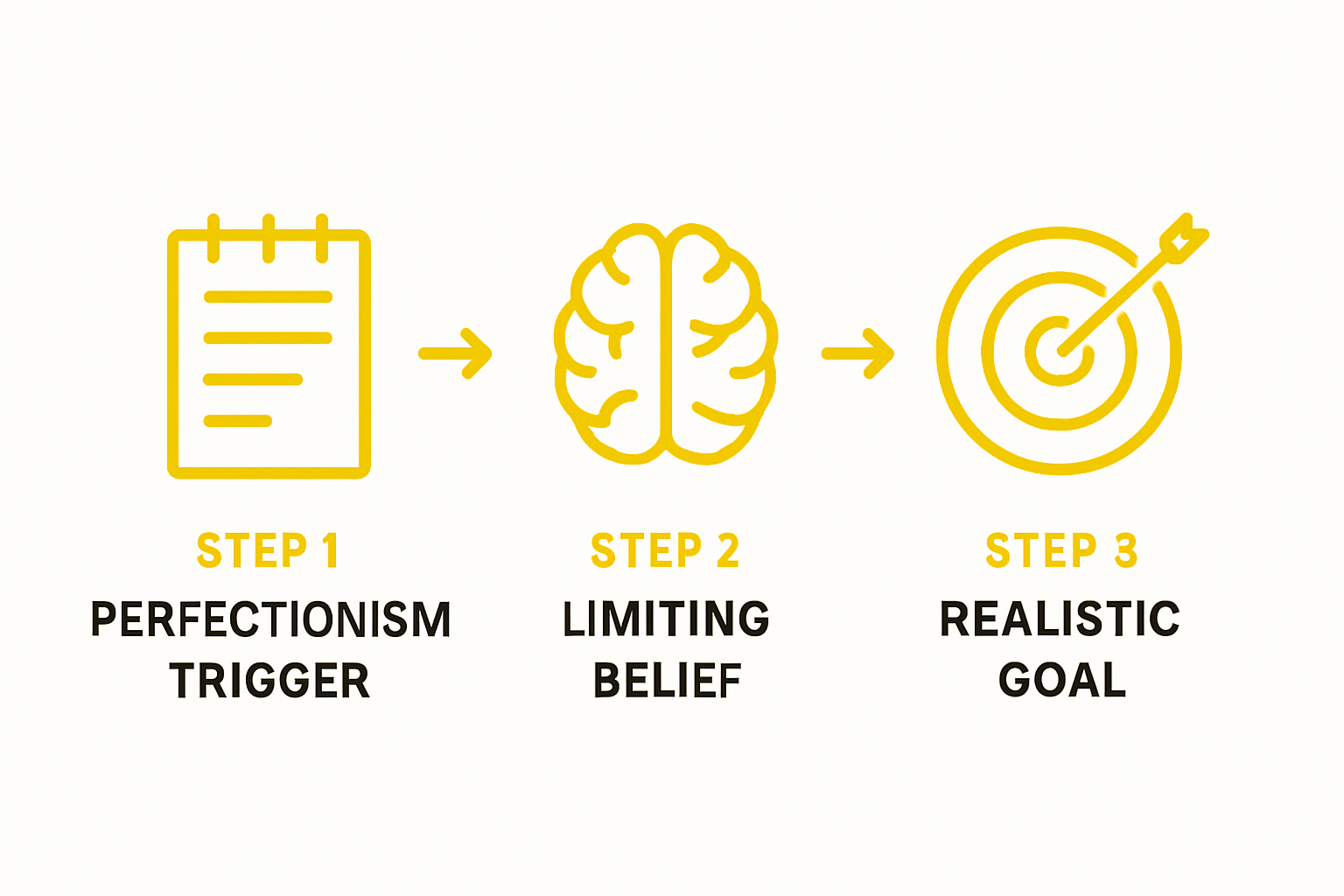
- Step 1: Identify Your Perfectionism Triggers
- Step 2: Challenge Your Limiting Beliefs
- Step 3: Set Realistic Goals And Expectations
- Step 4: Embrace Imperfection In Daily Tasks
- Step 5: Develop A Support Network For Accountability
Quick Summary
| Key Point | Explanation |
|---|---|
| 1. Identify Your Perfectionism Triggers | Recognize what specifically triggers your perfectionist responses to develop self-awareness and initiate change. |
| 2. Challenge Your Limiting Beliefs | Dismantle rigid thought patterns by documenting and questioning your perfectionist beliefs to promote self-acceptance. |
| 3. Set Realistic Goals and Expectations | Create achievable and flexible objectives to align your expectations with your true capabilities for personal growth. |
| 4. Embrace Imperfection in Daily Tasks | Intentionally introduce small imperfections in your routine to reduce anxiety and improve emotional resilience. |
| 5. Develop a Support Network for Accountability | Build a network of trusted individuals to provide feedback and encouragement in your journey to overcome perfectionism. |
Step 1: Identify Your Perfectionism Triggers
Understanding your perfectionism triggers is the foundational step toward meaningful personal transformation. This initial phase helps you recognize the hidden patterns and emotional roots driving your relentless pursuit of flawlessness. By mapping out these triggers, you create self-awareness that becomes the catalyst for sustainable change.
Psychological Origins and Personal Exploration
Perfectionism rarely emerges in isolation. Childhood experiences and emotional regulation strategies often serve as the primary breeding ground for these deeply ingrained behaviors. Start by reflecting on your personal history and emotional landscape. Consider moments when you felt an overwhelming need to perform perfectly or experienced intense anxiety about potential mistakes.
Begin a journaling practice dedicated to tracking your perfectionistic tendencies. Document specific scenarios where you notice heightened self-criticism, excessive preparation, or paralyzing fear of failure. Pay attention to the emotional and physical sensations accompanying these experiences. Do you feel tension in your shoulders? Does your breathing become shallow? These bodily signals provide valuable insights into your triggers.
Mapping Your Trigger Landscape
Create a comprehensive trigger map by examining different life domains: professional performance, personal relationships, creative endeavors, and self-care routines. Ask yourself probing questions: What situations consistently provoke your perfectionist responses? Which environments or interactions intensify your need for control?
Be brutally honest during this self-exploration. Recognize that identifying triggers is not about self-judgment but about developing compassionate understanding. The goal is to transform awareness into actionable insights. Learn to observe your patterns with curiosity rather than criticism.
To validate your progress, review your journal entries and look for recurring themes. Successful completion of this step means you can articulate at least three primary perfectionism triggers with specific examples from your life. This self-knowledge becomes the foundation for developing healthier coping mechanisms and more balanced approaches to personal and professional challenges.
Step 2: Challenge Your Limiting Beliefs
Challenging your limiting beliefs is a transformative process that dismantles the rigid mental frameworks sustaining perfectionism. This critical step involves recognizing the deeply embedded thought patterns that keep you trapped in cycles of unrealistic expectations and self-criticism.
Deconstructing Perfectionist Narratives
According to University of Maryland Counseling Center, perfectionism often emerges from internalized critical messages that shape our perception of self-worth. Begin by identifying the core beliefs driving your perfectionist tendencies. These might sound like internal monologues such as “I must be flawless to be valuable” or “Mistakes mean I am a failure.”
Create a belief deconstruction journal where you document these recurring thoughts.
For each limiting belief, develop a systematic approach to challenge its validity. Ask yourself probing questions: What evidence actually supports this belief? What alternative perspectives exist? What would a compassionate friend say about this thought?
Cognitive Restructuring and Practical Reframing
The process of challenging limiting beliefs requires deliberate cognitive restructuring. Start by distinguishing between healthy striving and destructive perfectionism. Healthy striving involves setting ambitious yet attainable goals with flexibility and self-compassion. Destructive perfectionism, conversely, creates impossible standards that guarantee perpetual feelings of inadequacy.
Practice reframing your thoughts by developing more balanced statements. Instead of “I must do everything perfectly,” try “I will do my best and learn from the experience.” This subtle shift creates space for growth, learning, and self-acceptance. Visualization techniques can also be powerful. Imagine yourself responding to challenges with resilience and kindness rather than harsh self-judgment.
Successful completion of this step means you can:
- Identify at least three recurring limiting beliefs
- Articulate counterarguments to these beliefs
- Develop alternative, more supportive thought patterns
Remember, challenging limiting beliefs is not about achieving instant transformation but cultivating a compassionate, realistic approach to personal expectations. Each small shift brings you closer to breaking free from the perfectionism trap.
Step 3: Set Realistic Goals and Expectations
Setting realistic goals and expectations is a critical transformation from perfectionist thinking to sustainable personal growth. This step bridges the gap between your idealized self and your authentic capabilities, creating a framework for meaningful progress without overwhelming self-criticism.
Crafting Purposeful and Achievable Objectives
According to University of Michigan’s Counseling and Psychological Services, developing realistic standards requires a strategic approach. Begin by examining your current goal-setting patterns. Perfectionists often create grandiose, unattainable objectives that guarantee eventual disappointment. Instead, design goals that are specific, measurable, and flexible.
Start by breaking larger ambitions into smaller, manageable milestones. If you’re working on a professional project, divide it into incremental tasks with reasonable timelines. For instance, instead of demanding a flawless completed project, focus on completing specific sections with room for iteration and learning. This approach transforms overwhelming expectations into achievable steps.
Implementing Adaptive Goal-Setting Strategies
Develop a goal-tracking system that emphasizes progress over perfection. Use a journal or digital tool to document your objectives, but more crucially, record your learning and growth throughout the process. Celebrate incremental achievements and view setbacks as valuable feedback rather than personal failures.
Practice self-compassion by integrating built-in flexibility into your goal-setting. Recognize that unexpected challenges will arise, and your ability to adapt is more important than maintaining an unrealistic ideal. Create contingency plans that allow for adjustments without triggering self-criticism.
To verify you’ve successfully implemented this step, ensure you can:
- Identify at least three goals with clear, achievable milestones
- Demonstrate a method for tracking progress that celebrates learning
- Articulate how you will respond to potential setbacks with compassion
Remember, realistic goal-setting is not about lowering your standards but about creating a sustainable pathway to meaningful achievement. By aligning your expectations with your genuine capabilities, you unlock a more fulfilling approach to personal and professional development.
Step 4: Embrace Imperfection in Daily Tasks
Embracing imperfection represents a profound shift from rigid perfectionist thinking to a more fluid, compassionate approach to daily life. This critical step transforms your relationship with mistakes, turning them from dreaded failures into valuable learning opportunities with practical strategies for personal growth.
Systematic Imperfection Training
According to research in cognitive therapy, deliberately exposing yourself to situations where perfection is impossible can dramatically reduce perfectionist tendencies. Begin by intentionally introducing small, controlled imperfections into your daily routine. This might mean deliberately leaving a minor household task incomplete, sending an email with a small typo, or wearing a slightly mismatched outfit.
The goal is to build emotional resilience through incremental exposure. Start with low-stakes scenarios where the potential consequence of imperfection is minimal. Notice the internal dialogue that emerges during these moments. Are you experiencing anxiety? Shame? Criticism? Observe these feelings without judgment, recognizing them as habitual responses you’re learning to transform.
Practical Imperfection Cultivation
Develop a deliberate practice of imperfection across different life domains. In professional settings, this might mean submitting a draft that’s good enough rather than endlessly refining it. In creative pursuits, allow yourself to sketch or write without immediate editing. When cooking, embrace recipes that don’t look picture-perfect. The key is progressively expanding your comfort with non-ideal outcomes.
Create an “imperfection journal” where you document these experiences. Record not just the task, but your emotional response, initial anxieties, and the actual consequences. You’ll likely discover that most imperfections are far less catastrophic than your perfectionistic mind imagines.
To verify you’ve successfully integrated this step, confirm you can:
- Intentionally perform tasks without obsessive refinement
- Recognize and challenge perfectionistic thoughts in real-time
- Describe at least three scenarios where you’ve deliberately accepted imperfection
Remember, progress is more important than perfection. Each moment of acceptance is a step toward greater personal freedom and authentic self-expression.
Step 5: Develop a Support Network for Accountability
Building a support network for accountability transforms your journey from an isolated struggle with perfectionism to a collective process of growth and healing. This step recognizes that overcoming deeply ingrained behavioral patterns requires external perspectives, emotional support, and structured guidance.
Cultivating Intentional Support Connections
According to research from the University of Maryland’s Counseling Center, seeking support is crucial in managing perfectionist tendencies. Begin by identifying individuals who embody compassionate, realistic approaches to personal challenges. These might include therapists, coaches, trusted friends, or colleagues who demonstrate balanced perspectives on achievement and self-worth.
When selecting support network members, prioritize those who can offer constructive feedback rather than pure validation. Look for individuals who can gently challenge your perfectionistic thoughts while maintaining emotional safety. Share your specific goals around reducing perfectionism, and request their help in recognizing when you’re falling into old thought patterns.
Structured Accountability Strategies
Develop a systematic approach to accountability that goes beyond casual conversations. Schedule regular check-ins with your support network, where you can openly discuss your progress, challenges, and insights. These meetings should include specific, measurable discussions about how you’re implementing strategies to overcome perfectionism.
Consider creating a personal accountability contract with one or more support network members. This document might outline specific behaviors you’re working to change, potential triggers you’re addressing, and concrete steps you’re taking to develop more flexible thinking. The contract serves as a tangible reminder of your commitment and provides a structured framework for ongoing growth.
To verify you’ve successfully developed a support network, confirm you can:
- Name at least two trusted individuals who understand your perfectionism journey
- Describe a specific accountability mechanism you’ve established
- Demonstrate your ability to receive and integrate supportive feedback
Remember that building a support network is an ongoing process. Be patient with yourself and recognize that vulnerability is a strength, not a weakness. Each conversation and connection brings you closer to breaking free from perfectionism’s restrictive grip.
Ready to Move Beyond Perfectionism?
You already know how exhausting it is to always chase flawless results. The journey described in “Overcoming Perfectionism: Achieve Balance and Fulfillment” highlights how perfectionist triggers, limiting beliefs, and unrealistic self-expectations can keep you stuck. Trying to break these habits alone can feel overwhelming. If you are looking for real change, guided support and accountability make a world of difference. Discover how working with experienced coaches, healers, and growth experts can help you identify your perfectionism triggers, challenge old beliefs, and create lasting, fulfilling progress.

Take your next step toward more balance and self-acceptance. Explore a range of well-being and personal growth services from life coaches, meditation guides, and nutrition experts. You can choose one-on-one sessions, group workshops, or practical digital resources designed to help you embrace imperfection in a safe and supportive environment. Do not let perfectionism control your future. Visit Plentiful now and start building your support network today.
Frequently Asked Questions
What are the common triggers of perfectionism?
Perfectionism triggers often stem from childhood experiences, emotional regulation strategies, and specific life domains such as work or relationships. Common triggers include intense self-criticism, fear of failure, and the urge to maintain control in various situations.
How can I challenge my limiting beliefs related to perfectionism?
To challenge limiting beliefs, start by identifying the core thoughts that fuel your perfectionism. Document these beliefs, then systematically question their validity by seeking evidence and considering alternative perspectives. Reframe these thoughts into more supportive statements to foster self-compassion.
What strategies can I use to set realistic goals?
To set realistic goals, break larger ambitions into smaller, achievable milestones. Ensure your goals are specific and flexible, emphasizing progress rather than perfection. Develop a tracking system to celebrate learning and adapt your plans in response to setbacks.
How can I practice embracing imperfection in my daily life?
Begin by intentionally exposing yourself to minor imperfections in low-stakes situations. Document your emotional responses and recognize that mistakes are valuable learning opportunities. Gradually expand your comfort with imperfection in various areas, reinforcing the idea that progress is more important than perfection.
Recommended
- How To Overcome Writer’s Block
- The Blossom Collective: From Overwhelm To Inner Calm | Dee Hennessy
- Foundations for Fulfillment by Hanna Carroll
- How to Practice Assertiveness for Personal Empowerment
- Release Your Anxiety | Austin Kory
- Healthy Habits, Happy Life | Ana Martinez
- Master Maintaining a Tidy Home
Want your life to be more Plentiful?
Sign up for stories, experience info and launches, and event invites delivered right to your inbox.
Unsubscribe anytime.