







Coaching is now seen as an essential driver of professional growth and personal transformation. Successful professionals are turning to coaches who offer more than just advice and quick fixes. But it might surprise you that coaching relationships can boost performance by up to 70 percent according to recent studies. Forget the stereotype of a coach simply handing out solutions. The real impact comes from emotional intelligence, powerful questions, and a rare ability to unlock true potential that most people never realize they have.
Table of Contents
- Understanding The Role Of A Good Coach
- Essential Qualities Every Good Coach Possesses
- How Coaching Brings Out Your Hidden Potential
- Choosing The Right Coach For Your Next Level
Quick Summary
| Takeaway | Explanation |
|---|---|
| Coaching is a transformative partnership. | Effective coaching goes beyond advice; it empowers personal and professional growth through collaboration and self-discovery. |
| Emotional intelligence fosters trust. | A good coach builds deep connections, allowing clients to feel safe and vulnerable in their growth journey. |
| Powerful questioning unlocks insights. | Exceptional coaches use transformative questions to provoke reflection and help clients challenge their perspectives. |
| Continuous learning enhances coaching effectiveness. | Great coaches adapt their techniques, ensuring they remain relevant by committing to their own growth and understanding. |
| Trust is essential for successful coaching. | A strong coaching relationship relies on mutual trust and psychological safety for meaningful exploration of professional challenges. |
Understanding the Role of a Good Coach
Coaching is far more than a simple transactional relationship between a professional and an advisor. It represents a transformative partnership that empowers individuals to unlock their full potential, navigate complex career challenges, and achieve extraordinary personal growth.
The Foundational Purpose of Professional Coaching
A good coach serves as a strategic catalyst for professional development, providing much more than conventional advice. Research published in Healthcare reveals that successful coaching relationships fundamentally depend on the coach’s ability to create a supportive environment that facilitates meaningful personal and professional transformation.
Professional coaches do not simply tell their clients what to do. Instead, they employ sophisticated techniques like reflective questioning and collaborative goal-setting to help professionals discover their own insights and pathways to success. This approach differs dramatically from traditional mentorship or consulting, as it centers on empowering the individual to develop self-awareness and internal problem-solving capabilities.
Core Responsibilities of an Effective Coach
The role of a good coach extends well beyond offering generic guidance. They are strategic partners who help professionals:
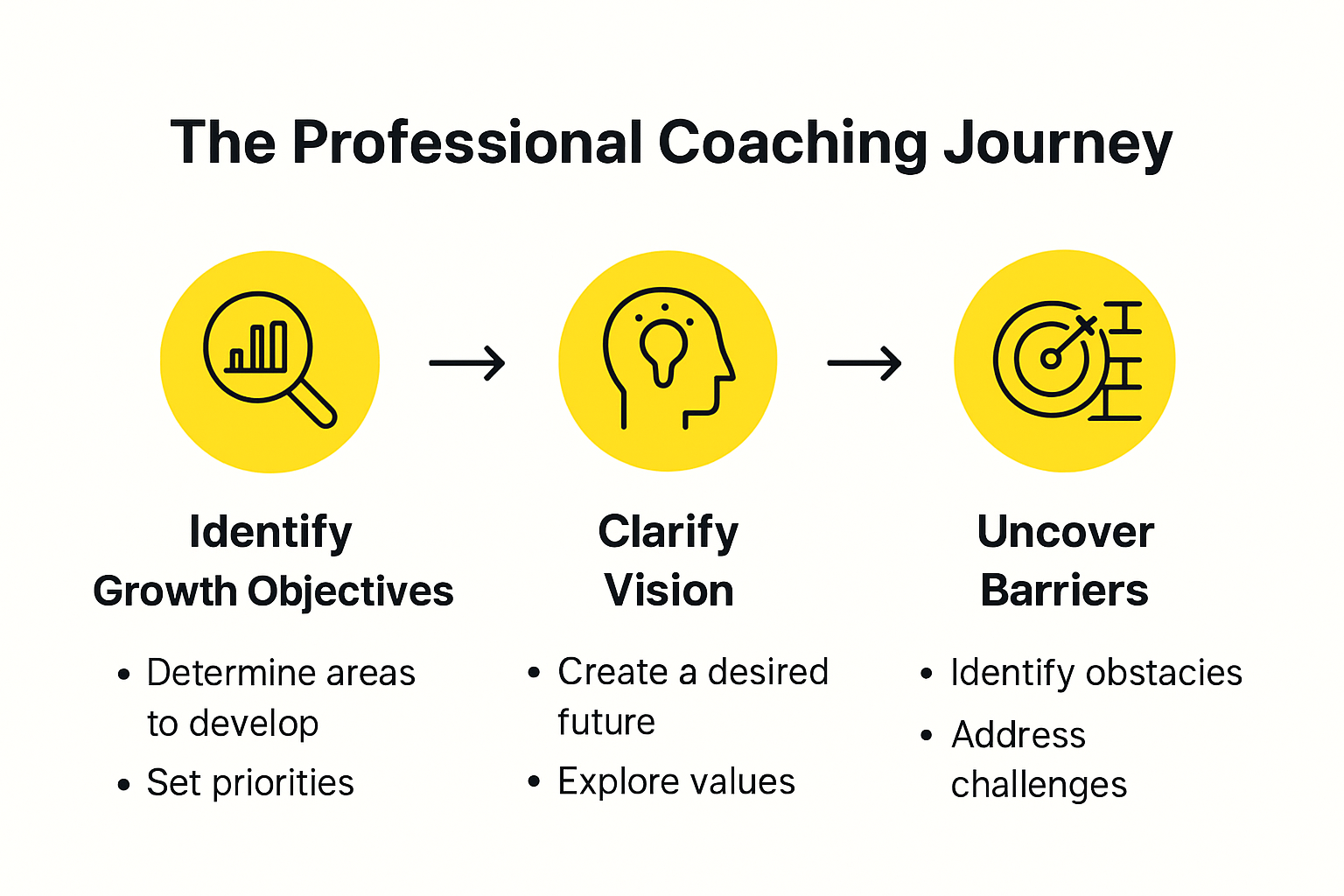
- Clarify Vision: Help clients articulate and refine their professional and personal objectives with precision
- Identify Barriers: Uncover hidden obstacles and limiting beliefs that might be hindering progress
- Develop Strategies: Collaborate on creating actionable, personalized strategies for overcoming challenges
A remarkable coach understands that each professional’s journey is unique. They bring a nuanced, empathetic approach that respects individual contexts while providing structured support. By combining deep listening skills with expert knowledge, coaches create a safe space for professionals to explore their potential, challenge their assumptions, and make meaningful breakthroughs.
The Psychological Dimensions of Coaching
Effective coaching transcends practical skill development. It involves a profound psychological understanding of human motivation, behavioral patterns, and personal growth mechanisms. Experts in organizational psychology emphasize that the most successful coaches possess an extraordinary ability to read emotional and cognitive landscapes, helping clients navigate complex internal dynamics.
Through carefully crafted conversations and targeted interventions, good coaches help professionals reframe challenges, build resilience, and develop a growth mindset. They are not just advisors but transformative partners who facilitate deep personal and professional evolution.
The ultimate measure of a great coach is not the advice they give, but the potential they help their clients unlock. By fostering self-discovery, accountability, and strategic thinking, coaches become instrumental in helping professionals not just achieve their goals, but fundamentally reimagine what’s possible in their careers and lives.
Essential Qualities Every Good Coach Possesses
Not all coaches are created equal. The most exceptional coaches possess a unique combination of skills, attributes, and emotional intelligence that sets them apart from ordinary advisors. These qualities transform coaching from a simple guidance interaction into a profound personal development experience.
Emotional Intelligence and Empathetic Connection
The Department of Defense leadership development guidelines emphasize that effective coaches must demonstrate extraordinary emotional intelligence. This goes beyond merely understanding emotions it involves creating deep, authentic connections that inspire trust and vulnerability.
Emotional intelligence in coaching manifests through several critical capabilities:
- Active Listening: Hearing not just words, but understanding underlying meanings and unexpressed emotions
- Non-Judgmental Presence: Creating a safe space where professionals feel completely accepted and supported
- Empathetic Responsiveness: Acknowledging emotional experiences without attempting to immediately solve or minimize them
Strategic Communication and Powerful Questioning
Research from the Virtual Lab School reveals that exceptional coaches possess a remarkable ability to ask transformative questions. These are not simple inquiries but carefully crafted prompts designed to unlock deeper insights and challenge existing perspectives.
Powerful communication in coaching involves:
- Asking open-ended questions that provoke reflection
- Using precise language that invites exploration
- Providing feedback that is constructive, specific, and growth-oriented
Adaptive Expertise and Continuous Learning
The most remarkable coaches are perpetual students of human potential. They do not rely on a fixed methodology but continuously adapt their approach to each unique individual. Their expertise is not static but dynamic, characterized by:
- Intellectual curiosity about human behavior
- Willingness to challenge their own assumptions
- Commitment to personal and professional growth
An exceptional coach understands that their role is not to have all the answers, but to help clients discover their own profound truths. They balance professional knowledge with humility, recognizing that each coaching relationship is a collaborative journey of mutual learning.
Ultimately, the most essential quality of a good coach is their genuine commitment to their client’s holistic success. This goes beyond professional achievements it encompasses personal fulfillment, emotional well-being, and authentic self-actualization. By embodying these qualities, a coach becomes more than an advisor they become a catalyst for transformative personal growth.
To help you understand the most critical qualities that set exceptional coaches apart, here’s a summary table capturing essential traits and how they are demonstrated during coaching:
| Quality | Demonstration in Coaching |
|---|---|
| Emotional Intelligence | Builds authentic trust, tunes into unspoken client emotions |
| Active Listening | Hears beyond words, uncovers underlying concerns |
| Non-Judgmental Presence | Creates a safe, supported environment |
| Empathetic Responsiveness | Acknowledges and holds space for emotional experiences |
| Powerful Questioning | Provokes reflection, challenges limiting perspectives |
| Adaptive Expertise | Customizes approach to individual needs, context |
| Commitment to Continuous Learning | Seeks ongoing growth and adapts to new coaching techniques |
How Coaching Brings Out Your Hidden Potential
Potential is not a static concept but a dynamic landscape of untapped capabilities waiting to be discovered and cultivated. Professional coaching serves as a powerful mechanism for uncovering and expanding these hidden reservoirs of talent, skill, and personal power.
Revealing Unconscious Limitations
Research in the International Journal of Evidence Based Coaching and Mentoring reveals that effective coaching operates at a profound psychological level, helping professionals identify and dismantle unconscious barriers that limit their performance and growth. These limitations often manifest as self-imposed restrictions, deeply ingrained belief systems, and unexamined assumptions about personal capabilities.
Coaches employ specialized techniques to illuminate these hidden constraints, including:
- Reflective Questioning: Challenging existing mental frameworks
- Pattern Recognition: Identifying recurring behavioral and thought patterns
- Perspective Shifting: Introducing alternative viewpoints and interpretations
Strategic Potential Activation
The process of potential activation is not about creating something new, but excavating and polishing innate talents that have been overlooked or undervalued. Coaches act as strategic partners who help professionals:
- Map their unique strengths
- Recognize transferable skills
- Design personalized development strategies
This approach transforms potential from an abstract concept into a tangible, actionable roadmap for personal and professional advancement. By providing targeted feedback and structured interventions, coaches help professionals see themselves through a lens of possibility rather than limitation.
The Transformative Power of Self-Discovery
Beyond technical skill development, coaching facilitates a profound journey of self-discovery. Learn more about transformative career coaching that goes beyond traditional performance improvement.
This journey involves deep introspection, helping professionals understand not just what they can do, but who they can become. Coaches create a supportive environment that encourages experimentation, vulnerability, and courageous self-exploration. They help clients:
- Challenge self-limiting beliefs
- Develop a growth mindset
- Build authentic confidence
- Align professional pursuits with personal values
The true magic of coaching lies in its ability to help individuals recognize potential they did not know existed. It is a collaborative process of uncovering, nurturing, and activating dormant capabilities. A skilled coach does not simply provide advice they create a transformative experience that empowers professionals to rewrite their own narratives of possibility.
Ultimately, coaching is about more than performance improvement. It is a revolutionary approach to personal development that views human potential as an expansive, ever-evolving landscape of opportunity. By partnering with the right coach, professionals can unlock doors to achievements and personal satisfaction they might have previously considered out of reach.
Choosing the Right Coach for Your Next Level
Selecting the right coach is not a simple transaction but a strategic decision that can profoundly impact your professional trajectory. The coaching relationship is a deeply personal journey that requires careful consideration, alignment of values, and a genuine connection between coach and client.
Identifying Your Specific Growth Objectives
According to Harvard Business Review, successful coaching transcends generic advice. It demands a precise understanding of your unique professional landscape and aspirational goals. Before embarking on a coaching relationship, professionals must conduct a rigorous self-assessment that clarifies:
- Immediate Professional Challenges: Current obstacles blocking progress
- Long-Term Career Vision: Desired professional transformation
- Personal Development Gaps: Skills and mindset areas requiring enhancement
This introspective process ensures that you seek a coach who can provide targeted, meaningful guidance rather than generic recommendations. The most effective coaching relationships are built on a foundation of crystal-clear objectives and mutual understanding.
Evaluating Coach Compatibility and Expertise
Choosing a coach involves more than reviewing credentials. It requires a holistic assessment of their professional philosophy, communication style, and proven track record. Key evaluation criteria include:
- Demonstrated expertise in your specific professional domain
- Proven history of facilitating meaningful client transformations
- Alignment with your personal values and communication preferences
- Capacity for deep listening and powerful questioning
Professionals should approach coach selection as a strategic partnership. This means conducting thorough interviews, requesting client testimonials, and potentially engaging in initial consultation sessions to gauge compatibility.
The Importance of Trust and Psychological Safety
The most transformative coaching relationships are built on an intricate foundation of trust, vulnerability, and psychological safety. A truly exceptional coach creates an environment where professionals feel empowered to explore their deepest professional challenges without fear of judgment.
Explore transformative career coaching options that prioritize your unique professional journey and personal growth.
This requires a coach who can:
- Maintain strict confidentiality
- Provide non-judgmental, constructive feedback
- Challenge existing thought patterns respectfully
- Support clients through uncomfortable personal growth moments
Trust is not granted automatically it is earned through consistent demonstration of empathy, expertise, and genuine commitment to the client’s holistic success. The right coach becomes more than an advisor they become a trusted ally in your professional transformation.
Ultimately, choosing the right coach is about finding a partner who can see your potential more clearly than you can see it yourself. It is a collaborative relationship that demands mutual respect, open communication, and a shared commitment to pushing beyond existing professional boundaries. By approaching coach selection with intentionality, self-awareness, and strategic thinking, professionals can unlock unprecedented levels of personal and professional growth.
Selecting a coach can feel overwhelming. To clarify the process, here is a checklist table summarizing key steps for choosing the right coach, aligned with the recommendations from the article:
| Step | Description | Completed (Y/N) |
|---|---|---|
| Define Growth Objectives | Assess immediate challenges & long-term vision | |
| Identify Skill & Mindset Gaps | Pinpoint areas for development | |
| Assess Coach’s Domain Expertise | Verify coach’s experience in your field | |
| Check Track Record | Review past client success stories | |
| Ensure Values Alignment | Confirm personal and communication compatibility | |
| Evaluate Psychological Safety | Gauge trust, confidentiality, and respectful challenge | |
| Conduct an Initial Consultation | Experience style and compatibility before deciding |
Frequently Asked Questions
What qualities should I look for in a good coach?
Look for qualities such as emotional intelligence, strategic communication skills, adaptive expertise, and a commitment to continuous learning. These traits ensure that the coach can effectively support your personal and professional growth.
How can a coach help me uncover my hidden potential?
A coach can help reveal your hidden potential by using techniques such as reflective questioning, pattern recognition, and perspective shifting. These methods challenge your existing beliefs and enable you to recognize and activate your innate talents.
Why is emotional intelligence important in coaching?
Emotional intelligence is crucial because it fosters trust and authentic connections between the coach and the client. A coach with high emotional intelligence can create a safe environment where clients feel understood, accepted, and empowered to explore their growth journey.
What is the role of powerful questioning in coaching?
Powerful questioning is essential in coaching as it provokes reflection and encourages clients to challenge their perspectives. This method prompts deeper insights and helps clients explore possibilities they may not have considered, facilitating personal and professional transformation.
Elevate Your Personal and Professional Growth with Plentiful
Are you looking for more than quick advice and generic coaching? If this article made you realize that true transformation comes from finding a coach who is emotionally intelligent, asks powerful questions, and helps you break through hidden barriers, then it is time to discover real solutions. At Plentiful, we understand your need for specialized guidance tailored to your specific growth objectives and personal ambitions. Our global network includes career coaches, healers, life coaches, mindfulness teachers, and more. You can access one-on-one sessions, group workshops, and transformative digital experiences wherever you are in the world.

Choose a coach who truly listens, supports your journey, and matches your unique goals. Browse Plentiful’s transformative sessions today or explore our personal growth services to experience the deeper breakthroughs this article inspired. Your hidden potential is ready to be unlocked. Start now and move toward peak performance with the support you deserve.
Recommended
- Top Benefits of Career Coaching for Professionals in 2025 – Plentiful
- Strengths Coaching with Heather Kunz
- Coach Ang | Certified Life Coach
- HerdWise Coaching | Leadership Coaching
- Transformative Living Expertise | Reddoor Coaching and Consulting
- Rebellious Habit Reset: 7 Days to Unlock Your Flow
Ready to improve your life?
Access our free newsletter designed to help you become the best version of yourself.
Learn how to find your path, understand yourself, and make progress toward your dream life.


