







Gratitude gets tossed around as a feel good buzzword in the workplace, but there is real science behind its impact. New studies show that organizations with gratitude cultures see big gains in productivity and efficiency. Surprisingly, most professionals still see gratitude as soft or secondary compared to hard skills. That thinking leaves a lot of untapped success on the table because gratitude is not just about personal happiness, it is your hidden advantage for professional performance and meaningful growth.
Table of Contents
Quick Summary
| Takeaway | Explanation |
|---|---|
| Gratitude improves workplace performance. | Regular gratitude enhances efficiency, productivity, and interpersonal relationships in professional settings. |
| Daily gratitude practices foster resilience. | Maintaining a gratitude journal and intentional rituals helps develop emotional strength and adaptability in challenging environments. |
| Overcome psychological barriers to gratitude. | Addressing negative thinking patterns like comparison and impostor syndrome is essential for cultivating a gratitude mindset. |
| Specific appreciation strengthens relationships. | Offering detailed recognition of others’ contributions enhances trust and collaboration in professional interactions. |
| Gratitude enriches professional networks. | Consistently expressing appreciation helps build robust, supportive relationships that lead to greater career opportunities. |
Why Gratitude Matters for Professionals
Professionals today face unprecedented challenges in maintaining personal satisfaction and workplace effectiveness. Gratitude emerges as a powerful strategy for navigating complex professional environments, transforming how individuals perceive and approach their careers.
The Professional Performance Catalyst
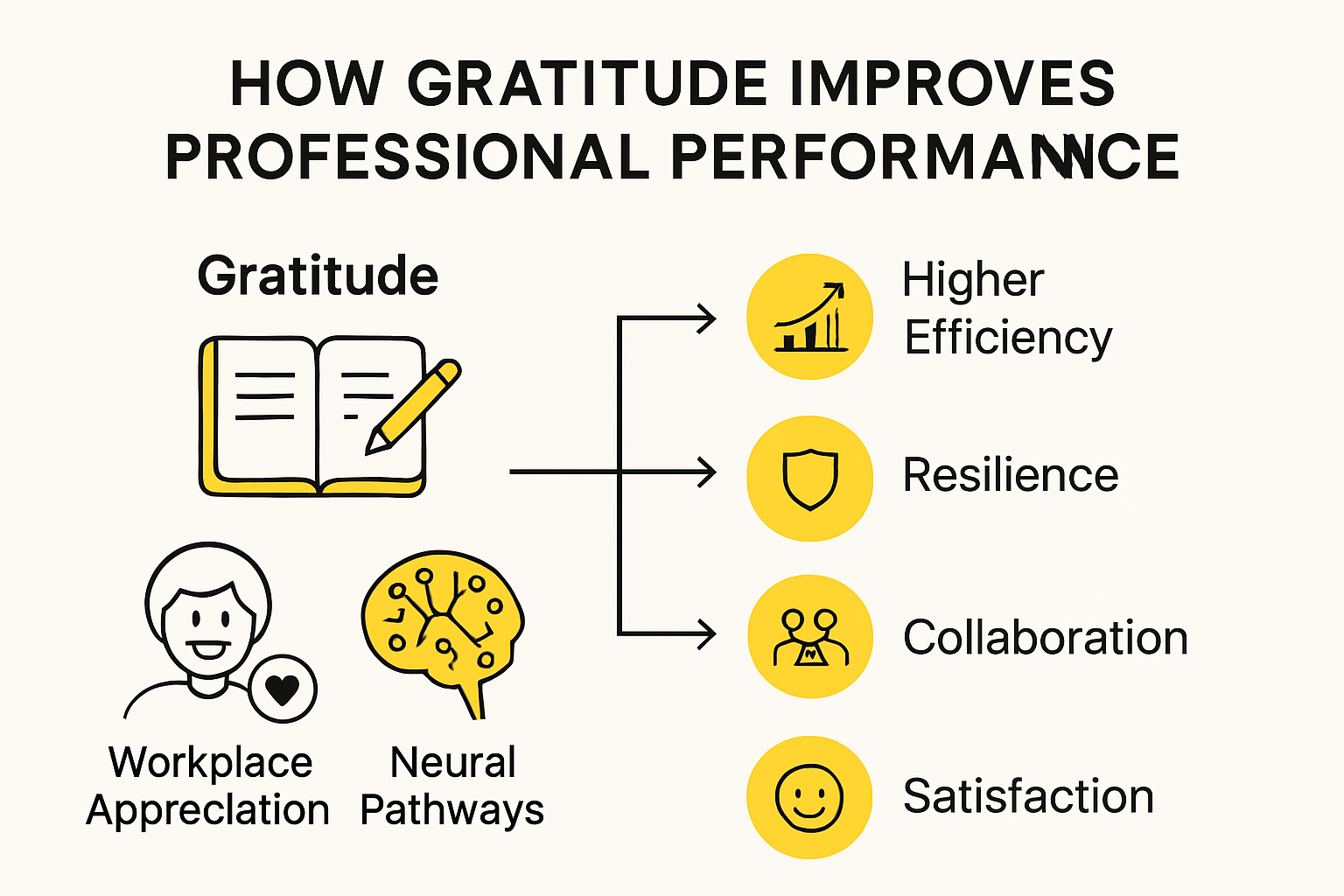
Gratitude is more than a ‘feel good’ emotion. Research from organizational psychology studies reveals that gratitude directly impacts workplace performance. Organizations that cultivate a culture of appreciation see significant improvements in employee efficiency, productivity, and organizational citizenship behaviors. Professionals who practice regular gratitude experience enhanced mental resilience, improved interpersonal relationships, and a more positive approach to workplace challenges.
The neurological benefits are profound. When professionals consistently acknowledge positive aspects of their work and personal experiences, they rewire their brain’s neural pathways. This neuroplasticity enables more adaptive thinking, reduced stress responses, and increased emotional intelligence. According to studies published by the National Institutes of Health, individuals who practice gratitude demonstrate better overall health outcomes and enhanced psychological well being.
Transforming Professional Mindsets
Most high achieving professionals operate from a scarcity mindset, constantly comparing themselves to others and focusing on what they lack. Gratitude serves as a powerful counterbalance, shifting attention toward existing opportunities, strengths, and positive experiences. By recognizing current achievements and resources, professionals can develop a more expansive and generative perspective.
This mindset transformation goes beyond personal satisfaction. Grateful professionals become more collaborative, empathetic, and innovative. They view challenges as opportunities for growth rather than insurmountable obstacles. The practice of gratitude creates a ripple effect, influencing team dynamics, leadership approach, and overall organizational culture.
Moreover, gratitude acts as a professional resilience builder. In industries characterized by rapid change and intense competition, the ability to maintain a positive outlook becomes a critical competitive advantage. Professionals who can consistently find appreciation even during challenging times demonstrate greater adaptability and emotional stamina.
The implications extend far beyond individual performance. Research from organizational psychology journals suggests that gratitude is a learnable skill that can be systematically developed. It is not about forced positivity but about cultivating genuine appreciation for the complex professional journey.
By integrating gratitude into daily professional practices, individuals can unlock unprecedented levels of personal fulfillment and workplace success. The practice is not a luxury but a strategic approach to professional development, offering a sustainable pathway to meaningful achievement and lasting satisfaction.
Daily Gratitude Practices That Really Work
Transforming gratitude from a sporadic emotion to a consistent daily practice requires intentional strategies and practical approaches. While many professionals understand the concept, implementing effective gratitude techniques demands structured methods that seamlessly integrate into busy lifestyles.
Structured Reflection Techniques
Research from Harvard Health Publishing reveals that systematic gratitude practices can significantly enhance psychological well-being. One powerful approach is maintaining a daily gratitude journal. Professionals should dedicate 5-10 minutes each morning or evening to documenting three specific things they appreciate. These entries need not be elaborate but should focus on genuine moments of appreciation.
The key is specificity. Instead of writing generic statements like “I’m grateful for my job,” professionals should drill down into precise experiences. For example, “Today, my colleague provided incredibly helpful feedback during our project meeting, which helped me refine my presentation strategy.” This level of detail transforms gratitude from an abstract concept into a tangible, meaningful reflection.
Intentional Appreciation Rituals
According to the American Psychological Association consistent gratitude interventions create long-term psychological benefits. Professionals can develop intentional appreciation rituals that become natural parts of their daily routine. These might include morning meditation focused on thankfulness, evening reflection periods, or strategic moments of pause during the workday.
One effective technique involves creating a “gratitude trigger” – a specific moment or action that prompts reflection. This could be brewing morning coffee, commuting, or transitioning between work tasks. During these moments, professionals can mentally acknowledge three positive aspects of their current experience or recent achievements. Learn more about mindful practices that support gratitude and enhance overall well-being.
Technology can also support these practices. Smartphone apps and digital journals provide structured prompts and tracking mechanisms, helping professionals maintain consistency. Some apps offer daily reminders, guided reflection exercises, and progress tracking to transform gratitude from an occasional thought into a sustainable habit.
Professionals should approach these practices without perfectionism. Some days, gratitude will flow easily; other days, it might feel challenging. The goal is not flawless execution but consistent, compassionate effort. Skipping a day or writing a brief, imperfect entry is infinitely better than abandoning the practice entirely.
Ultimately, daily gratitude practices are personal journeys of discovery. They require experimentation, patience, and a willingness to adapt techniques that resonate individually. By viewing gratitude as a skill to be developed rather than a fixed trait, professionals can systematically enhance their emotional resilience, professional satisfaction, and overall quality of life.
Here is a summary table outlining different daily gratitude techniques discussed above and their core features:
| Practice Method | Description | When to Use |
|---|---|---|
| Gratitude Journal | Write 3 specific things you appreciate daily | Morning or evening |
| Morning Meditation | Begin the day with mindful reflection on positive aspects | Upon waking |
| Gratitude Trigger | Use specific cues (like coffee, commute) to mentally reflect on positives | During daily routines |
| Evening Reflection | Review and note positive experiences before bedtime | Before bed |
| Digital Apps & Journals | Use app reminders or prompts for daily gratitude tracking | Anytime |
Overcoming Roadblocks to a Gratitude Mindset
Gratitude does not come naturally for many professionals. Despite understanding its benefits, individuals often encounter significant psychological barriers that prevent them from developing a genuine appreciation mindset. Understanding and systematically addressing these obstacles becomes crucial for sustainable personal growth.
Recognizing Psychological Barriers
Research from UC Berkeley’s Greater Good Science Center reveals that humans are neurologically predisposed to negative bias. Our brains have evolved to prioritize potential threats, making it challenging to consistently recognize positive experiences. This evolutionary mechanism means professionals must intentionally train themselves to counteract automatic negative thinking patterns.
Common psychological roadblocks include comparison syndrome, where individuals constantly measure their achievements against others, and imposter syndrome, which undermines personal accomplishments. These mental frameworks create emotional resistance to genuine gratitude, making it difficult to appreciate personal progress and current circumstances.
Strategic Cognitive Restructuring
A comprehensive review published in Frontiers in Psychology outlines several evidence-based strategies for overcoming gratitude obstacles. Cognitive restructuring emerges as a powerful technique, involving deliberate reframing of negative thought patterns. Professionals can develop this skill by challenging automatic negative interpretations and consciously seeking alternative, more balanced perspectives.
Practical approaches include maintaining a “perspective journal” where individuals document challenging situations alongside potential learning opportunities. This method helps rewire neural pathways, gradually shifting from a deficit-focused mindset to an appreciation-oriented perspective. Explore techniques for transforming mental patterns that can support this cognitive shift.
Another effective strategy involves developing emotional granularity – the ability to precisely identify and articulate complex emotional experiences. By learning to recognize nuanced feelings beyond simple categorizations, professionals can create more sophisticated appreciation frameworks. This skill allows individuals to find gratitude even in challenging or ambiguous situations.
Cynicism and professional burnout often emerge as significant barriers to gratitude. Many high-achieving professionals develop protective emotional mechanisms that inadvertently block appreciation. Recognizing these defense mechanisms becomes the first step in dismantling them. Small, consistent practices of acknowledging minor positive experiences can gradually erode these defensive walls.
Ultimately, overcoming roadblocks to a gratitude mindset requires patience, self-compassion, and systematic practice. It is not about achieving perfection but about creating progressive, incremental shifts in perception. Professionals who approach gratitude as a skill to be developed rather than a spontaneous emotion will find themselves more resilient, adaptable, and emotionally intelligent.
The journey toward a gratitude mindset is deeply personal and requires ongoing commitment. By understanding psychological barriers, implementing strategic cognitive techniques, and maintaining a compassionate approach to personal growth, professionals can transform their emotional landscape and unlock unprecedented levels of professional and personal satisfaction.
Below is a comparison table summarizing common psychological barriers to gratitude and strategies to overcome them, as discussed in the text:
| Psychological Barrier | Description | Overcoming Strategy |
|---|---|---|
| Negative Bias | Tendency to focus on threats over positives | Intentional gratitude training |
| Comparison Syndrome | Measuring self against others, fueling dissatisfaction | Perspective journaling |
| Imposter Syndrome | Feeling unworthy of achievements | Cognitive restructuring |
| Cynicism/Burnout | Emotional defense blocking appreciation | Small, consistent gratitude acts |
| Emotional Granularity | Difficulty recognizing nuanced emotions | Practice identifying emotions |
Leveraging Gratitude for Growth and Connection
Gratitude transcends personal emotional management and emerges as a powerful catalyst for professional growth and meaningful social connections. By strategically applying gratitude principles, professionals can transform their interpersonal dynamics, organizational relationships, and personal development trajectories.
Professional Relationship Dynamics
Research published in the National Institutes of Health reveals that intentional gratitude interventions dramatically improve psychological well-being and social connectedness. In professional contexts, expressing genuine appreciation becomes a nuanced skill that can revolutionize workplace interactions. Thoughtful acknowledgment of colleagues’ contributions goes beyond simple politeness, creating intricate networks of trust and mutual respect.
Effective gratitude in professional settings involves specificity and authenticity. Rather than generic praise, professionals should articulate precise contributions. For example, instead of saying “great job,” a more impactful approach might be, “Your detailed market analysis helped us identify crucial customer segments that transformed our strategic approach.” This level of specificity validates individual efforts and demonstrates deep professional respect.
Personal Growth and Emotional Intelligence
According to the University of California, Berkeley’s Greater Good Science Center, gratitude practices significantly strengthen social relationships and personal trust. By consistently recognizing others’ contributions, professionals develop enhanced emotional intelligence. This skill becomes increasingly critical in complex, collaborative work environments where interpersonal dynamics directly influence productivity and innovation.
Gratitude also serves as a powerful tool for personal transformation. When professionals approach challenges with an appreciation mindset, they reframe obstacles as opportunities for learning and growth. This perspective shift enables more resilient, adaptive professional development. Learn more about cultivating mindful professional growth and its transformative potential.
Strategic Networking and Collaboration
Beyond individual interactions, gratitude becomes a strategic networking mechanism. Professionals who consistently express authentic appreciation create broader, more robust professional networks. These networks are characterized not by transactional exchanges, but by genuine mutual respect and collaborative potential.
Implementing a gratitude-centered networking approach involves several key strategies. This includes sending thoughtful follow-up messages after meetings, acknowledging specific insights shared by colleagues, and proactively recognizing team members’ unique contributions. Such practices transform networking from a mechanical process into a meaningful, relationship-building endeavor.
The long-term impact of leveraging gratitude extends far beyond immediate professional interactions. Professionals who consistently practice appreciation develop reputations as supportive, emotionally intelligent collaborators. This reputation becomes a significant career asset, opening doors to opportunities that transcend traditional networking boundaries.
Ultimately, gratitude is not a passive emotional state but an active, strategic approach to professional and personal development. By viewing appreciation as a sophisticated skill to be cultivated, professionals can unlock unprecedented levels of connection, growth, and meaningful success. The journey requires consistent practice, genuine curiosity about others’ contributions, and a commitment to viewing professional relationships as collaborative, mutually enriching experiences.
Frequently Asked Questions
What are the benefits of practicing gratitude in the workplace?
Regularly practicing gratitude improves efficiency, productivity, and interpersonal relationships among professionals, leading to a more positive work environment.
How can I incorporate gratitude into my daily routine?
You can incorporate gratitude by maintaining a daily journal where you list specific things you appreciate, setting intentional moments during your day to reflect on positive experiences, or using smartphone apps to track your gratitude practices.
What are some common barriers to developing a gratitude mindset?
Common barriers include negative bias, comparison syndrome, and imposter syndrome, which can hinder the ability to recognize and appreciate personal achievements and positive experiences.
How can gratitude enhance professional relationships?
Gratitude strengthens professional relationships by fostering trust and mutual respect. Detailed acknowledgment of colleagues’ contributions creates a supportive network that enhances collaboration and innovation.
Ready to Transform Your Gratitude Into Lasting Growth?
Many professionals find themselves aware of the benefits of gratitude but still struggle to put it into daily practice. If you read the article, you know how easy it is to fall into comparison or let negative thinking slow your progress. You want more than short-term workplace happiness. You want sustainable, skillful growth supported by meaningful connections and proven practices.

That next step is at your fingertips. At Plentiful, you can connect with experienced coaches, healers, and guides who help you turn insights about gratitude into real, actionable change. Discover mindful practices and expert support to move past psychological barriers and unlock professional satisfaction. Take charge of your well-being and growth right now. Visit Plentiful’s homepage today to find your coach and start building a more resilient, gratitude-driven career.
Recommended
- About Plentiful – The Online Marketplace for Finding Your Purpose
- How To Live a Meaningful Life: 7 Ways – Plentiful
- Worthiness and Value Soul Activations – Plentiful
- 90-Day Journey to Body Wisdom, Self-Love & Empowerment
- Master the Format of a Letter of Motivation: Your Comprehensive Guide to Success
Ready to improve your life?
Access our free newsletter designed to help you become the best version of yourself.
Learn how to find your path, understand yourself, and make progress toward your dream life.