







Holistic wellbeing has become a new buzzword as more high-achievers look beyond physical health for deeper fulfillment. Yet most people focus on surface solutions like diets or gym routines and hope for complete transformation. The real surprise is that over 60 percent of professionals say external success alone leaves them feeling unfulfilled, proving that true wellness means integrating mind, body, and spirit. That shift opens the door to a different kind of personal growth—one where purpose and connection matter just as much as achievement.
Table of Contents
- Understanding The Core Of Holistic Wellbeing
- Key Elements Of Holistic Wellbeing
- Why High-Achievers Seek Holistic Fulfillment
- Practical Steps To Improve Holistic Wellbeing
Quick Summary
| Takeaway | Explanation |
|---|---|
| Holistic wellbeing integrates mind, body, and spirit. | This approach acknowledges the interconnections between different aspects of human health for more comprehensive personal development. |
| Embrace proactive lifestyle choices for wellness. | Adopting balanced habits like mindful eating and physical activity is essential for sustainable health improvement. |
| Self-assessment is vital for personal growth. | Regularly reflecting on your physical and mental states helps identify areas for improvement and encourages targeted strategies. |
| Build supportive networks for holistic development. | Surrounding yourself with nurturing relationships and communities can significantly boost your personal growth journey. |
| Redefine success to include personal fulfillment. | Moving beyond traditional metrics allows individuals to find deeper meaning and satisfaction in their personal and professional lives. |
Understanding the Core of Holistic Wellbeing
Holistic wellbeing represents a comprehensive approach to health that transcends traditional medical perspectives by recognizing the intricate connections between mind, body, spirit, and environment. Unlike fragmented approaches that treat symptoms in isolation, holistic wellbeing embraces a transformative philosophy that views individuals as complex, interconnected systems.
The Multidimensional Nature of Wellness
At its core, holistic wellbeing acknowledges that human experience cannot be compartmentalized. Research from the National Institutes of Health demonstrates that our physical health is profoundly influenced by mental, emotional, and social factors. This means that true wellness extends far beyond the absence of disease—it encompasses optimal functioning across multiple life domains.
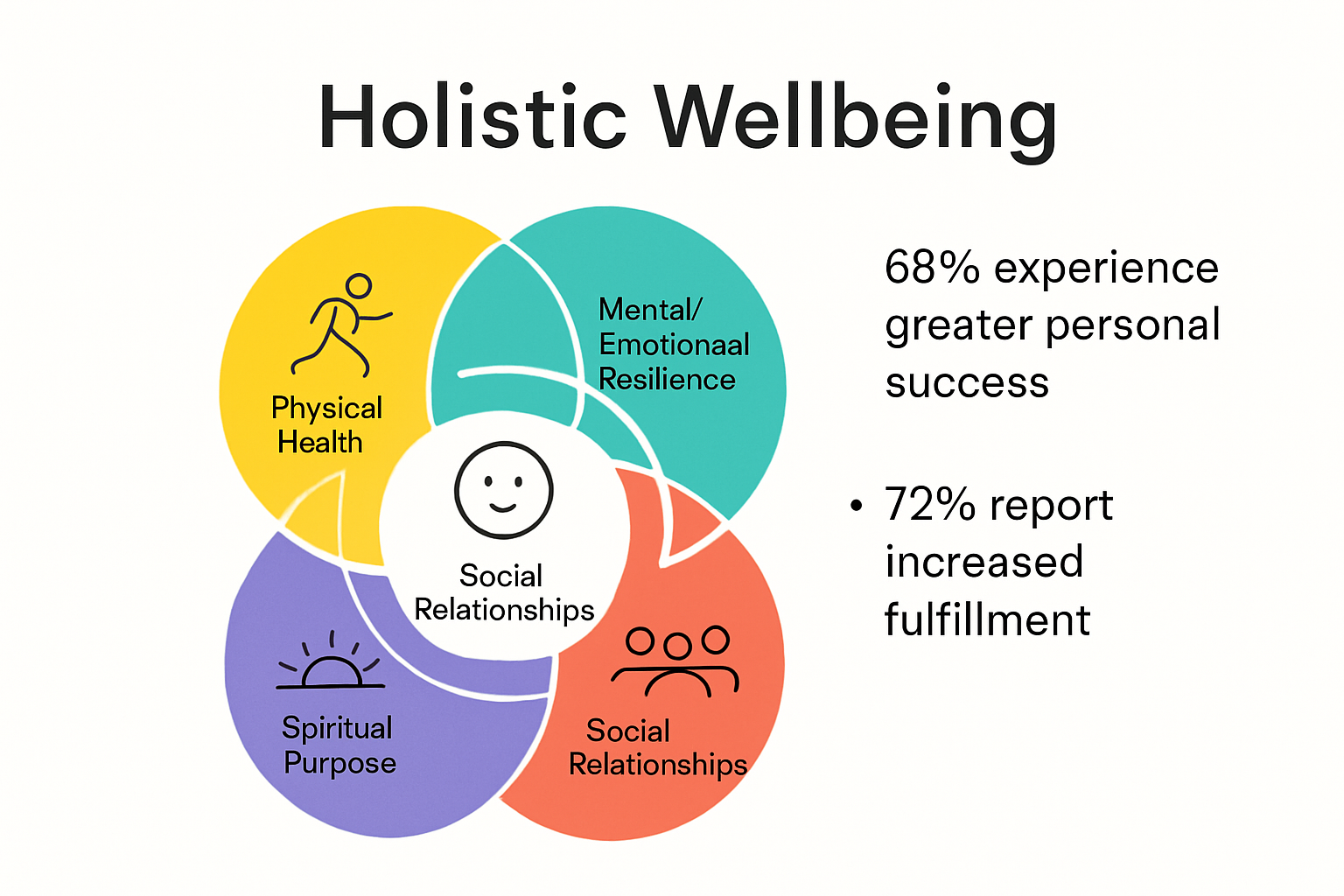
Professionals seeking comprehensive personal growth understand that holistic wellbeing requires intentional integration of various life aspects. Physical fitness, mental clarity, emotional resilience, spiritual alignment, and social connections are not separate pursuits but interconnected pathways to genuine thriving. By recognizing these intricate relationships, individuals can develop more nuanced strategies for personal development.
Holistic Approaches to Personal Transformation
The holistic paradigm emphasizes proactive and preventative strategies rather than reactive interventions. According to Harvard Medical School’s Integrative Medicine Department holistic practices recognize that sustainable wellness emerges from balanced lifestyle choices, mindful practices, and a deep understanding of one’s unique physiological and psychological landscape.
This approach invites professionals to view their personal development as a dynamic, ongoing process. It’s not about achieving a static state of perfection but continuously aligning physical, mental, and spiritual dimensions. Practices like meditation, nutrition optimization, stress management, purposeful movement, and meaningful social connections become essential tools in this holistic journey.
Holistic wellbeing ultimately empowers individuals to become active architects of their health and potential. By embracing a comprehensive perspective that honors the complexity of human experience, professionals can unlock more profound levels of personal effectiveness, resilience, and fulfillment. Learn more about our holistic approach to personal transformation.
The journey toward holistic wellbeing is not about radical overhaul but thoughtful, integrated progress. It’s an invitation to explore the rich interconnectedness of your inner and outer worlds, recognizing that true wellness emerges when all aspects of your being are acknowledged, nurtured, and brought into harmonious alignment.
Key Elements of Holistic Wellbeing
Holistic wellbeing is a dynamic framework comprising interconnected dimensions that work together to support an individual’s comprehensive health and potential. Understanding these key elements allows professionals to develop targeted strategies for personal growth and sustainable wellness.
To help clarify the differences and connections between the three key elements of holistic wellbeing, the following table provides a summary of their main characteristics and focus areas.
| Key Element | Main Focus | Common Practices |
|---|---|---|
| Physical & Energetic Balance | Nutrition, body movement, energy, sleep, immunity | Yoga, personalized nutrition, sleep hygiene, exercise |
| Mental & Emotional Resilience | Emotional intelligence, stress, cognitive flexibility | Meditation, journaling, coaching, support networks |
| Spiritual & Purpose-Driven Alignment | Meaning, purpose, alignment with values | Meditation, reflection, nature connection, contemplation |
Physical and Energetic Balance
Physical wellbeing forms the foundational cornerstone of holistic health. Research from Stanford University’s Wellness Center reveals that physical health is not merely the absence of disease but a state of robust energy, optimal functionality, and resilient immunity. This dimension encompasses nutrition, movement, sleep quality, and bodily awareness.
Professionals seeking holistic transformation must recognize that physical wellness extends beyond traditional fitness metrics. It involves understanding individual metabolic patterns, implementing personalized nutrition strategies, and creating sustainable lifestyle practices that support online energy healing courses. Practices like yoga, tai chi, and mindful movement integrate physical and energetic dimensions, promoting a more nuanced approach to bodily wellness.
Mental and Emotional Resilience
Mental and emotional wellness represent critical components of holistic wellbeing. According to the American Psychological Association psychological resilience directly influences physical health, professional performance, and overall life satisfaction. This element involves developing emotional intelligence, stress management techniques, and cognitive flexibility.
Emotional resilience is not about eliminating challenges but cultivating adaptive responses. Professionals can enhance this dimension through practices like meditation program, journaling, therapeutic coaching, and developing robust support networks. By understanding and processing emotional experiences, individuals create internal space for growth, creativity, and authentic self-expression.
Spiritual and Purpose-Driven Alignment
Spiritual wellness transcends religious frameworks, focusing on personal meaning, purpose, and connection to something larger than oneself. This dimension involves exploring personal values, cultivating inner peace, and aligning daily actions with deeper life intentions. Learn more about integrating purpose into your wellness journey.
Professionals committed to holistic wellbeing recognize that spiritual alignment provides essential context and motivation for personal development. It involves practices that nurture inner wisdom, such as meditation, reflective contemplation, nature connection, and exploring philosophical perspectives that expand personal understanding.
Integrating these key elements requires a patient, compassionate approach. Holistic wellbeing is not a destination but a continuous journey of self-discovery, adaptation, and intentional growth. By honoring the intricate relationships between physical, mental, and spiritual dimensions, professionals can unlock more profound levels of personal effectiveness, fulfillment, and authentic potential.
Why High-Achievers Seek Holistic Fulfillment
High-achieving professionals increasingly recognize that traditional success metrics no longer provide complete satisfaction. In a world where external accomplishments often mask internal fragmentation, holistic fulfillment has become a critical pursuit for those seeking genuine personal transformation.
To illustrate the shift from traditional success measures to a holistic fulfillment focus, the following table compares their core differences as discussed in this section.
| Aspect | Traditional Success | Holistic Fulfillment |
|---|---|---|
| Definition | External achievements, titles, wealth | Integration of mind, body, spirit, and purpose |
| Emotional Impact | Can lead to burnout, emptiness | Increases satisfaction, resilience, and connection |
| Motivation | Driven by societal metrics, recognition | Informed by personal values and authentic desires |
| Approach | Linear, compartmentalized | Interconnected, balanced, integrative |
| Outcome | Often temporary satisfaction | Sustainable, meaningful fulfillment |
The Limitations of External Success
Research from Harvard Business Review reveals that professionals experiencing peak career achievements frequently report feeling disconnected, exhausted, and fundamentally unfulfilled. Despite impressive credentials, many high-performers struggle with persistent stress, emotional depletion, and a sense that something essential is missing from their lives.
Traditional success paradigms emphasize linear progression—climbing corporate ladders, accumulating financial resources, and achieving professional milestones. However, these external markers increasingly fail to provide the deeper sense of meaning and purpose that modern professionals crave. High-achievers are discovering that true fulfillment requires a more comprehensive approach that integrates professional excellence with personal well-being.
The Desire for Authentic Integration
According to Stanford University’s Center for Compassion and Altruism Research, high-achieving individuals are seeking holistic approaches that allow them to align their professional aspirations with personal values, emotional intelligence, and spiritual growth. This shift represents more than a trend—it’s a fundamental reimagining of personal and professional development.
Professionals are recognizing that compartmentalizing their lives creates internal friction. The most successful individuals now understand that peak performance emerges from a state of genuine alignment—where career achievements harmonize with personal well-being, relationships, and deeper life purpose. Learn more about our approach to professional transformation.
Redefining Success Through Holistic Lens
Holistic fulfillment offers a nuanced alternative to traditional success narratives. It invites high-achievers to view their personal and professional journeys as interconnected, dynamic experiences. This approach acknowledges that true success involves more than external achievements—it requires ongoing personal growth, emotional resilience, and a profound understanding of one’s intrinsic motivations.
For professionals navigating complex personal and career landscapes, holistic fulfillment provides a comprehensive framework. It supports individuals in developing adaptive strategies that honor their multidimensional nature. By embracing this approach, high-achievers can create more sustainable, meaningful paths that integrate professional excellence with personal well-being.
Ultimately, the pursuit of holistic fulfillment represents a courageous commitment to authenticity. It requires professionals to look beyond surface-level achievements and cultivate a deeper, more compassionate relationship with themselves. This journey is not about abandoning ambition but about redefining success on more holistic, personally meaningful terms.
Practical Steps to Improve Holistic Wellbeing
Transforming holistic wellbeing requires intentional, strategic approaches that address multiple dimensions of personal health and development. Unlike quick fixes or temporary interventions, sustainable wellness demands a comprehensive, integrated methodology that empowers professionals to create meaningful, lasting change.
Cultivating Mindful Self-Assessment
Research from the Mayo Clinic demonstrates that self-awareness is the critical first step in holistic personal development. Professionals seeking genuine transformation must develop a practice of honest, compassionate self-reflection that goes beyond surface-level observations.
This involves creating regular opportunities for deep introspection through practices like journaling, meditation, and structured personal assessments. The goal is not self-criticism but developing a nuanced understanding of personal patterns, strengths, and areas for growth. By mapping current physical, emotional, and mental states, individuals can design targeted strategies for holistic improvement.
Integrated Lifestyle Design
According to the National Institutes of Health holistic wellbeing emerges from intentional lifestyle design that harmonizes multiple life dimensions. This approach requires professionals to view their daily choices as interconnected systems rather than isolated actions.
Practical integration involves creating structured routines that support physical energy, mental clarity, and emotional resilience. This might include developing personalized nutrition plans, implementing consistent sleep hygiene, incorporating mindful movement practices, and establishing boundaries that protect personal energy. Learn more about designing your holistic wellness journey.
Building Regenerative Support Systems

Holistic wellbeing cannot exist in isolation. Professionals must consciously cultivate support networks and environments that nourish personal growth. This involves surrounding oneself with relationships, communities, and professional connections that inspire, challenge, and support comprehensive personal development.
Building regenerative support systems requires strategic relationship management. This means actively seeking mentors, participating in growth-oriented communities, and creating professional and personal connections that encourage authentic expression and continuous learning. The quality of one’s environment directly influences personal transformation potential.
Implementing these practical steps is not about perfection but consistent, compassionate progress. Holistic wellbeing is a dynamic journey that demands patience, curiosity, and a commitment to ongoing personal evolution. By approaching wellness as an integrated, multidimensional practice, professionals can unlock more profound levels of personal effectiveness, resilience, and genuine fulfillment.
Frequently Asked Questions
What is holistic wellbeing?
Holistic wellbeing is an integrated approach to health that emphasizes the connections between mind, body, spirit, and environment, focusing on comprehensive personal development rather than isolated treatment of symptoms.
How can I improve my holistic wellbeing?
Improving holistic wellbeing involves cultivating practices like mindful self-assessment, integrated lifestyle design, and building supportive relationships that nurture physical, mental, and emotional health.
Why do high-achievers seek holistic fulfillment?
High-achievers often find that traditional metrics of success, such as wealth and titles, do not provide lasting satisfaction. They seek holistic fulfillment to align their professional achievements with personal well-being and deeper life purposes.
What are the key elements of holistic wellbeing?
The key elements of holistic wellbeing include physical and energetic balance, mental and emotional resilience, and spiritual and purpose-driven alignment, all of which contribute to comprehensive health and personal growth.
Ready to Experience True Holistic Wellbeing?
If the article left you questioning whether external success really brings fulfillment or wondering how to bridge the gap between your professional achievements and your inner purpose, you are not alone. Many high-achievers struggle with stress, burnout, and a lingering sense that something is missing—despite following surface-level wellness routines. The path to sustainable transformation lies in an integrated approach that aligns mind, body, and spirit with real-life support and expertise.

Why wait to feel connected and purposeful? At Plentiful, you can access a world of highly skilled coaches, healers, and guides who help you put the concepts from this article into practice. Whether you are ready to try a holistic coaching session or want to explore tailored workshops, there is an experience designed for your unique journey. Start your personal transformation today and unlock your full potential for 2025 and beyond.
Recommended
- About Plentiful – The Online Marketplace for Finding Your Purpose
- The Journal | Personal Growth and Wellbeing Topics | Plentiful
- SpineRevitalize: A Journey to Holistic Healing
- Personal Intensive Retreat
- Private Coaching Container
- How to Live a Meaningful Life: 7 Ways
- Top Benefits of Energy Healing for Professionals in 2025
- 5 Daily Habits to Enhance Your Overall Well-being – No Fuss Deal
Ready to improve your life?
Access our free newsletter designed to help you become the best version of yourself.
Learn how to find your path, understand yourself, and make progress toward your dream life.