







Most professionals are stuck in a vicious loop — scrolling through notifications, bouncing between back-to-back meetings, and watching their calendars devour their days. They try to “win” by cramming more in, juggling every task like a circus act, and then wondering why they end the week exhausted and no closer to their big goals.
Here’s the shocker: research shows focused time blocking can skyrocket productivity by up to 40%. Yet most people still treat multitasking like a badge of honor. When in reality, it’s the fastest route to burnout.
The real breakthrough isn’t about working more. It’s about working differently, designing your day so that every minute moves you closer to the work and life you actually want.
Table of Contents
- Understanding Time Management Challenges
- Proven Techniques To Boost Productivity
- Balancing Work, Life, And Personal Growth
- Leveraging Digital Tools For Efficiency
Quick Summary
| Takeaway | Explanation |
|---|---|
| Identify and Overcome Psychological Barriers | Recognize issues like perfectionism and failure fear affecting time management. Addressing these can transform productivity. |
| Implement Time Blocking for Focus | Schedule specific time slots for tasks to enhance focus and efficiency, potentially increasing productivity by up to 40%. |
| Leverage Technology Wisely | Utilize digital tools and apps for scheduling and productivity while understanding personal energy patterns for optimal task management. |
| Balance Work and Personal Growth | Integrate personal aspirations with professional goals to achieve a fulfilling and sustainable career path. |
| Optimize Communication and Collaboration | Use digital collaboration tools to reduce unnecessary meetings and improve team coordination, enhancing overall productivity. |
Understanding Time Management Challenges
Professionals today face unprecedented challenges in managing their time effectively. The modern work environment has become increasingly complex, with constant digital distractions, multiple responsibilities, and blurred boundaries between professional and personal life creating significant obstacles to productive time management.
The Hidden Costs of Poor Time Management
Time management is not just about scheduling tasks. Learn more about personal productivity strategies that can transform your professional approach. According to research published in the International Journal of Environmental Research and Public Health, poor time management skills directly correlate with increased stress levels and decreased job satisfaction. Professionals who struggle with time management experience several critical challenges:
To help clarify the typical consequences of poor time management faced by professionals, the following table summarizes these key challenges along with their impacts.
| Challenge | Description | Impact |
|---|---|---|
| Chronic Procrastination | Delaying important tasks in favor of non-essential activities | Lost productivity; missed goals |
| Ineffective Prioritization | Not distinguishing between urgent and important tasks | Misallocated effort; stress |
| Overwhelming Workload | Managing too many complex projects without structure | Burnout; reduced effectiveness |
- Chronic Procrastination: Delaying important tasks and allowing non-essential activities to consume valuable work hours.
- Ineffective Prioritization: Failing to distinguish between urgent and important tasks, leading to misallocated energy and resources.
- Overwhelming Workload: Attempting to manage multiple complex projects simultaneously without a structured approach.
Psychological Barriers to Effective Time Management
Beyond external challenges, internal psychological factors significantly impact a professional’s ability to manage time effectively. Many individuals struggle with deep-rooted behaviors that sabotage their productivity. These include perfectionism, fear of failure, and an inability to set clear boundaries.
Perfectionists often spend excessive time on tasks, believing that every detail must be flawless. This approach leads to diminished overall productivity and increased stress. Similarly, professionals who fear failure may procrastinate or over-prepare, preventing them from making meaningful progress on critical objectives.
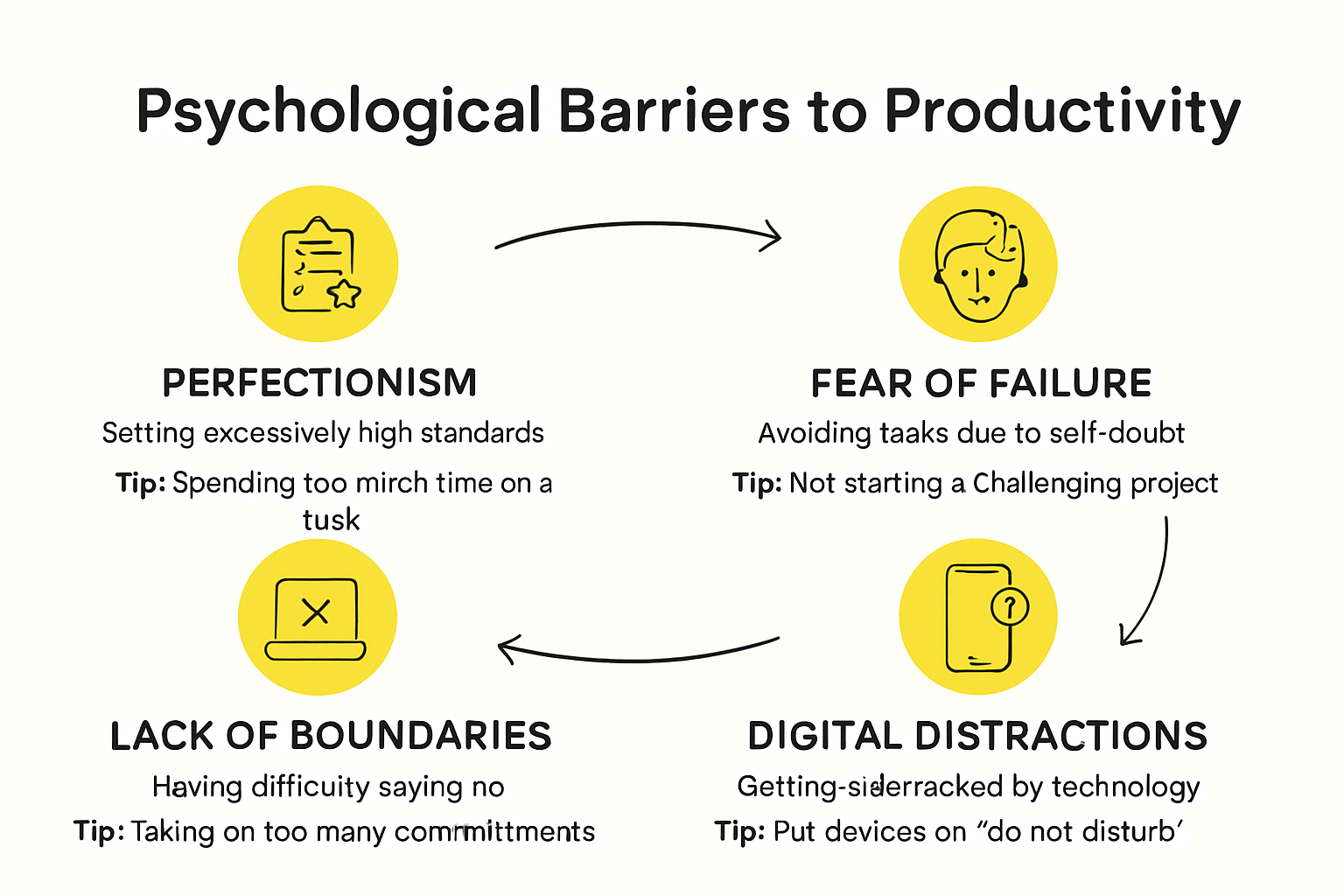
The digital era has compounded these challenges. Constant connectivity through smartphones and communication tools creates an illusion of productivity while actually fragmenting attention and reducing genuine work efficiency. Professionals find themselves trapped in a cycle of reactive work, responding to notifications and emails instead of proactively managing their most important responsibilities.
Recognizing these challenges is the first step toward developing a more intentional and effective approach to time management. By understanding the psychological and practical obstacles that prevent optimal performance, professionals can begin to implement strategies that transform their productivity and professional satisfaction.
Proven Techniques to Boost Productivity
Professionals seeking to enhance their productivity must adopt strategic approaches that go beyond traditional time management methods. The key to success lies in implementing targeted techniques that optimize cognitive performance and create sustainable work habits.
Strategic Time Blocking and Focus Management
Discover advanced productivity strategies that can transform your work approach. Time blocking emerges as a powerful technique for professionals looking to maximize their efficiency. This method involves deliberately scheduling specific time periods for different types of tasks, creating structured windows of concentrated work. Research from the American Psychological Association indicates that dedicated focus periods can increase overall productivity by up to 40 percent.
Effective time blocking requires several critical components:
- Prioritization: Identifying the most important tasks and allocating peak energy hours to them.
- Minimal Interruptions: Creating distraction-free environments during focused work periods.
- Realistic Scheduling: Understanding individual energy patterns and matching tasks to optimal times.
Leveraging Technology and Personal Energy Management
Modern professionals can significantly boost productivity by integrating smart technological tools and understanding personal energy rhythms. Productivity apps and digital calendars offer sophisticated tracking and management capabilities. However, the most successful approach combines technological support with a deep understanding of personal energy cycles.
Energy management goes beyond simple time tracking. Professionals must learn to recognize their natural productivity peaks and design their work schedules accordingly. This might mean tackling complex analytical tasks during morning hours for some individuals, while others might find their creative best in late afternoon or evening hours.
Technology can play a crucial role in this process. Advanced productivity tools now offer insights into work patterns, suggesting optimal times for different types of tasks. Machine learning algorithms can analyze individual work habits, providing personalized recommendations for maximizing efficiency.
Additionally, professionals should consider implementing short, strategic breaks. Counterintuitive as it might seem, regular breaks actually enhance overall productivity. The human brain requires periodic rest to maintain peak performance. Techniques like the Pomodoro method recommend 25-minute focused work intervals followed by 5-minute breaks, helping to maintain mental freshness and prevent burnout.
Ultimately, boosting productivity is not about working harder but working smarter. By combining strategic time management, technological support, and a nuanced understanding of personal energy patterns, professionals can create a sustainable approach to high performance that doesn’t compromise personal well-being.
Balancing Work, Life, and Personal Growth
Achieving harmony between professional responsibilities and personal development represents one of the most significant challenges for modern professionals. Explore strategies for sustainable professional growth that prioritize both career success and personal well-being.
The Integrated Approach to Professional Development
According to research from the National Institutes of Health, successful professionals recognize that work-life integration is not about perfect balance, but about creating meaningful connections between professional aspirations and personal fulfillment. This holistic approach requires intentional strategies that address multiple dimensions of personal and professional growth.
Key principles of integrated professional development include:
- Holistic Self-Assessment: Regularly evaluating personal goals, professional objectives, and areas of potential growth.
- Flexible Boundary Setting: Creating adaptable boundaries that allow for professional excellence without sacrificing personal well-being.
- Continuous Learning: Maintaining a commitment to personal and professional development across all life domains.
Navigating Personal Growth and Professional Demands
The Wharton Work/Life Integration Project highlights the importance of viewing personal growth as an integral component of professional success. Professionals must develop a nuanced approach that allows for simultaneous career advancement and personal development.
This integrated approach involves several critical strategies. First, professionals must recognize that personal growth is not separate from professional success but is instead a fundamental component of overall achievement. Investing in personal development skills such as emotional intelligence, mindfulness, and self-reflection directly contributes to professional effectiveness.
Mental and physical well-being play a crucial role in this integrated approach. Professionals who prioritize self-care create a strong foundation for sustained success. This means developing practices that support mental health, physical wellness, and emotional resilience. Regular exercise, mindfulness practices, and intentional rest become as important as professional skill development.
Technology and modern work structures offer unprecedented opportunities for flexible personal and professional growth. Remote work, online learning platforms, and digital networking tools enable professionals to pursue personal interests while maintaining professional momentum. The key lies in intentional use of these resources, ensuring they support rather than distract from meaningful growth.
Ultimately, balancing work, life, and personal growth is an ongoing journey of self-discovery and intentional development. It requires a dynamic approach that embraces complexity, values personal well-being, and recognizes that true professional success is intimately connected with personal fulfillment. By adopting a holistic perspective, professionals can create a life that is not just productive, but genuinely meaningful and satisfying.
Leveraging Digital Tools for Efficiency
In the contemporary professional landscape, digital tools have transformed how individuals manage time, collaborate, and optimize productivity. Discover strategic digital productivity solutions that can revolutionize your work approach.
Strategic Tool Selection and Integration
According to research from the National Institute of Governmental Purchasing, effective time management hinges on selecting and integrating the right digital tools. Professionals must approach technology not as a distraction, but as a strategic asset for enhancing efficiency.
Key considerations for digital tool selection include:
Below is a table summarizing the essential factors to consider when selecting digital tools for professional productivity, as discussed in the article.
| Consideration | Explanation |
|---|---|
| Compatibility | Ensures tools fit seamlessly with current workflows |
| User Experience | Involves choosing tools with intuitive and easy-to-use interfaces |
| Scalability | Allows tools to expand and adapt as professional or organizational needs grow |
| Security | Requires robust data protection, encryption, and authentication features for confidentiality |
- Compatibility: Ensuring tools seamlessly integrate with existing workflows
- User Experience: Choosing platforms with intuitive interfaces
- Scalability: Selecting tools that can grow with professional needs
Optimizing Communication and Collaboration
Research from a comprehensive study on global software engineering published in arXiv reveals that professionals spend significant time in both scheduled and unscheduled meetings. Digital collaboration tools can dramatically reduce this time while maintaining effective communication.
Modern professionals have access to an unprecedented array of digital solutions designed to streamline work processes. Project management platforms like Asana and Trello offer visual task tracking, while communication tools such as Slack enable real-time collaboration. These technologies allow for seamless information sharing, reducing email clutter and enhancing team coordination.
Advanced digital tools now incorporate artificial intelligence to provide predictive insights. Machine learning algorithms can analyze work patterns, suggest optimal scheduling, and even predict potential productivity bottlenecks. Calendar apps with AI capabilities can automatically block focus time, recommend efficient meeting slots, and help professionals maintain a balanced workload.
Cybersecurity and privacy remain critical considerations when adopting digital tools. Professionals must carefully evaluate the data protection mechanisms of any platform, ensuring sensitive information remains secure. Two-factor authentication, end-to-end encryption, and robust privacy settings should be baseline requirements for any professional-grade digital tool.
Ultimately, digital tools are most effective when used intentionally. They are not magic solutions but sophisticated instruments that require thoughtful implementation. Successful professionals view these technologies as extensions of their cognitive capabilities, designed to amplify human potential rather than replace human judgment. By adopting a strategic, mindful approach to digital tools, professionals can transform their productivity, creating more space for creativity, strategic thinking, and meaningful work.
Frequently Asked Questions
What are the benefits of time blocking for professionals?
Time blocking can increase productivity by up to 40% by scheduling specific time periods for tasks, allowing for enhanced focus, better prioritization, and reduced distractions.
How can technology improve time management for professionals?
Technology can improve time management by offering productivity apps and digital calendars that help schedule tasks, monitor work patterns, and provide insights into optimal productivity cycles.
What are common psychological barriers to effective time management?
Common psychological barriers include perfectionism, fear of failure, and difficulty in setting boundaries, which can lead to procrastination and reduced efficiency.
How can professionals balance work and personal growth?
Professionals can balance work and personal growth by integrating personal aspirations with professional goals, regularly assessing their objectives, and prioritizing self-care to maintain overall well-being.
Elevate Your Professional Productivity With Holistic Support
Professionals everywhere are searching for more freedom and real success, yet many struggle with chronic procrastination, overwhelming workloads, and scattered focus. If parts of this article resonated with you—feeling stretched thin by digital distractions, perfectionism, or reactive habits—it is time to tap into solutions that address both your productivity and well-being. Imagine pairing strategic time management with ongoing personal support from experts who help you break those old patterns and create new pathways to achievement.

Ready to experience lasting change and unlock your full potential? Connect with a community of specialized coaches and guides for career growth, mindfulness, or energy management through Plentiful’s online marketplace. You can choose from one-on-one coaching, group workshops, or digital content proven to boost focus and satisfaction. Take your next step to meaningful progress today—visit https://helloplentiful.com and discover holistic tools designed for professionals just like you.
Recommended
- Empowerment Programs, Coaching & Self-Empowerment Courses
- Career Coaching & Training programs | Career Guidance Counselor Online
- Coaching Sessions, Courses, Masterclasses, Retreats | Browse All
- Personal Intensive Retreat | Herdwise Leadership Coaching
Ready to improve your life?
Access our free newsletter designed to help you become the best version of yourself.
Learn how to find your path, understand yourself, and make progress toward your dream life.