Chi, more commonly written as qi, is a concept from Chinese philosophy associated with breath, vitality, movement, and the processes that sustain life. It became central to several Chinese philosophical and medical traditions and remains part of qigong, tai chi, acupuncture, and some martial arts.
English speakers often translate qi as “energy,” “vital energy,” or “life force.” These phrases provide a useful starting point, but none captures the concept completely. Qi has carried different meanings across centuries of Chinese thought, from air and breath to the dynamic material processes believed to constitute living beings and the wider world.
Modern science has not established chi as a measurable physical substance or force. Researchers have, however, studied practices associated with cultivating qi, particularly qigong and tai chi. Some studies report measurable benefits, although the strength of the evidence varies.
What does chi mean?
The Chinese character for qi is written 氣 in traditional Chinese and 气 in simplified Chinese.
Early meanings of the word included air, vapor, and breath. Chinese philosophers later used qi to describe processes of vitality, transformation, and interaction within the body and the natural world.
The Stanford Encyclopedia of Philosophy explains that theories of qi appeared in early Chinese philosophical writing and later became integral to Chinese medical thought. Different schools did not always define qi in precisely the same way.
This history explains why modern definitions can sound inconsistent. Depending on the context, chi may refer to:
- Breath or air
- Vitality within a living body
- The dynamic processes that constitute the world
- A traditional explanation for health and bodily function
- A quality cultivated through movement, breathing, or meditation
- A personal sense of physical or emotional aliveness
The word belongs to a rich philosophical tradition. Reducing chi to a mysterious invisible power strips away much of that history.
Are chi and qi the same?
Chi and qi are two English spellings of the same Chinese word.
“Qi” comes from Pinyin, the official romanization system widely used for Mandarin Chinese. “Chi” comes from the older Wade-Giles system and remains common in English.
Both are usually pronounced approximately “chee.”
The spelling difference does not indicate two forms of energy or two separate traditions. “Chi energy” and “qi energy” generally refer to the same underlying concept.
One linguistic complication appears in the phrase tai chi. The “chi” in tai chi comes from ji in taiji, a different Chinese term often translated as the “Supreme Ultimate.” Tai chi is closely associated with cultivating qi, but the two uses of “chi” do not represent the same written Chinese word.
Is chi the same as life-force energy?
People often describe chi as life-force energy because qi became closely associated with vitality and the processes of life.
The translation has limits. In Chinese thought, qi has often meant more than a force contained inside the human body. Some philosophical traditions regarded everything in the world as constituted through changing configurations of qi.
The Stanford Encyclopedia of Philosophy’s account of the heart-mind in Chinese philosophy describes qi as connected with bodily activity, thought, emotion, intention, and moral cultivation. Other Chinese philosophical texts relate qi to weather, seasons, landscapes, health, and the structure of the cosmos.
Calling chi “life-force energy” therefore captures part of the idea, but it can also make qi sound more like a modern supernatural claim than a complex historical concept.
Where did the concept of chi come from?
Ideas about qi developed over many centuries rather than originating with a single teacher or text.
Early Chinese writers used qi in discussions of breath, nourishment, emotion, physical constitution, nature, and the cultivation of character. During the Warring States and early imperial periods, thinkers connected qi with yin and yang, the Five Phases, seasonal change, health, and longevity.
These ideas later informed texts associated with traditional Chinese medicine. The Huangdi Neijing, commonly called the Yellow Emperor’s Inner Canon, brought medical observations into a broader framework involving qi, yin and yang, the Five Phases, the body, and the natural world.
Qi also developed within Daoist, Confucian, martial, and self-cultivation traditions. Its meaning changed according to the questions each tradition asked.
There is no single historical definition that covers every use of the word.
What is chi in traditional Chinese medicine?
Traditional Chinese medicine, or TCM, uses qi as part of a diagnostic and therapeutic framework.
Within traditional theory, health depends partly on the appropriate movement, transformation, and distribution of qi. Practitioners may describe a person’s condition through patterns such as:
- Qi deficiency
- Qi stagnation
- Rebellious qi
- Sinking qi
- Collapsed qi
These phrases have specific meanings within TCM. They should not be treated as biomedical diagnoses or translated directly into a disease, organ defect, or laboratory measurement.
A TCM practitioner considers a wider pattern that may include physical symptoms, sleep, appetite, temperature, emotions, the tongue, and the pulse. Treatment may involve acupuncture, movement, herbs, diet, massage, or other traditional methods.
The National Center for Complementary and Integrative Health advises people to discuss complementary approaches with their health-care providers and not use unproven practices to replace or delay conventional care.
What are chi pathways?
People searching for “chi pathways” are usually asking about meridians.
Traditional Chinese medicine describes meridians, also called channels, as routes through which qi and blood circulate. Acupuncture points are organized along these channels within the traditional system.
Meridians do not correspond neatly to nerves, blood vessels, lymphatic vessels, or any other single anatomical structure recognized by modern medicine. Researchers have proposed neurological, connective-tissue, circulatory, and biochemical explanations for some effects associated with acupuncture, but no established anatomical structure has been shown to carry a measurable substance called qi.
This distinction matters. A traditional map can organize observation and practice without being identical to a modern anatomical map.
What are dantians?
A dantian is a focal area used in several Chinese meditation, martial, and internal-cultivation traditions. The word is often translated as “elixir field.”
Different traditions describe more than one dantian, but the lower dantian receives the most attention in qigong and martial arts. Practitioners usually locate it in the lower abdomen.
The lower dantian is not a discrete anatomical organ. In practice, focusing on this area may help someone coordinate breathing, posture, balance, attention, and movement.
Some systems also describe middle and upper dantians associated with the chest and head. Their precise locations and meanings vary by tradition.
How do yin and yang relate to chi?
Yin and yang describe complementary aspects of change. They can refer to qualities such as inward and outward, cooling and warming, stillness and activity, or contraction and expansion.
They do not represent fixed opposites. Each quality exists in relation to another and can transform as circumstances change.
Traditional Chinese thought often uses yin and yang to describe patterns within qi. A healthy state depends on an appropriate relationship between these qualities rather than the permanent dominance of one.
The phrase “balanced chi” usually refers to this kind of dynamic regulation. Balance does not mean perfect stillness or equal quantities of everything. It means that changing processes remain appropriately coordinated.
What does blocked chi mean?
“Blocked chi” is a common English expression, although traditional practitioners may use more specific language such as qi stagnation.
Within a traditional framework, stagnation means that qi is not moving appropriately. A practitioner might associate the pattern with discomfort, tension, irritability, digestive symptoms, or other signs considered together.
In everyday wellness language, people sometimes use “blocked energy” more loosely to describe feeling tense, emotionally stuck, exhausted, or disconnected from their bodies.
Neither use should substitute for medical assessment. Persistent pain, fatigue, breathing problems, digestive changes, or other physical symptoms can have causes that need conventional diagnosis and treatment.
Can you feel chi?
People practicing qigong, tai chi, meditation, acupuncture, or martial arts sometimes report sensations they interpret as chi.
Commonly reported experiences include:
- Warmth in the hands or abdomen
- Tingling or pulsing sensations
- Changes in breathing
- A feeling of heaviness or lightness
- Muscle release
- Heightened awareness of posture
- A sense of calm, vitality, or internal movement
The sensations may be genuine without proving one particular explanation for them. Attention, breathing, circulation, muscle activity, expectation, emotion, and changes in the nervous system can all shape bodily experience.
A person working within a qi-based tradition may understand these sensations as movement or concentration of chi. Another person may describe them through physiology or interoception, the perception of sensations from inside the body.
You can observe the experience without deciding in advance what caused it.
How do people cultivate chi?
Chinese traditions developed many approaches to cultivating qi. The best-known include qigong, tai chi, meditation, breath regulation, and martial arts.
Qigong
Qigong combines physical posture or movement, breathing, and directed attention. Some forms use slow sequences. Others use still postures, visualization, sound, or repeated movements.
The National Center for Complementary and Integrative Health’s qigong guide describes most forms as involving slow breathing, gentle movement, and mental focus.
Tai chi
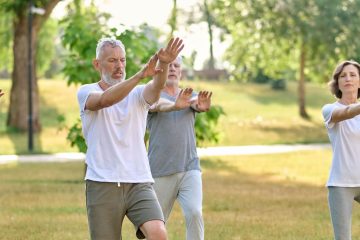
Tai chi developed as a Chinese martial art and now serves as a widely practiced form of meditative movement. Its sequences train balance, coordination, posture, attention, and controlled weight transfer.
Tai chi practice often includes traditional instruction about relaxing unnecessary tension, coordinating breath and movement, and allowing qi to circulate.
Meditation and breathing
Some practices cultivate qi through seated or standing meditation. A practitioner may focus on the breath, lower abdomen, posture, or sensations in the body.
Forceful breathing is unnecessary for beginners. Comfortable, unstrained breathing provides a safer starting point.
Martial arts
Several Chinese martial arts discuss qi in relation to breathing, attention, posture, rooting, timing, and coordinated force.
Traditional language can describe genuine training principles without establishing extraordinary claims. Efficient biomechanics, balance, relaxation, and practice can produce impressive physical results.
Claims that a person can project force over a distance, resist injury without physical conditioning, or develop supernatural power require evidence beyond demonstrations performed under uncontrolled conditions.
A simple way to begin exploring chi
You do not need to adopt a fixed belief about chi before trying a traditional practice.
- Choose qigong or tai chi. Look for a qualified teacher who welcomes questions and respects physical limitations.
- Begin with posture. Let your feet make steady contact with the floor. Keep your knees comfortable and your shoulders relaxed.
- Allow the breath to settle. Breathe naturally rather than trying to produce an unusual sensation.
- Move slowly. Pay attention to balance, weight transfer, tension, and coordination.
- Notice what changes. Observe warmth, breathing, muscular effort, mood, and attention without forcing an interpretation.
- Practice consistently. Ten comfortable minutes repeated regularly will teach you more than one strenuous attempt.
Stop if you feel pain, dizziness, shortness of breath, or unusual discomfort. Ask a health professional about suitable exercise if you are pregnant, recovering from an injury, or managing a health condition.
What does science say about chi?
Science has not established chi as a distinct physical energy, substance, or force circulating through meridians.
That statement does not mean that every practice associated with qi lacks value. It separates two different questions:
- Does a measurable substance called chi exist?
- Can practices associated with chi produce measurable effects?
Research has not answered the first question with evidence of a distinct physical force. Researchers can study the second question through outcomes such as balance, pain, fatigue, sleep, mobility, mood, and quality of life.
Qigong and tai chi combine several components that may affect health:
- Physical activity
- Balance and coordination training
- Slow breathing
- Focused attention
- Relaxation
- Social participation when practiced in groups
- Regular time devoted to movement and recovery
A beneficial result does not show that chi itself caused the change. It shows that the practice, with all its physical and psychological components, affected the outcome being measured.
What has research found about qigong and tai chi?
Evidence varies by condition, population, practice, and study quality.
NCCIH reports that qigong and tai chi have been studied for pain, balance, fatigue, mood, sleep, quality of life, and several chronic conditions. Some findings are encouraging, but many research reviews call for larger and better-designed trials.
Research on tai chi provides some of the clearest practical findings. NCCIH reports evidence that tai chi can help improve balance and stability and may reduce the risk of falls among some older adults. Research has also examined tai chi for knee osteoarthritis, fibromyalgia, Parkinson’s disease, heart health, and cancer-related symptoms.
Qigong research has reported possible benefits for fatigue, quality of life, and some psychological or physical symptoms. The studies vary considerably in their methods, and researchers do not always use the same qigong forms, schedules, or comparison groups.
These limitations make sweeping claims inappropriate. Evidence that a specific practice helped a particular group does not prove that qigong treats every illness or that increasing chi explains the result.
Can chi boost immunity or cure illness?
Evidence does not support a broad claim that raising chi boosts immunity or cures disease.
Movement, breathing, sleep, stress reduction, social connection, and other health behaviors can influence physical and psychological well-being. These effects should be described precisely rather than attributed automatically to an increase in invisible energy.
Be cautious when someone claims that:
- Blocked chi caused a serious illness
- Energy work can replace medical treatment
- A practitioner can diagnose disease solely by sensing energy
- One method can cure many unrelated conditions
- Worsening symptoms prove that healing is occurring
- You must buy repeated treatments to prevent harm
A credible practitioner stays within their training, explains the limits of the service, and encourages appropriate medical care.
Is qigong safe?
Gentle qigong and tai chi appear to be low-risk for most people when taught and practiced appropriately.
Possible problems include muscle soreness, joint discomfort, loss of balance, or aggravation of an existing injury. The instructor should adapt movements to your mobility and health.
NCCIH advises pregnant people and those with health concerns to speak with a health-care provider before starting a new exercise practice. Acupuncture requires a properly trained practitioner who uses sterile needles. Improper acupuncture can cause infections and serious injuries.
Herbal products require separate caution. “Traditional” does not automatically mean safe. Herbs can cause side effects, contain contaminants, or interact with medications.
Is chi Chinese or Japanese?
Qi is a Chinese concept.
The Japanese word ki uses the same character and entered Japanese culture through historical Chinese influence. Ki appears in Japanese practices and terms such as aikido and Reiki, but Japanese traditions developed their own interpretations.
Indian traditions use concepts such as prana, nadis, and chakras. These ideas share some translated language about breath and vitality, but they developed within different historical and philosophical systems.
Chakras and chi therefore should not be treated as interchangeable. Our guide to chakra vs. chi explains the differences between the two traditions.
A grounded way to understand chi
Chi offers a language for thinking about breath, vitality, movement, balance, and the relationship between a person and the surrounding world.
The concept deserves more care than either blind belief or casual dismissal. Qi played a serious role in Chinese philosophy, medicine, self-cultivation, and martial practice. Modern scientific evidence does not establish it as a measurable physical force, but some practices associated with qi can produce measurable effects.
You can explore qigong or tai chi without pretending that every traditional claim has been scientifically proven. You can also respect the tradition without reducing it to supernatural power.
Begin with a qualified teacher, attend to your body, and judge health claims by the quality of the evidence behind them.
If you would like to explore contemporary practices concerned with vitality, awareness, and personal energy, browse Plentiful’s energy-work experiences. These offerings may draw on traditions other than Chinese philosophy, so read each practitioner’s description before choosing an experience.
Curious to explore energy-based practices for yourself? Browse Plentiful’s energy-work experiences and compare each practitioner’s approach, format, and training.
Frequently asked questions
What is chi in simple terms?
Chi, or qi, is a Chinese concept associated with breath, vitality, movement, and the processes of life. It is often translated as vital energy or life force, although those English terms do not capture its full philosophical history.
What is chi energy?
“Chi energy” is a common English phrase for qi. Traditional Chinese thought describes qi as connected with vitality and change, but modern science has not established it as a distinct physical energy that can be measured in the body.
Are chi and qi different?
No. Chi and qi are different romanized spellings of the same Chinese word. Qi is the modern Pinyin spelling. Chi comes from an older romanization system.
How do you pronounce qi?
Qi is pronounced approximately “chee.”
What are chi pathways?
Chi pathways usually refer to meridians, the channels through which qi is traditionally said to circulate. Meridians form part of traditional Chinese medicine, but they have not been established as anatomical pathways comparable to nerves or blood vessels.
Where is chi stored in the body?
Some qigong and martial traditions focus on the lower dantian, an area in the lower abdomen. Practitioners may describe it as a center for cultivating or storing qi. The dantian is a traditional focal area rather than a discrete anatomical organ.
What does balanced chi feel like?
People may use balanced chi to describe feeling steady, vital, relaxed, and physically coordinated. These experiences are subjective and should not be used to diagnose health conditions.
How can I cultivate chi?
Qigong and tai chi provide accessible ways to explore qi through movement, breathing, posture, and attention. Begin gently with a qualified teacher and focus on comfortable practice rather than trying to force unusual sensations.
Is chi scientifically proven?
Science has not demonstrated chi as a distinct measurable force or substance. Studies have found potential benefits from practices associated with qi, including qigong and tai chi, but those findings do not prove that chi itself caused the effects.
Can chi heal the body?
There is no reliable evidence that chi alone cures disease. Some mind-body practices associated with qi may support balance, movement, relaxation, or quality of life. They should complement appropriate medical care rather than replace it.