






In an age of constant stimulation and chronic stress, people are craving something medicine alone can’t give them: true soul-level healing. Enter shamanic healing: a 50,000-year-old practice that treats illness not just as a physical imbalance, but as a disturbance in the spirit. Once practiced by indigenous healers across every continent, shamanic traditions are now finding their way into therapy rooms, wellness retreats, and even neuroscience labs.
In this guide, we’ll explore what shamanic healing really is, how it works, and why it’s gaining renewed attention in the modern world. You’ll learn how shamans enter altered states of consciousness to restore harmony between body, mind, and spirit… and what contemporary research reveals about its effects on the brain and emotional health.
By the end, you’ll understand not only the techniques (like drumming, journeying, and soul retrieval) but also the science and spiritual philosophy behind them, and why ancient wisdom may hold the key to healing what modern life has fractured.
Table of Contents
- Defining Shamanic Healing: An Ancient Practice
- The Importance of Shamanic Healing in Modern Life
- Understanding the Mechanisms of Shamanic Healing
- Key Concepts in Shamanic Healing: Spirits, Journeys, and Rituals
- The Role of a Shaman: Guide and Healer in the Process
Quick Summary
| Takeaway | Explanation |
|---|---|
| Shamanic healing targets spiritual root causes of illness. | This practice sees illness originating from spiritual disruptions, not just physical symptoms. |
| Spiritual journeying is a key healing technique. | Shamans utilize trance states to navigate unseen realms, gaining insights for healing. |
| Shamans function as holistic guides and intermediaries. | Their role is to bridge the gap between physical reality and spiritual dimensions for comprehensive healing. |
| Emotional and spiritual imbalances affect physical health. | Shamanic practices emphasize that addressing emotional well-being is crucial for overall health. |
| Modern stress can benefit from ancient shamanic wisdom. | In today’s fast-paced world, shamans offer unique insights for tackling emotional burnout and disconnection. |
Defining Shamanic Healing: An Ancient Practice
Shamanic healing represents one of humanity’s oldest holistic approaches to wellness, rooted in indigenous traditions that view healing as a deeply spiritual and interconnected process. Unlike modern medical practices that often treat symptoms, shamanic healing addresses physical, emotional, and spiritual imbalances by engaging with unseen energetic realms.
The Spiritual Foundation of Shamanic Practice
At its core, shamanic healing is based on the fundamental belief that illness originates from spiritual disruptions rather than purely physical manifestations. Shamans, considered spiritual practitioners and mediators between visible and invisible worlds, use complex rituals and altered states of consciousness to diagnose and treat conditions. Explore more about holistic healing practices that share similar philosophical foundations.
The practice recognizes that human beings are not just physical entities but multidimensional beings with energetic and spiritual components. Shamans believe that emotional traumas, spiritual disconnection, and energetic blockages can manifest as physical or psychological ailments. Their healing approach involves:
- Identifying spiritual root causes of illness
- Performing ceremonial rituals to restore energetic balance
- Facilitating spiritual reconnection and personal transformation
Techniques and Spiritual Journeying
Traditional shamanic healing involves several sophisticated techniques designed to restore holistic wellness. According to research examining traditional healing practices, shamans typically employ methods such as:
- Trance state induction through drumming, chanting, or plant medicine
- Spiritual journeying to communicate with spirit guides
- Energy extraction to remove negative spiritual influences
- Soul retrieval to heal fragmented aspects of an individual’s spiritual self
These practices transcend mere symptom management, aiming to restore fundamental harmony within an individual’s spiritual ecosystem.
To clarify the various methods utilized in shamanic healing, the following table summarizes the main techniques and their core purposes as described in the article.
| Technique | Description | Main Purpose |
|---|---|---|
| Trance State Induction | Altered consciousness via drumming, chanting, or plant medicine | Enables access to spiritual realms |
| Spiritual Journeying | Navigating unseen realities to communicate with spirit guides | Gather insight and guidance for healing |
| Energy Extraction | Removal of negative or disharmonious energetic influences | Restore energetic and spiritual balance |
| Soul Retrieval | Healing and reintegrating fragmented spiritual aspects | Reclaim wholeness and emotional well-being |
By addressing underlying energetic imbalances, shamanic healing seeks comprehensive wellness that integrates body, mind, and spirit.
The Importance of Shamanic Healing in Modern Life
In an era characterized by technological advancement and clinical healthcare, shamanic healing offers a profound alternative approach to wellness that addresses the complex emotional and spiritual dimensions often overlooked by conventional medicine.
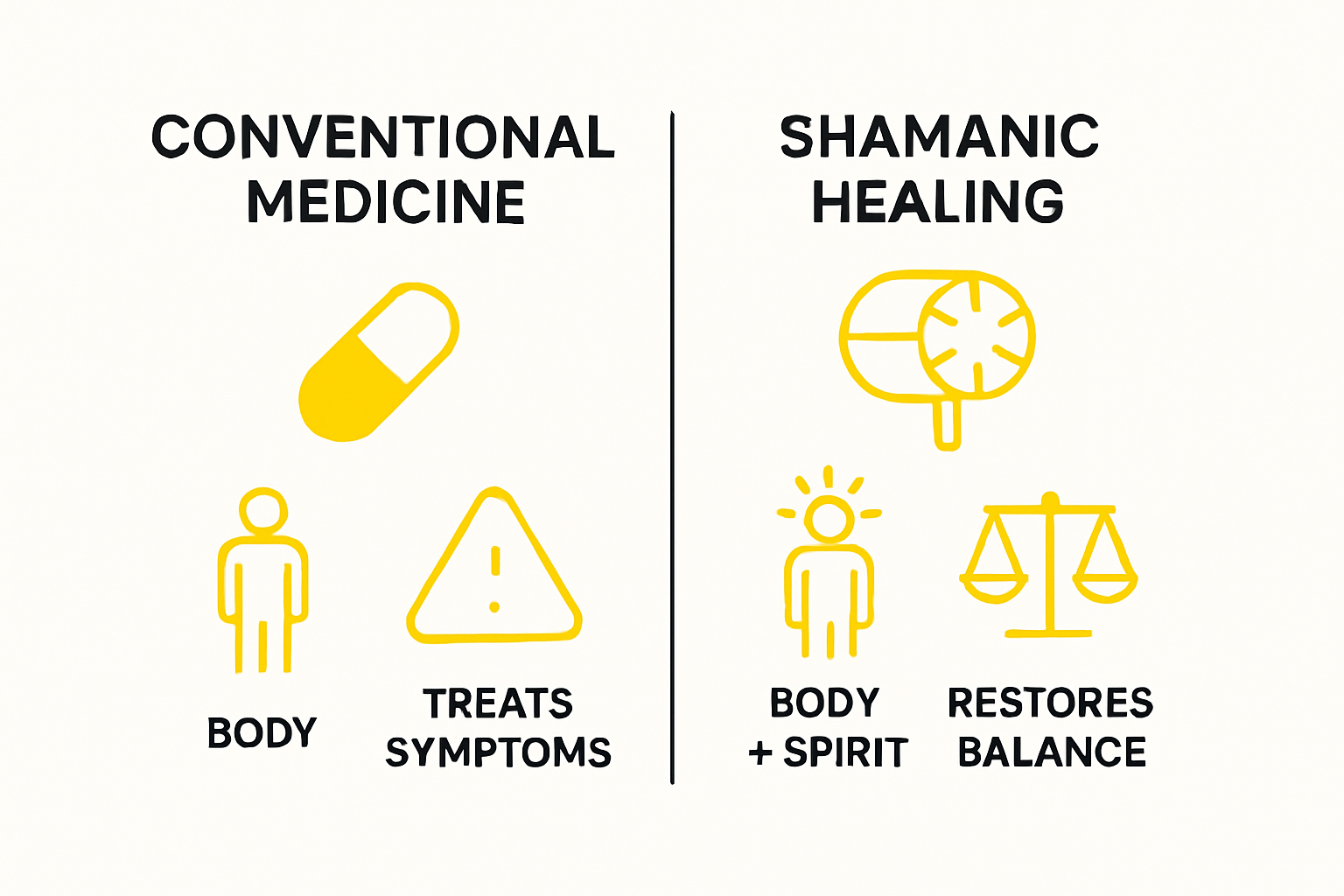 Modern professionals experiencing chronic stress, emotional burnout, and disconnection find significant value in these ancient healing practices.
Holistic Wellness in a Fragmented World
Modern life frequently creates deep psychological and spiritual fractures that traditional medical treatments struggle to heal. Shamanic practices provide comprehensive healing by recognizing that emotional and spiritual imbalances directly impact physical health. Learn more about starting your personal healing journey and understanding holistic wellness approaches.
As contemporary society grapples with increasing mental health challenges, shamanic healing offers unique insights into personal transformation. The practice goes beyond symptom management, focusing on root causes of psychological distress and spiritual disconnection. Key benefits include:
- Restoring personal agency and empowerment
- Developing deeper self-awareness
- Creating meaningful connections with inner experiences
- Addressing trauma at energetic and emotional levels
Bridging Ancient Wisdom and Contemporary Challenges
According to research exploring shamanic practices, shamanic healing provides critical interventions for modern psychological challenges. By inducing altered states of consciousness and promoting psychological integration, these practices offer powerful tools for addressing contemporary issues like stress, trauma, and existential alienation.
Shaminic healing recognizes that true wellness extends beyond physical health, encompassing emotional resilience, spiritual connection, and personal growth. In a world increasingly dominated by digital interactions and surface-level connections, these ancient practices remind us of our fundamental need for deep, transformative healing experiences that honor our complete human complexity.
Understanding the Mechanisms of Shamanic Healing
Shamanic healing operates through intricate psychospiritual mechanisms that transcend conventional medical understanding, engaging complex interactions between consciousness, energy, and healing intention. These practices represent sophisticated approaches to wellness that integrate psychological, neurological, and spiritual processes.
Neurological and Consciousness Transformation
The core mechanism of shamanic healing involves deliberately inducing altered states of consciousness that enable profound neurological recalibration. Trance states achieved through rhythmic drumming, chanting, or ritualistic practices create neurological pathways that facilitate deep psychological integration and emotional processing. Explore the fascinating world of healing frequencies to understand complementary vibrational healing approaches.
These altered consciousness states enable shamans to access deeper levels of psychological experience, allowing them to:
- Navigate unconscious psychological landscapes
- Identify energetic blockages
- Facilitate emotional release
- Reframe traumatic experiences
Energetic Intervention and Healing Dynamics
According to research exploring shamanic healing mechanisms, shamanic practices operate through complex biopsychosocial processes. Shamans function as energetic practitioners who can perceive and manipulate subtle energetic fields surrounding an individual. This intervention goes beyond physical treatment, addressing psychological, emotional, and spiritual dimensions simultaneously.
The healing mechanism involves creating a therapeutic container where psychological transformation can occur naturally. By working with symbolic representations, ritualistic practices, and intentional energy work, shamans support individuals in releasing trapped emotional energies, realigning internal systems, and restoring holistic balance. The process is fundamentally about reconnecting fragmented aspects of human experience and supporting comprehensive healing.
Key Concepts in Shamanic Healing: Spirits, Journeys, and Rituals
Shamanic healing represents a profound spiritual technology that operates through intricate connections between visible and invisible realms, utilizing sophisticated metaphysical practices that transcend ordinary consciousness. These practices are grounded in ancient wisdom traditions that understand healing as a multidimensional process involving spirit, energy, and intentional transformation.
The Spiritual Landscape and Spirit Allies
In shamanic cosmology, reality extends far beyond physical perception, with spiritual dimensions that are actively engaged during healing work. Shamans cultivate relationships with spirit allies—non physical entities that provide guidance, protection, and healing information. Learn about energy healing practitioners who work with similar holistic approaches to wellness.
Spirit allies can manifest in multiple forms, including:
The table below outlines the different types of spirit allies in shamanic healing and their respective roles, helping readers understand the cosmological framework within which shamans operate.
| Spirit Ally Type | Description | Role in Healing |
|---|---|---|
| Animal Spirits | Represent archetypal energies | Provide power, protection, and guidance |
| Ancestral Guides | Spirits from one’s lineage or heritage | Offer wisdom and support lineage healing |
| Nature Spirits | Elemental beings connected to natural forces | Foster connection with earth and elements |
| Personal Guardians | Unique personal entities assigned to individuals | Deliver individualized support and safety |
- Animal spirits representing archetypal energies
- Ancestral guides offering wisdom and lineage healing
- Nature spirits connecting humans with elemental forces
- Personal guardian spirits providing individualized support
Spiritual Journeying and Ritual Mechanics
According to research exploring shamanic healing practices, spiritual journeying represents a core mechanism through which shamans access alternative consciousness states. These intentional voyages allow practitioners to navigate non ordinary realities, gathering diagnostic insights and energetic remedies that are not accessible through conventional perception.
Ritual serves as the structured container through which spiritual insights are translated into healing interventions. These carefully designed ceremonial practices create powerful transformative spaces where psychological, emotional, and spiritual recalibration can occur. By combining intentional movement, sacred objects, sound, and focused consciousness, shamans facilitate profound healing experiences that integrate fragmented aspects of human experience.
The Role of a Shaman: Guide and Healer in the Process
Shamans represent far more than traditional healers, functioning as complex spiritual practitioners who bridge human experience with metaphysical realms. Their role transcends conventional medical understanding, embodying sophisticated approaches to individual and collective healing that integrate psychological, spiritual, and energetic dimensions.
Multidimensional Healing Practitioners
Shamans are holistic guides who navigate intricate spiritual landscapes, serving as intermediaries between visible physical reality and unseen energetic dimensions. Their healing work involves deep intuitive understanding and complex spiritual technologies that address root causes of human suffering. Explore healing approaches from experienced practitioners to understand complementary healing modalities.
Their comprehensive approach to healing encompasses multiple critical functions:
- Diagnosing spiritual and energetic imbalances
- Facilitating psychological and emotional transformation
- Restoring individual and community harmony
- Interpreting symbolic and spiritual communications
Spiritual Navigation and Diagnostic Expertise
According to cross-cultural research exploring healing practices, shamans possess unique abilities to perceive and interact with non ordinary realities. They function as sophisticated diagnosticians who can identify disturbances in an individual’s energetic system that manifest as physical, emotional, or psychological symptoms.
Their healing process involves intricate spiritual technologies that go beyond symptom management. By understanding the interconnected nature of human experience, shamans support profound personal transformation, helping individuals reconnect with their inherent wholeness and spiritual potential. The shaman’s role is fundamentally about guiding people through spiritual growth, emotional healing, and energetic recalibration.
Ready for a Deeper Healing Experience?
Have you ever felt that regular solutions only scratch the surface of your well-being? The article highlights how shamanic healing goes beyond just treating symptoms. It addresses the emotional and spiritual roots of imbalance—something you might be seeking if wellness feels out of reach. At Plentiful, we understand the struggle with stress, emotional burnout, and a sense of spiritual disconnection mentioned in the article. Our team of genuine coaches, healers, and guides is ready to help you restore balance with proven holistic techniques.

Discover your next step toward true wellness. Access personalized 1:1 sessions, group classes, and even transformative retreats that honor your unique journey. Join Plentiful today to explore how holistic healing practices, guided by experienced energy practitioners, can support your growth. Real change starts when you decide to address every layer of your being—claim your session now and experience what deep transformation can look like.
Frequently Asked Questions
What is shamanic healing?
Shamanic healing is an ancient holistic practice that addresses physical, emotional, and spiritual imbalances through spiritual means, often involving rituals and altered states of consciousness.
How does shamanic healing work?
Shamanic healing operates through the recognition that illness stems from spiritual disruptions. Shamans engage in techniques such as trance induction and spiritual journeying to identify root causes and restore energetic balance.
What techniques are commonly used in shamanic healing?
Common techniques include trance states induced by drumming and chanting, spiritual journeying, energy extraction, and soul retrieval. These methods aim to heal fragmented aspects of a person’s spiritual self and promote overall wellness.
Why is shamanic healing relevant in modern life?
In today’s fast-paced world, shamanic healing offers an alternative to conventional medicine by addressing often overlooked emotional and spiritual dimensions of health, promoting holistic wellness, and facilitating personal transformation.
Recommended
- The Beginner’s Guide to the Power of Sound Healing | Plentiful
- What is a Reiki Healer and Why Do People Swear by Them? – Plentiful
- What Are The Benefits Of Energy Healing?
- 4 Reasons Why You Need Reiki Meditation for Healing – Plentiful
- Fluum | What is Shamanic Healing
- Energy Healing Practices on Plentiful
Want your life to be more Plentiful?
Sign up for stories, experience info and launches, and event invites delivered right to your inbox.
Unsubscribe anytime.